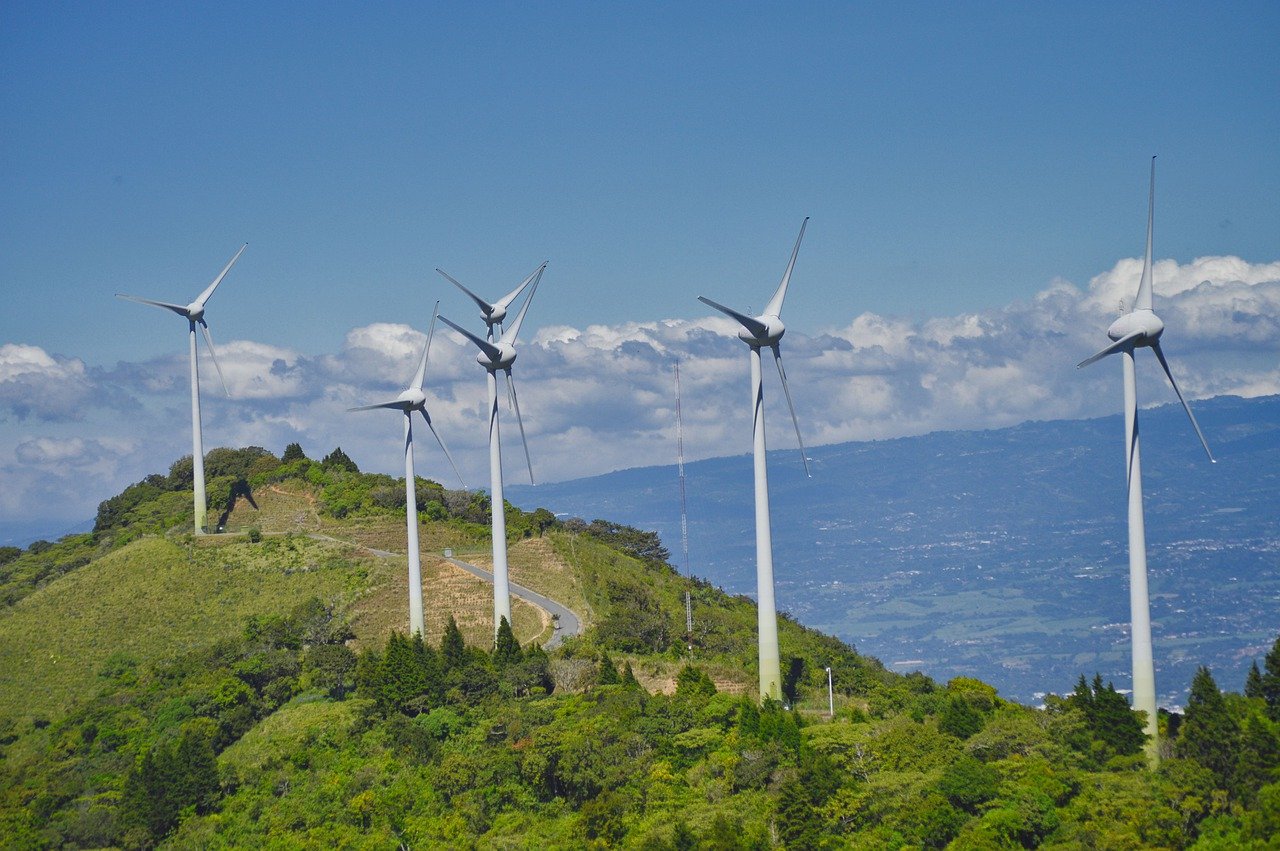
The European Commission has presented an action plan to support the European wind energy sector in order to reach the recently agreed EU target of doubling the share of wind energy in EU consumption to 42.5% by 2030.
The Commission's ambition is for renewables to go even higher, to 45% of consumption by 2030, and for this to happen, it will need ’a huge boost in installed wind capacity with an expected increase from 204 GW in 2022 to over 500 GW in 2030«, she stresses.
The Commission's plan provides, among other things, for faster authorisation of wind farms. In 2022, 16 GW of wind installations were added in 2022, a record performance and an increase of 47% compared to 2021. However, this is well below the 37 GW/year required to meet the EU's 2030 renewable energy target. The Commission is launching the «Accele-RES» initiative with Member States to ensure the rapid implementation of the revised EU renewable energy rules, with a greater focus on digitisation of permitting procedures and technical assistance to Member States.
In addition, building on the proposed Zero Net Emission Industry Act and the reform of the electricity market design, the Commission will support Member States in improving auctions with well-designed and objective criteria that reward the highest value-added equipment and ensure full and timely implementation of cybersecurity risk projects.
To accelerate investment and financing for wind power generation in Europe, the Commission will facilitate access to EU funding, in particular through the Innovation Fund, while the European Investment Bank (EIB) will provide risk-minimisation guarantees. The Commission also encourages Member States to make full use of the flexibility provided by the amended Temporary Crisis and Transition Framework for State aid to support wind turbine production in the EU.
To ensure that the wind energy sector can operate on a level playing field, the Commission is closely monitoring possible unfair trading practices that benefit foreign wind turbine producers and will continue to use trade agreements to facilitate access to foreign markets, while promoting the adoption of EU and international standards for the sector.
Finally, the Commission's new vision is to accelerate the deployment of offshore wind energy, which is expected to contribute significantly to the EU's climate and energy goals in the coming years. Building on the 2020 Offshore Renewable Energy Strategy, Member States have recently agreed ambitious new targets for offshore renewable energy production by 2050, with intermediate targets up to 2030 and 2040 for each of the five EU sea basins. In 2022, the cumulative EU-27 offshore installed capacity reached 16.3 GW. This means that to bridge the gap between the 111 GW committed by Member States and the 2022 capacity, we need to install almost 12 GW/year on average, 10 times more than the new 1.2 GW installed last year. This is why the Commission is redoubling its efforts to support specifically the offshore renewable energy sector.
Commission Vice-President responsible for the European Green Deal, Maros Sevkovic said: «The green transition cannot succeed without a strong industrial base. We must ensure that all sectors can operate in an enabling environment that allows them to contribute effectively to our ambitious climate and energy targets. This package will help the European wind energy sector to grow in Europe and compete globally, reducing dependencies on external suppliers and creating green jobs for workers.»