After a record year, the rate of tropical rainforest loss slowed in 2025, but remains at alarming levels and the trend may be accepted as ephemeral, a reference observatory reports today.
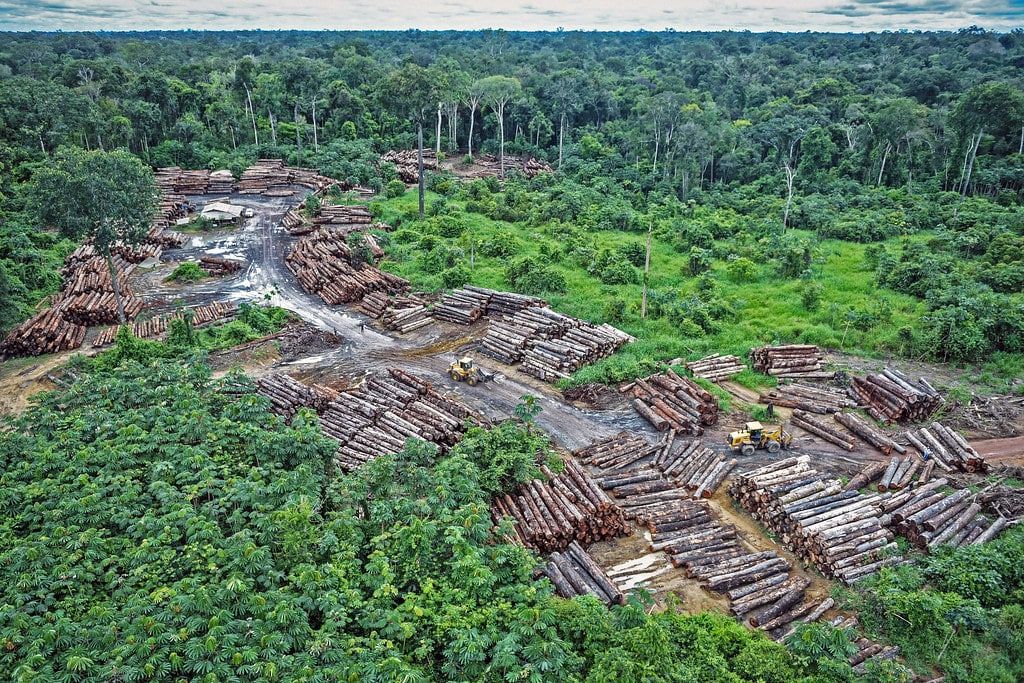
The tropics lost 43 million hectares of primary forests last year, an area equal to that of Denmark, according to data collected by satellites and analysed by the Global Forest Watch of the US-based World Resources Institute (WRI), in collaboration with the University of Maryland.
This is a reduction of 361 TP3T compared to 2024, when the destruction of forests, absolutely essential for biodiversity, water supply and carbon absorption, set an alarming record: 67 million hectares were lost.
Although the decline is «encouraging» and shows the rightness of some governments' actions, according to Elizabeth Goldman, co-director of Global Forest Watch, it may be only temporary and does nothing to change the dramatic nature of deforestation on a global scale.
«Every good year is encouraging, but we need good years to last forever to protect the rainforests,» said Matt Hansen, a professor at the University of Maryland, during a conference call.
Despite the progress, an area of rainforest equivalent to 11 football pitches every minute around the world continues to be lost, according to the report.
Rainforest losses remained 46% higher than ten years ago.
In this context, the global target to halt deforestation by 2030 looks very difficult to achieve, as current levels are 70% higher than the trajectory that would be required to do so, Global Forest Watch stresses.
Fragile progress
Much of the progress recorded in 2025 was due to Brazil, home to the world's largest rainforest.
In 2025, mainly due to the implementation of a decisive policy (deforestation prevention plan, increase in fines and penalties for environmental crimes), the country reduced non-fire primary deforestation by 411 TP3T compared to 2024, the lowest level on record.
Other countries have managed to reduce rainforest destruction, such as Colombia (-17%), or to maintain it at levels far below those recorded in the past (Malaysia, Indonesia), thanks to strict government policies.
But progress remains fragile and subject to various pressures, such as the expansion of soybean and livestock farming in Brazil, or nickel mining in Indonesia, which is wiping out tens of thousands of acres.
At the same time, primary rainforest destruction remains high in other countries, such as Bolivia, DR Congo, Cameroon and Madagascar.
The threat of fires
For all forests, global tree cover is reduced by 141 TP3T in 2025. And, although agricultural expansion remains the main driver of destruction, fires are playing an increasingly major role due to climate change, which was confirmed in 2025 (42% of losses), especially in Arctic sectors.
«Over the past three years, fires have destroyed more than twice as much forest cover as twenty years ago,’ Goldman said.
Although fires can have natural causes, the majority of them are caused by humans.
Fire losses were huge in Canada, where flames charred 53 million acres - making 2025 the second worst year on record in this North American country, in this respect.
In France, forest destruction due to fires was seven times higher than in 2024. While in the two Iberian countries, Spain and Portugal, 60% of tree losses were due to fires.
This threat is expected to increase in the coming years due to climate change, which is making conditions warmer and drier, in other words, encouraging the spread of fires.
According to the Intergovernmental Panel on Climate Change (GIEC), if the global temperature were to rise by 4° Celsius, the frequency of fires would increase by about 30% and burnt areas would also increase by 50 to 70%.
For Global Forest Watch, 2026 will be a «pivotal» year. The possible return of the El Niño phenomenon, which tends to bring rising global temperatures, raises the risk of fires becoming even worse. And forthcoming elections in countries where large forests are located, as well as international geopolitical tensions, may affect the continuation, or otherwise, of progress.