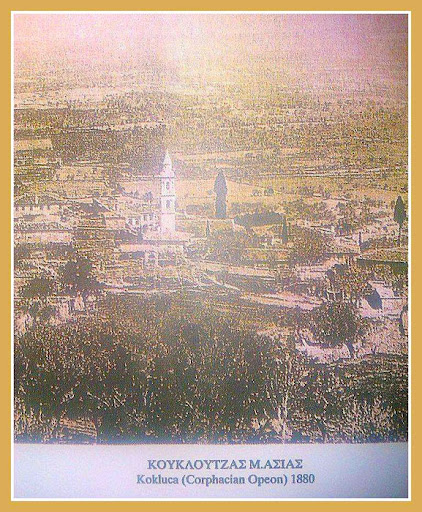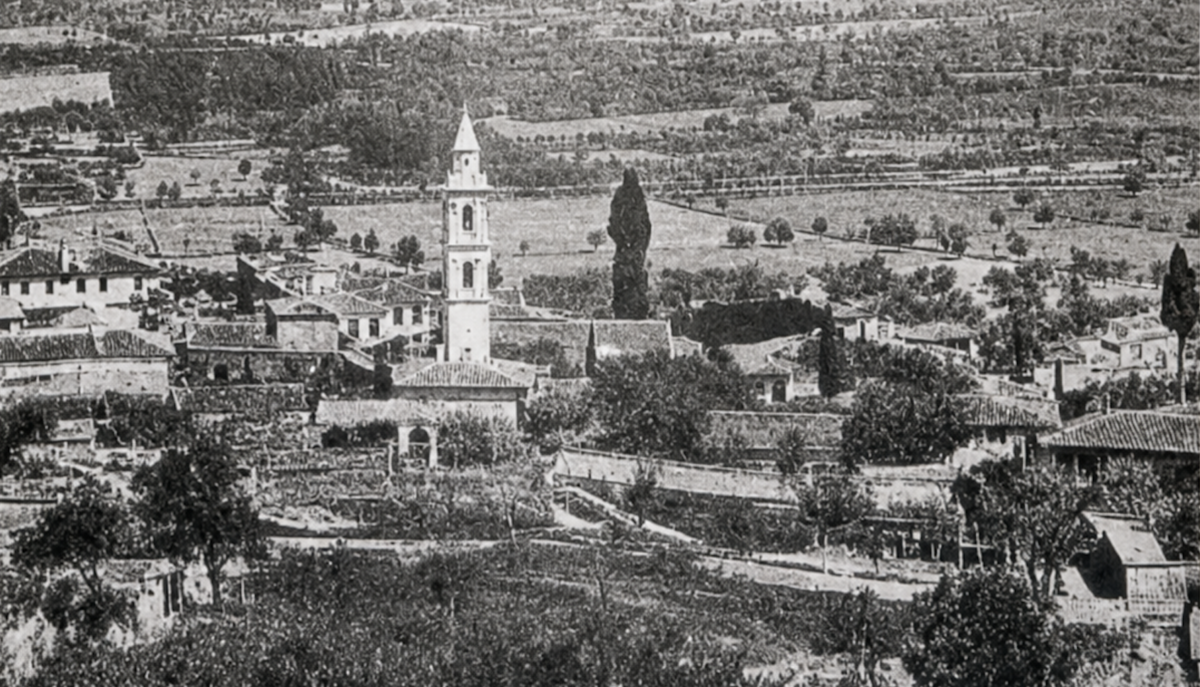
The following is a text from the Association of Vourliotes of Asia Minor regarding the suburb of Koukloutza in Smyrna, which was settled by people from Kythira and the Peloponnese in the 18th and 19th centuries.
INTRODUCTION
It was located east of Smyrna, 5 km from the city center, and belonged to the municipality of Bournova. The area was once covered with gardens. The oldest residents of the area live on the hillside.
GREEKS IN 1922
Before the destruction of Smyrna, many Greeks lived in the area; they were descendants of immigrants from Kythira and the Peloponnese who had fled there after the Orlov Revolt.
From time to time since 1770, the settlement was inhabited by a population ranging from 1,000 to 5,000 Greeks.
THE NAME
In ancient times, the settlement was first known as Opaion and even as Koryphasion.
The name Koukloutzas means “fragrant mountain”; in Byzantine times, the name was Kouklos (Kokluca). This name was later changed to Kouklouze. Today it is called Altindag. The Turkish word Altindag means “golden mountain,” and it is believed that the Turkish residents gave it this name when, following the Asia Minor Catastrophe, it was believed that the local Greeks and soldiers had buried treasures there upon their departure.
RELIGION
Their churches were those of the Apostles Peter and Paul (1765), the Chapel of St. John, St. George of Krinos, and St. Anastasia.
EDUCATION
It had a two-story school building with separate elementary schools for boys and girls and a kindergarten, with a total of 118 students.
In 1813, a Greek printing press named ”Hermes” was in operation.”
EMPLOYMENT
They were farmers and silk producers. They grew tobacco, grapes, wine, olives, apples, pears, figs, and mulberries, and they also raised silkworms.
PROSECUTIONS
August 27–September 1, 1922: Young men from the village resisted the Turks to allow their fellow villagers to escape, and as a result, they were all murdered.
Following the Asia Minor Catastrophe, the Greeks from the neighborhood fled as refugees to Greece, and some of them settled in Thessaloniki, where they established the Evosmos–Neos Koukloutzas neighborhood.
Near Smyrna (north) were the baths of Artemis (Chalka Bouna), where a statue of the goddess was found and where, according to tradition, a bronze ring prevented the waters of the spring from escaping and flooding Smyrna. In 1897, a French company used the water from this spring to supply the city.