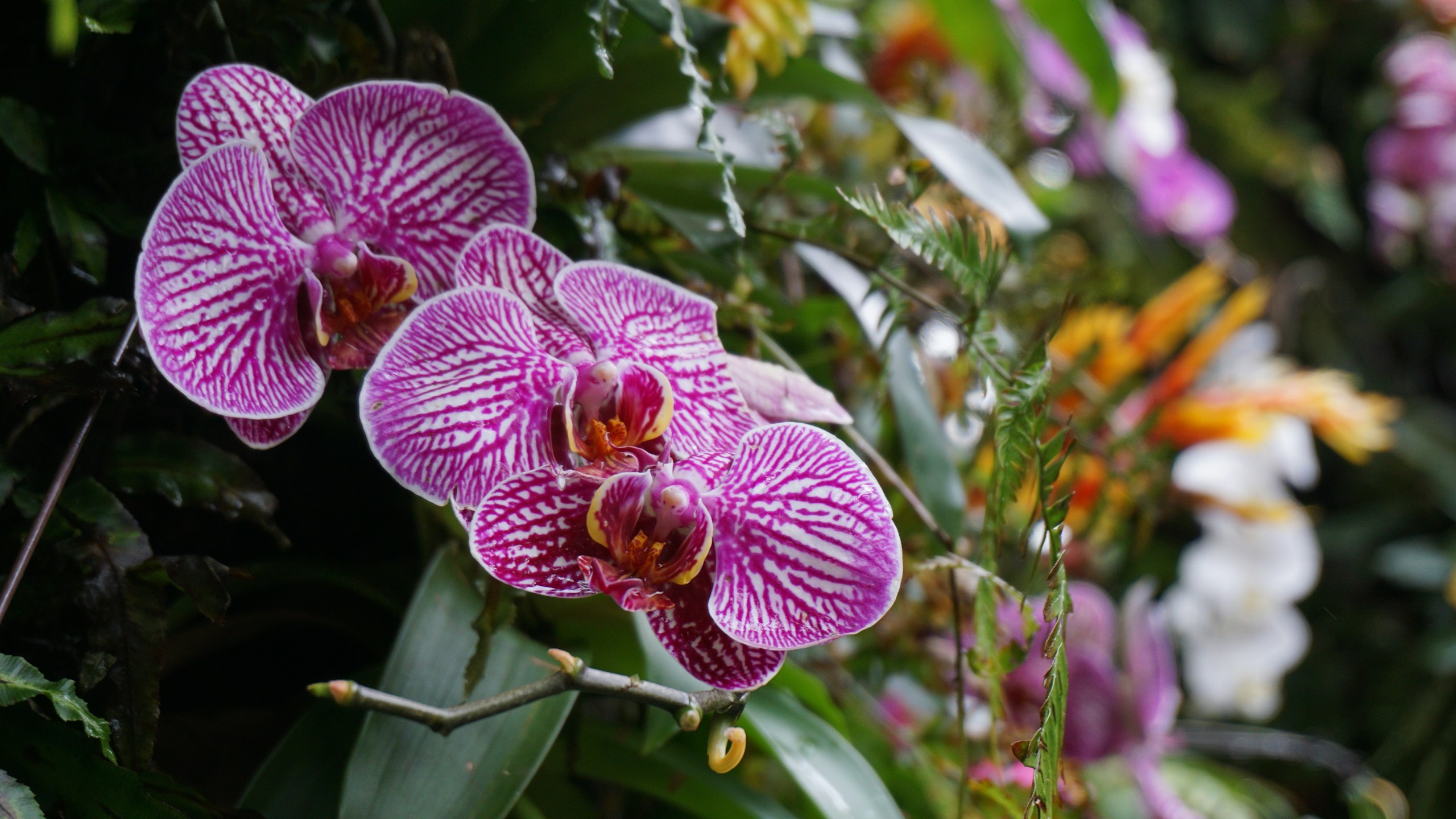
In the spring of 2026, the American Orchid Conservation Alliance will return to Rhodes for another scientific mission to study wild orchids.
This return is a continuation of a relationship that has been built over many years and confirms Rhodes as one of the few places in Europe where botanical research can yield comparable results to areas of global biodiversity, such as Madagascar or Ecuador.
The choice of the island for 2026 is not about tourism in the strict sense, but about the possibility of systematic scientific observation on a small geographical scale.
The Orchid Hunt 2026: Rhodes expedition is scheduled to take place from 17 to 24 March 2026. It will last eight days and will move exclusively inland and in the highlands of the island. The team will consist of 4 to 12 participants, a number deliberately chosen to limit the footprint on the natural environment and ensure the quality of the research.
According to the OCA, Rhodes is a rare geographical case. Its proximity to the coast of Asia Minor makes it a biological bridge between Europe and the East. The island is home to species at the westernmost limits of their range, which allows scientists to study population changes, adaptations and genetic diversity in real time.
For the organisation's researchers, Rhodes serves as a point of comparison. Their repeated presence in the same geographical context allows them to collect data over time, which is becoming increasingly difficult in areas subject to severe environmental pressures.
The timing of the mission is not accidental. Scientists are aiming for what they call the «ideal flowering window», when the last appearances of early species coexist with the first blooms of later ones. In Rhodes, this period condenses unique biological information.
The programme of the expedition includes the search for more than 40 species of orchids in eight days. These include Anacamptis collina, Anacamptis papilionacea, Serapias politsii, Serapias parviflora, as well as species of the genus Ophrys such as Ophrys rhodia, Ophrys dodekanensis, Ophrys omegaifera and Ophrys lucis. The density and accessibility of the habitats make this survey feasible, despite the pressures on the natural environment.
Special emphasis is given this year to the study of the orchids of the genus Ophrys. These plants have developed complex pollination mechanisms, mimicking both the form and pheromones of female insects.
Rhodes offers suitable conditions for the study of these phenomena, as it hosts endemic and rare species with distinct variations. Photographic documentation is a key component of the expedition and is used both for scientific publications and educational material for international use.
Jon Dunn, naturalist and orchid expert, and Sarah Cuttle, professional plant photographer, have taken on the scientific leadership of the expedition, as stated in the official OCA programme in collaboration with local guides.
According to the official programme of the expedition, the research will focus on the mountain range of Profitis Ilias and Atavyros, while excursions to the hill of Filerimos and the slopes of southern Rhodes are planned to identify rare orchid populations. The scientists will use the villages of Emponas, Apollo and Salakos as a base, combining botanical recording with visits to archaeological sites such as ancient Kamiros and Lindos in order to gain a comprehensive picture of the Rhodian landscape.
It is worth noting that international recognition comes with risks. Illegal collection of orchids and habitat degradation are permanent threats. OCA missions also act as an awareness-raising mechanism, highlighting the need for ecosystem protection and strict management.
The organisation's scientists emphasise that nature conservation is not just an environmental issue, but a basic prerequisite for the future of tourism itself. Rhodes, they point out, has a natural capital that requires long-term planning and constant protection.