
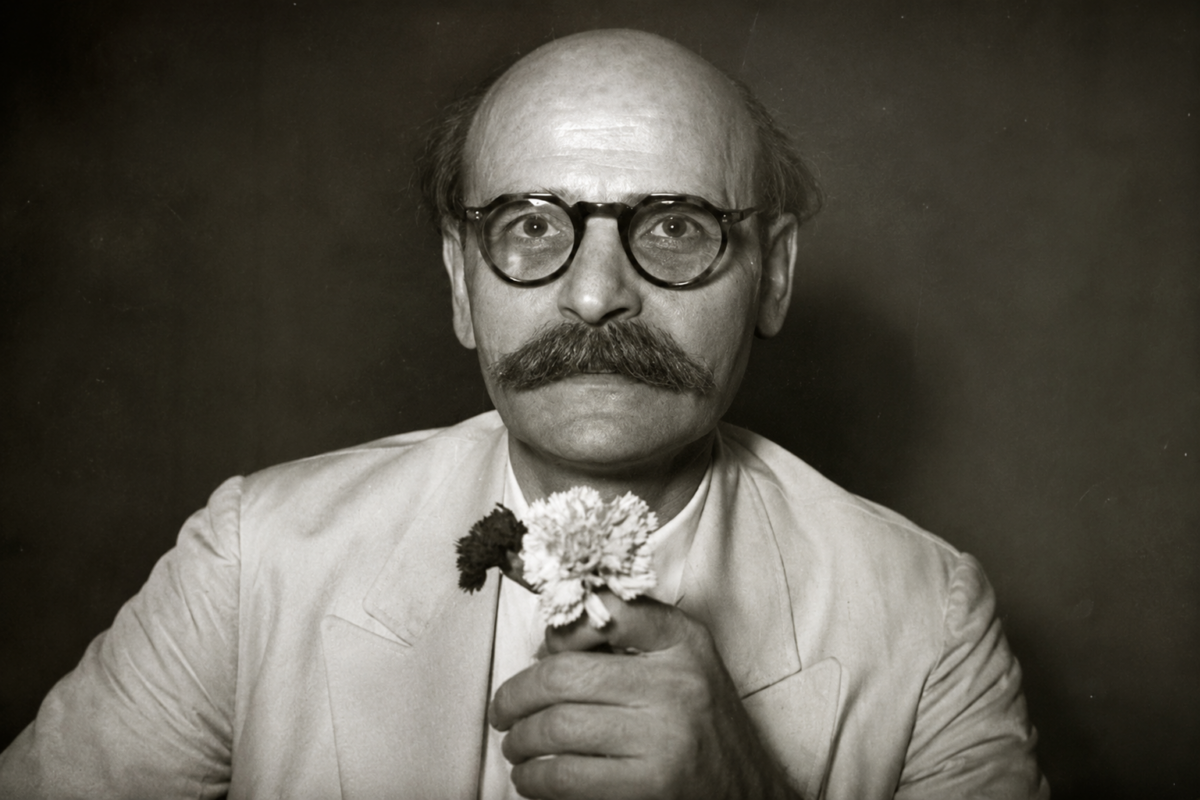
August 14, 2026, marks the 72nd anniversary of the execution of Nikos Ploumpidis.
His story is neither a simple biographical sketch nor just another tragic chapter in the country’s long history of political persecution. It is the condensed, bloody drama of the Greek Left, written by a man who stubbornly refused to become cynical. An analysis of this journey requires a sharp, unflinching look at political paranoia, blind dogmatism, post-civil war vindictiveness, and, above all, the unsurpassed dignity of individual conscience when it is confronted with the ruthless cogs of the system.
In Greece, to be respected, you must first be destroyed. If you’re also a teacher—that is, someone who has learned to articulate ideas rather than merely follow orders—your plight is twofold. Ploubidis was never a «professional revolutionary» in the convenient, safe, and bureaucratic sense that the term took on in party offices, transforming the class struggle into a civil service career. Born in Lagadia, Arcadia, in 1902, he was a man of everyday action who transformed education into political action and social duty into a way of life. From his early years in the ranks of the Teachers« Federation to his joining the Communist Party of Greece (KKE), the »Red Teacher” viewed politics not as an exercise of power, but as a total dedication.
During the Occupation and the Civil War, even as his severe tuberculosis was slowly and steadily eating away at his internal organs, he was crisscrossing Athens, setting up the party’s clandestine network. He did not direct operations from the safety of some distant, sheltered capital in Eastern Europe, like the bureaucratic hierarchy under Nikos Zachariadis. He remained on the street, in the daily illegal struggle for survival, on the front lines, where political action costs you your life and not just a spot in the party directory. He was the very man who, always operating in the utter darkness of severe illegality, orchestrated the greatest political successes of his movement under conditions of brutal repression, the most notable of which was the formation of the United Democratic Left (EDA) in 1951, which breathed new political life into the defeated and persecuted veterans of the Civil War.
The tragic grandeur of Nikos Ploumpidis is encapsulated in a unique, nightmarish paradox of modern Greek history. He was the activist executed by the post-civil war right-wing state, after first being morally and politically destroyed by the leadership of his own party. After the defeat of the Democratic Army, the leadership of the Communist Party of Greece (KKE), mired in Stalinist dogmatism, isolation, and an obsessive search for «internal enemies,» sought scapegoats to justify the disaster. Amid this climate of widespread suspicion and fear of informants, anyone who thought outside the party line was considered an agent, and so Ploumbidis was targeted.
When Nikos Belogiannis was sentenced to death in 1952, Ploubidis made a gesture of utter self-sacrifice that transcended the bounds of politics and bordered on ancient tragedy. He sent an open letter to the press, taking full responsibility for the clandestine organization and offering his own arrest and life in exchange for Belogiannis’s life. The reaction of the KKE leadership was shocking. The «Free Greece» radio station in Bucharest described the letter as «forged and fabricated by the Security Police» and publicly denounced Ploumbidis as a snitch, an agent, and a traitor.
This is precisely where the schizophrenia of Greek politics is revealed. The post-civil war right-wing state wanted him dead because he was a communist. The leadership of the Communist Party of Greece (KKE) wanted him ruined because he was not obedient. The «Red Teacher» found himself trapped in an absolute political and existential void, caught between right-wing bigotry and left-wing paranoia.
At his trial before the Court-Martial in 1953—severely ill, coughing up blood, and physically exhausted—Ploumbidis gave a master class in political integrity. He did not turn against his comrades who were denouncing him, nor did he attempt to save his life by renouncing his ideas before the military judges. He defended the Communist Party of Greece (KKE) with vigor, distinguishing the Idea of the revolution from the animosity and dogmatism of the individuals who led the party.
In the early hours of August 14, 1954, in the Agia Marina area of Dafni, he was led to the firing squad. He categorically refused to be blindfolded, because a free man looks death in the eye; he stood upright before the muzzles of the guns and fell dead, shouting «Long live the KKE!» He did not shout to vindicate the well-educated bureaucrats who had expelled him, but to defend the Idea for which he had fought his entire life, proving that the party belongs to those who die for it and not to those who manage it. The detachment’s doctor determined that, due to advanced tuberculosis, he had only a few weeks to live anyway. The post-civil war state, however, did not need to execute a dying man; it needed to execute a symbol. And yet, all it managed to do was create an eternal, insurmountable martyr.
The life and death of Nikos Ploumpidis encapsulate the most bitter—but also the most instructive—lesson of our modern political history. On the one hand, it demonstrates that when ideology becomes a religious dogma, it turns comrades into persecutors and the truth into an enemy. On the other hand, it proves that individual moral integrity and personal ethics are incomparably superior to any party label, bureaucratic decision, or temporary majority.
Decades later, following the expulsion of Zachariadis (who committed suicide while in exile in Siberia) and the 9th Plenary Session of 1958, the KKE rescinded his expulsion, acknowledging the charges of treason as unjust, baseless, and the product of an abnormal internal party regime. History, of course, laughs at the bureaucrats« apologies in hindsight. The »Red Teacher” ultimately triumphed on all fronts. He defeated his physical executioners, who thought that a few bullets would make his struggles disappear. But he also defeated his political slanderers, who signed his expulsion. Because when the clamor of the conferences of each era dies down, History does not remember the decisions of party offices, but the courage and dignity of those who stood tall in the hour of ultimate trial.












Today, more than ever, this land needs such fighters to emerge… Immortal…
«You’re wasting your time if you think you’ll make me turn against my Party,» was his response to the presiding judge when the latter attempted to use the unfair and false accusations leveled by the KKE leadership against Ploubidis.
«Today, gentlemen, you are not putting individuals on trial. You are putting the KKE on trial. And on that note, even though today not only do I not have the honor of representing my Party, but I am also facing opposition, I declare that I fully assume responsibility for my Party’s policies,’»Those who love and respect me must remain loyal to the Party, safeguard its unity, and have confidence in its leadership. My honor comes second; above all, I hold the Party’s honor in the highest regard. I am the first to put into practice what I have taught. I was loyal to the Party when it embraced me with affection and elevated me to its highest offices; I remain loyal now that—for better or worse, justly or unjustly—it accuses and stigmatizes me. «I will remain loyal forever, and I will die a communist,’,