Patriotism, as a concept of political identity and collective reference, often intersects in the public sphere with populism., which tends to simplify political competition through the dichotomy of «people» and «elite».
In this context, patriotic discourse can be transformed from an element of institutional responsibility into a tool of political confrontation and moral demarcation of opponents.
Thus, patriotism is transformed from a civic virtue into a tool of political mobilisation, integrated into a rhetoric that reinforces division and simplifies political reality..
In this light, patriotism does not simply function as a value reference, but is often instrumentalised to delineate friends and opponents, simplify complex issues and legitimise political choices.
In these cases, the public debate is not conducted in the context of a positive or negative assessment of issues, effectiveness, strategy or institutional constraints, but is organised around dichotomous assessments of «national responsibility» and «national deviation».
The result is the rearrangement of political competition into a moralized field, where criticism of government choices is not formulated as a policy disagreement, but as a questioning of the patriotic competence of the actors.
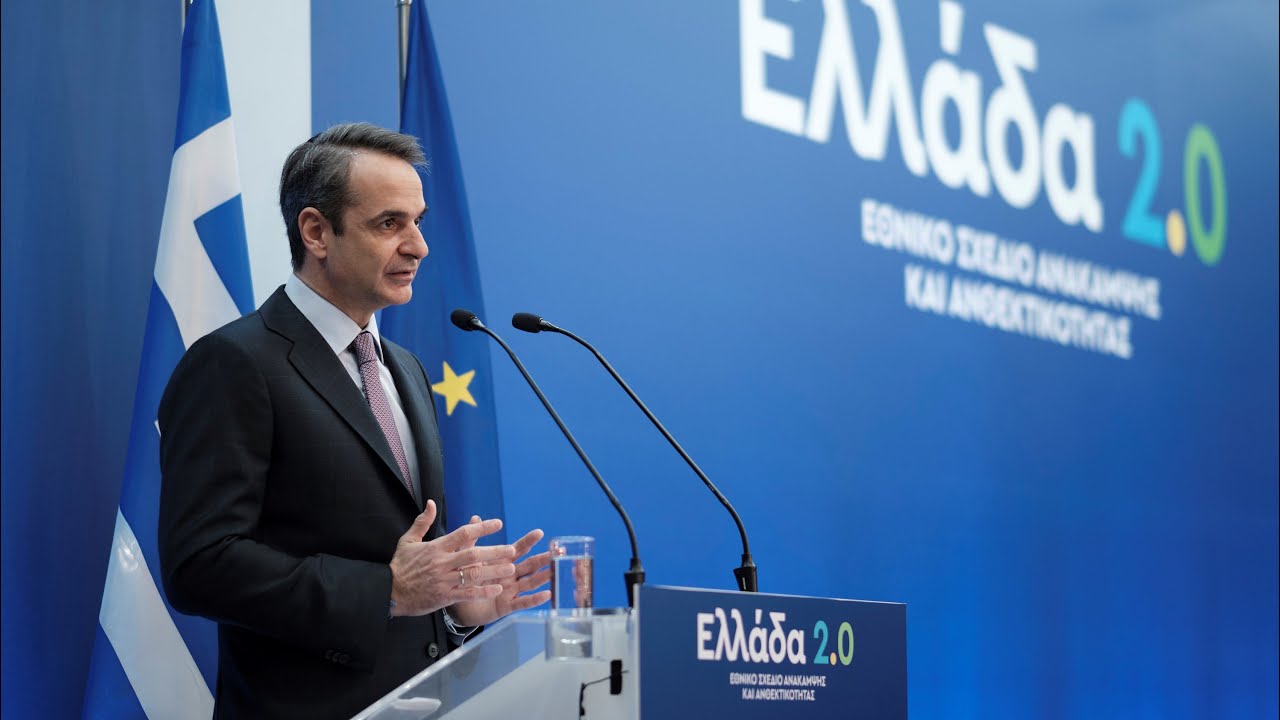
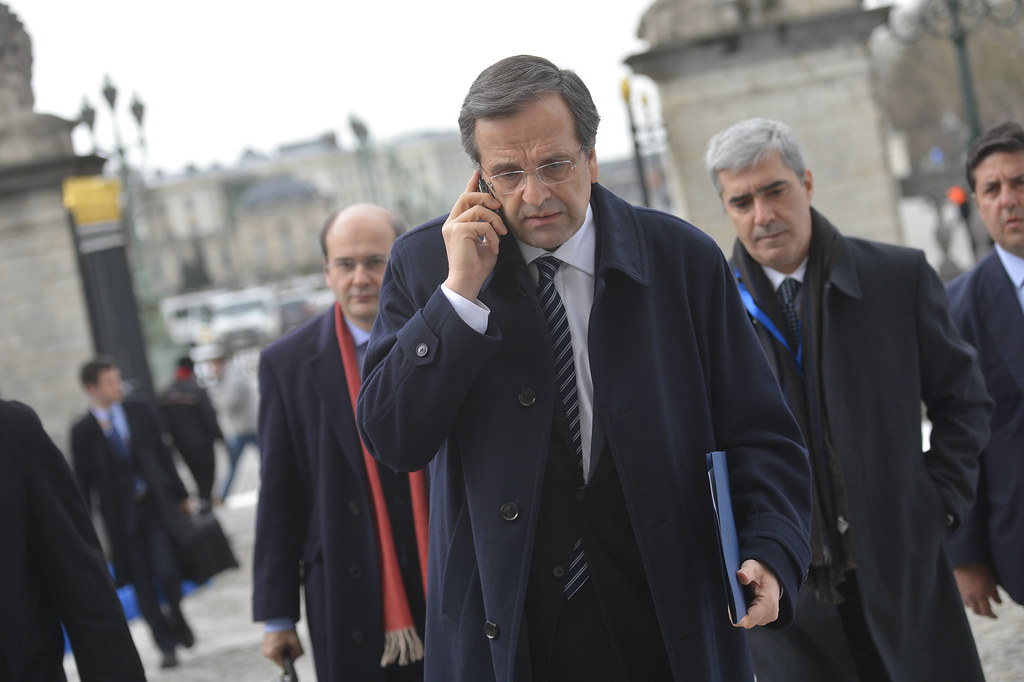
To understand this shift, it is necessary to contrast the current arguments of Mr. Antonis Samaras when criticising the government and Prime Minister Kyriakos Mitsotakis, with the rhetoric and governmental practices of the period of his premiership (2012-2015), when patriotism did not appear as a tool of rhetorical debate, but as an element of governmental responsibility.
Characteristic is his statement on Greek-Turkish relations, during the presentation of Manolis Kottakis« book »The Karamanlis files" at the War Museum on 1η July 2024 (see: related speech).
Specifically, Samaras denounced the foreign policy in general, characterizing the dialogue with Turkey as a «conversation with a pirate», denouncing the existence of a «lobby of appeasers» and claiming that the government, through options such as the «Friendship Pact», is leading the country to constant concessions and national humiliation, while Turkish provocativeness is escalating, calling directly for the abandonment of the policy of dialogue with Turkey.
In the same context, Antonis Samaras, adopting a rhetoric of high political intensity, stressed: «We eat one insult, one humiliation, then another» and called on the Prime Minister: «to completely review the ... “Friendship” with Turkey, making it clear in practice that we are not being blackmailed, threatened or feared. There are limits!!.
However, this position is in clear contradiction with his period of prime ministership, during which he described dialogue with Turkey as a necessary and productive policy tool.
In particular, Mr. After his meeting with Tayyip Erdogan in Istanbul during the 2nd High Cooperation Council between Greece and Turkey in March 2013, Samaras described this day as a “good day for Greek-Turkish relations”, underlining that the two countries were “building trust”, “creating mutual interests” and bringing the peoples closer together, while stressing that cooperation in the fields of economy, trade and tourism “improves the daily life of citizens” and “generates development and peace” (see: related Statements).
In the same context, 16 ministers of the then government participated in the Council and the meeting was accompanied by the signing of 25 cooperation agreements in critical public policy areas such as health, tourism, sports and energy, indicating the stable and institutionally organized character of the Greek-Turkish approach.
At the same time, throughout his premiership (2012-2015), the Greek government kept the channel of exploratory contacts active by holding successive rounds of talks, even in times of increased Turkish provocativeness, recognizing in practice dialogue as a necessary tool for the management of bilateral disputes.
In fact, based on the aggregated data of the General Staff for 2013 (see: the relevant data), a particularly increased level of Turkish violations of the Athens FIR was recorded during the period February-March 2013, with daily entries of armed formations of Turkish aircraft into national airspace and systematic interceptions by the Air Force.
This picture reflects an environment of constant operational pressure in the Aegean, in which, despite the ongoing tension and repeated provocations, the Samaras government of the time did not choose to cancel the dialogue, but instead chose its institutional continuation through exploratory contacts and bilateral cooperation mechanisms, presenting rapprochement and understanding as a conscious strategic choice of Greek foreign policy and as a an institutional tool for crisis management.
In support of the above, it is worth recalling that even in an environment of heightened tension (see: relevant publication), as it was before the summit meeting in Cardiff, Wales, due to the provocative statements of Mr Erdogan from the occupied territories - in which he blamed Greece and Cyprus for the Cyprus problem - the meeting between Samaras and Erdogan took place normally on the sidelines of the NATO Summit.
At this particular meeting, despite the full record of the divergence of views between the two sides, Mr Samaras did not choose to stop contacts with Turkey, but instead agreed with Mr Erdogan to continue the process of rapprochement, with a new meeting scheduled in Athens in the framework of the 3rd High Cooperation Council between Greece and Turkey (December 2014).
At the end of the Council's proceedings, an extract from the statements of the then Prime Minister Samaras (see: relevant Statements), where he stated: «It is true, of course, that in the broader context of our bilateral relations, there are issues - this is well known - on which we have substantial disagreements. We fully recognize this fact and we aim to establish relations of mutual respect between us, strengthening our cooperation, so as to contribute to the stability of our wider region.».
Moreover, it is worth noting that despite the tension in relations between the two countries, in 2014, as Mr.Samaras stressed during his speech at the Greece-Turkey Business Forum (see relevant speech), the two governments co-organised four business cooperation events.
This attitude demonstrates that even under conditions of intense rhetoric, provocations and tension, the Samaras-Venizelos government treated dialogue as a crisis management tool and not as a sign of retreat or weakness.
The paradox, however, is that today Mr. Samaras (see his interview in STEP on 17-11-2024) claims that in the period 2012-2015 he conducted a dialogue with Turkey because there was no Turkish-Libyan Memorandum, but neither was the settlement of Famagusta and the insistence on two separate states in Cyprus.
However, the actual data of the period do not confirm the picture described by Mr.Samaras because at that time the Turkish leadership was also formulating revisionist positions on the Cyprus issue, while systematic violations of national airspace were recorded in the Aegean, in contrast to the current period, when they have been significantly reduced or even eliminated.
At the same time, Turkish provocativeness was also manifested in the Eastern Mediterranean, with the research vessel Barbaros conducting research within the Cyprus EEZ, causing the strong reaction of the Republic of Cyprus and further aggravating the already tense security environment in the region.
Finally, Turkey's fixed positions on the demilitarization of islands and «grey zones» in the Aegean remained active, while the casus belli was still in force.
Under these circumstances, it becomes clear that Turkish revisionist behaviour is not a recent phenomenon, but a long-standing parameter of the Greek-Turkish relationship, a fact that did not prevent the then Greek government from continuing the dialogue.
At the same time, during his premiership, Samaras not only conducted a dialogue with Turkey, but was also a strong supporter of its European perspective, noting (see relevant statement) that: «Greece has supported and continues to support Turkey's European perspective. Because a European Turkey, a Turkey that has fulfilled everything that applies to everyone and follows the same standards, will be a better neighbour for Greece.».
In relation to his reference to the Turkish-Libyan Memorandum, that it is in full violation of international law, directly infringes the sovereign rights of Greece and constitutes a «pirate» act, it should be noted that the root of the problem lies in the moves that were not made in 2012-2014.
Specifically, since 2012, Turkey started to unilaterally delimit its «continental shelf» in the Eastern Mediterranean, completely ignoring Kastelorizo and proceeded to grant oil exploration licenses to the state-owned company TPAO in areas south of Rhodes and Kastelorizo.
On 12 March 2013, it even submitted a formal declaration to the UN (See: Note Verbal) in which Turkey claimed to have rights west of the 32°16’18 ”E meridian, «wiping out» Kastelorizo (see related publication), from the map of the maritime zones.
Given that Mr Samaras in his last speech in Parliament (see speech) called himself farsighted, after Turkey's revisionist actions at the time, why did he never submit coordinates to the UN for the area east of the 28th meridian (i.e. where Kastelorizo is affected), even though he had the Maniatis law in force that defined the outer limits of the continental shelf?;
Also, why it did not proceed to a partial demarcation with Egypt (as the current Prime Minister, Mr Mitsotakis, did in 2020), in order to create preemptive international legal precedents before the signing of the Turkish-Libyan Memorandum?;
Of particular interest is also what Mr.Samaras says in the same interview to VIMA on the issue of the EEZ, where he argues that Greece should negotiate exclusively the delimitation and not the very basis of its sovereign rights, implicitly rejecting any discussion that could lead to a compromise or an appeal to the International Court of Justice in The Hague under disputed conditions.
However, this position contradicts the practice of his governance, where the then Foreign Minister Mr Venizelos has publicly acknowledged (see interview with Mr. Venizelos) that the Greek side had begun exploratory contacts with Turkey (led by Ambassador Pavlos Apostolidis), seeking to formulate conditions for an appeal to The Hague, which necessarily implies negotiation on the subject matter of the dispute and the framework for its resolution.
Given that the persistent Turkish positions on limited ownership of the islands and disputing the EEZ are not a recent phenomenon, but a constant of Turkish policy over time, it becomes clear that the Greek government at the time did not consider the negotiation on these issues as a sign of retreat, but as a necessary element of an organised diplomatic strategy.
In conclusion, it is worth noting that in his recent criticism of the government, Samaras argues that the avoidance of unilateral actions, such as the declaration of the EEZ or the extension of the territorial waters to 12 nautical miles, aims to avoid causing tension, but in practice it may lead to the consolidation of the existing status quo that the Turkish side claims.
In this context, it should be recalled that in the programme statements of his government the intention to declare an Exclusive Economic Zone by Greece was announced (see Samaras government's Programmatic Statements, 6.7.2012).
Therefore, the question that reasonably arises is why this announcement did not become a government act during his term of office, especially at a time when the issue of the EEZ was a central subject of public policy and diplomatic debate?;
Finally, in the same interview to VIMA, Mr Samaras referred to the «Blue Homeland» doctrine» which is an open provocation against Greece, while the current government does not ask for it to be lifted, proclaiming its «friendship» with Turkey!
It forgets to mention, however, that the term «Mavi Vatan» was first officially used on 14 June 2006, during a symposium at the Turkish Navy Culture Center (Deniz Kuvvetleri Kültür Merkezi) by the then Vice Admiral Cem Gürdeniz (Cem Gürdeniz) (see relevant Link).
Then in 2011 the Admiral Cihat Yaycı (Jihat Yaycı) published a study (see related study), in the magazine of the Turkish Naval Academy (Deniz Harp Okulu), where he presented for the first time the map that ignores the influence of the islands.
In this light, it becomes clear that the elevation of the «Blue Homeland» doctrine as a supposedly recent and sudden threat does not reflect its true historical development, but a long-term strategic process that has been documented and analysed since the early 2000s.
In his last speech in Parliament (see speech) also, Mr Samaras described as «self-evident» the strategic move of Prime Minister Kyriakos Mitsotakis to send two Navy frigates and four F16 aircraft to Cyprus., helping to deter potential threats to the island's military and critical infrastructure, while attempting to downplay their strategic dimension.
This position raises questions when it is expressed by a former Prime Minister, given that no action in International Relations is a priori given or «self-evident», but is the product of complex strategic calculations that take into account power correlations, risk assessments and geopolitical balances.
In this perspective, if Mr Samaras' claim is correct, the question arises as to why it was not considered «obvious» to send corresponding military means to Cyprus during his prime ministership, when the Turkish research vessel Barbaros was conducting research within the Cyprus EEZ, in order to defend and protect the rights of Cyprus?;
This question takes on even greater significance if we consider that during his premiership, Antonis Samaras assured the then President of Cyprus, Mr Christofias, of Greece's determination to oppose any challenge to the sovereign rights of the Republic of Cyprus (see relevant statement to President Dimitris Christofias).
At the same time, of course, Mr. Samaras in an interview on 7/11/2014, to the Cypriot TV station Sigma and the journalist Mr. Chrysanthos Tsourooullis (see: relevant interview), he said: «I believe that at this time a hot episode would be a very, very negative development.».
Also, given Mr.Samaras« frequent reference to »appeasers« and »patriots", it should be noted that the specific strategic decision of Prime Minister Mitsotakis cannot be included in the logic of appeasement.
On the contrary, it constitutes a clear strategic choice of active deterrence and practical support for the Republic of Cyprus, enhancing the credibility of Greek foreign policy and reflecting the country's intention to defend its sovereign interests on the ground and not only in rhetoric.
In light of this, since Mr. Antonis Samaras is now calling for a more proactive stance towards Turkey, the question arises why his government in 2012-2015 did not undertake similar initiatives of increased strategic cost and risk in both the Aegean and the Eastern Mediterranean?;
The reference to «national trivialization» in the event of Greece's withdrawal from Cyprus after the end of operations in the Middle East, also ignores the fact that the presence of military assets abroad is not a matter of oppositional crowns and verbiage, but an object of dynamic strategic evaluation, which is adapted to evolving security conditions, operational needs and wider geopolitical correlations.
In conclusion, the comparison of Mr.Samaras' current rhetoric and public stance with the governmental practice of 2012-2015 highlights a clear contradiction.
It points out that when patriotism is cut off from its institutional responsibility and becomes a tool of conjunctural political confrontation, it feeds populism.
Because, after all, patriotism is not demonstrated by rhetorical flourishes and extreme oppositional crowns, but by consistency of words and deeds.
Author of the article:

Political Scientist – International Relations Specialist
Former Director General - Directorate General
National Defense and International Relations Policy (GDPAAD)
Ministry of National Defense (YPETHA)