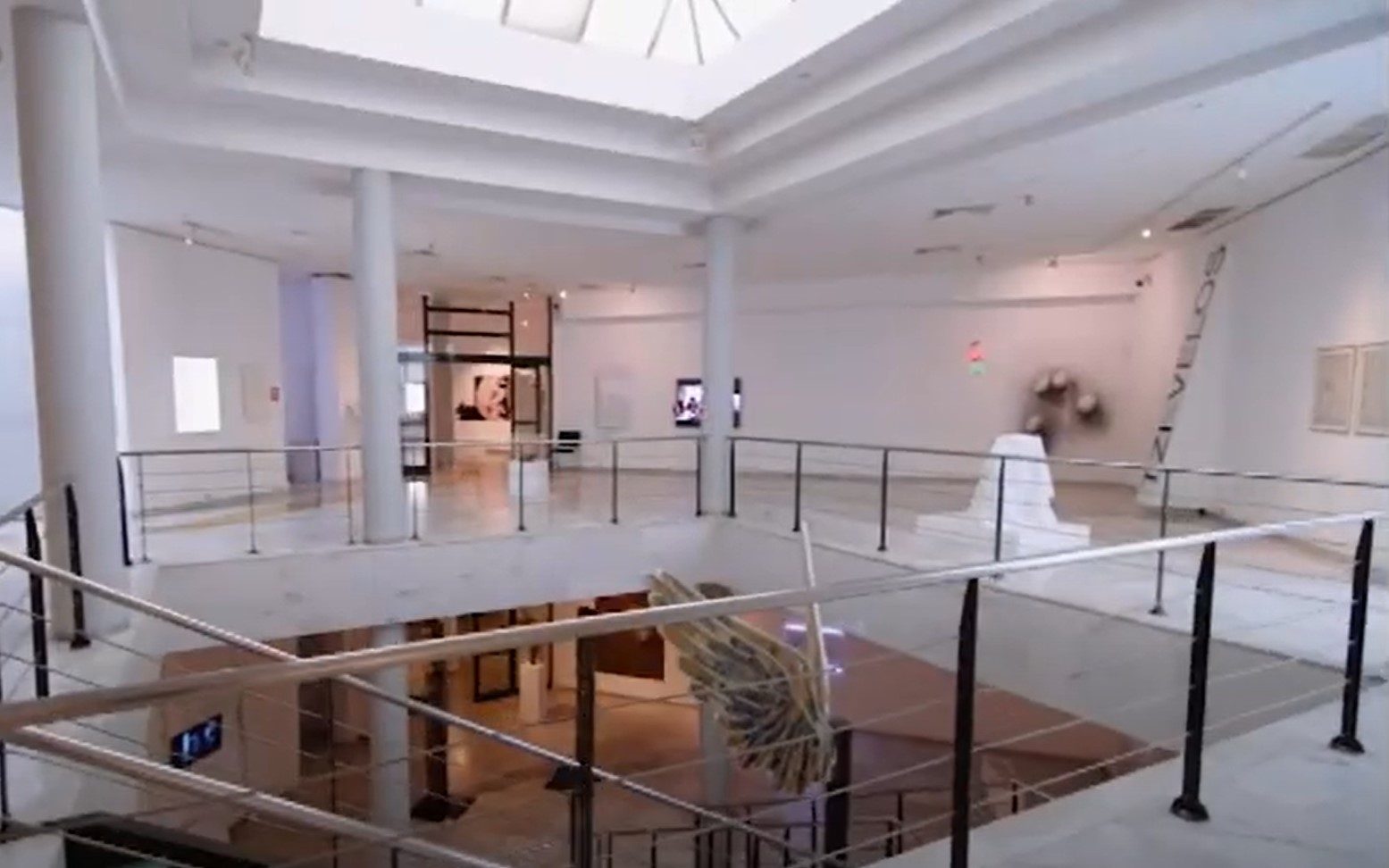
The sculptor’s studio, a space dominated by the loud sounds and clatter of his tools, in an effort to master materials such as clay, plaster, stone, marble, and metals; the everyday space where the idea is conceived, executed, and realized—the completed work of art—all of these are at the heart of the new exhibition by MOMus—Alex Mylonas Museum, in Athens (Ag. Asomaton Square, Thiseio).
With the title «The Sculptor's Studio», starting on April 7, the exhibition presents works, models, tools, and archival material from the creative and artistic practice of Greek sculptors—both men and women—in order to open the doors to their creative spaces and capture, as far as possible, their daily lives, their relationships of apprenticeship, friendship, and collaboration, as well as their artistic paths, which sometimes converge and sometimes diverge.
At the same time, the accompanying catalog—a useful compendium on modern Greek sculpture featuring original texts—attempts to trace its history from the early prewar decades to the early postwar decades, a period during which critical changes took place that significantly transformed and reoriented the art of sculpture itself. The exhibition and the publication complement one another, offering a panorama of the inner, everyday world of artistic expression among Greek sculptors, under the supervision and curation of curators and art historians.
Art historians Yannis Bolis and Dimitris Pavlopoulos note: «The artist’s studio was and remains a private space that was once mythologized and continues to exude charm to this day, as it appears mysterious and inaccessible. Around its atmospheric character, opinions and theories were formulated, conversations unfolded, objections were raised, and each artist’s position was defined through discourse. It was the natural shell that protected its owner’s identity and values. In the collective imagination, the studio would take on the dimension of the forbidden and the inviolable, the sanctuary of expression free from distractions and constraints, with the artist transformed into a hero in his struggle with all manner of tools, diverse materials, and equipment for shaping his forms. But the workshop, apart from the artists themselves, was also given meaning by other people: the assistants, visitors, buyers, art critics—the entire surrounding community that gave character, vitality, and rhythm to an unrelenting daily routine that was not always easy. While the painters» studios seemed tidy and generally quieter, the same could not be said of the sculptors’ studios, where the intense sounds and clatter of tools disrupted the communication among their occupants. Clay, plaster, marble, stone, and metals created an atmosphere of materiality, one in which spiritual quests were by no means absent.”.
The works on display come from the collections of MOMus—the Alex Mylonas Museum, MOMus—the Museum of Contemporary Art—the collections of the Macedonian Museum of Contemporary Art and the State Museum of Contemporary Art, the National Gallery—Alexandros Soutsos Museum, the Benaki Museum—Yannis Pappas Workshop and the Georgios Zongolopoulos Foundation, as well as from the collections of the artists‘ families and private collections.
Sculptors featured in this publication
Thanasis Apartis, Kostas Dimitriadis, Thomas Thomopoulos, Vassos Kapantaïs, Kostas Klouvatos, Kostas Koulentianos, Natalia Mela, Nausika Pastra, Gerasimos Sklavos, Gabriella Simosi, Takis, Michalis Tompros, Filolaos (Tloupas).
The exhibition will run through September 11 and will be accompanied by guided tours, educational programs, presentations, and a series of courses and lectures.
Admission to the museum requires proof of vaccination or recovery from COVID-19 (within the last three months). Masks are required.