The historical exhibition of photographs and documents, which opened tonight in Thessaloniki, attempts to bring to life for visitors one of the most turbulent and charged periods of modern history, but also one of the bloodiest and at the same time heroic moments of the country's labour movement: the May of 1936.
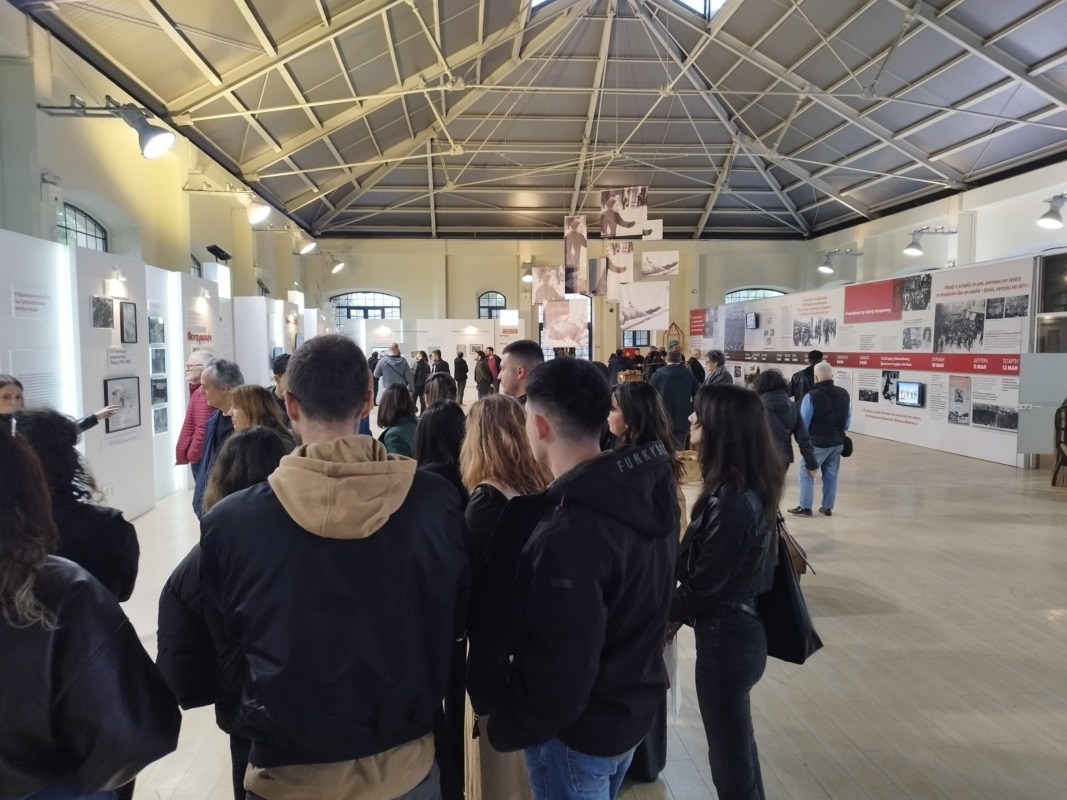
In the building of the old slaughterhouse (Labattoir), the Party Organization of Central Macedonia of the KKE inaugurated the historical exhibition dedicated to the 90 years of the events that shook Thessaloniki, turning it for days into a field of social conflict, mourning and collective claim.
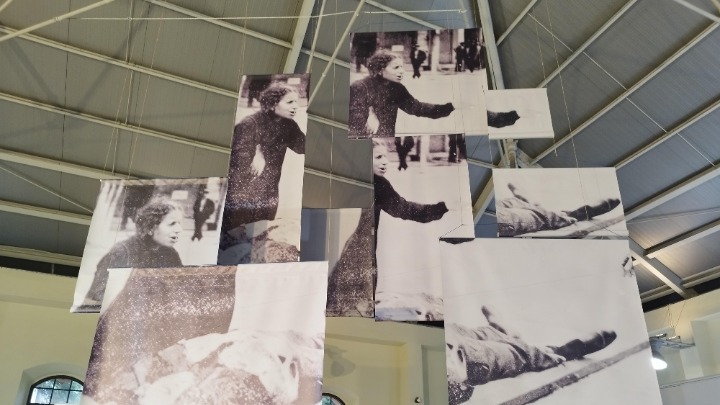
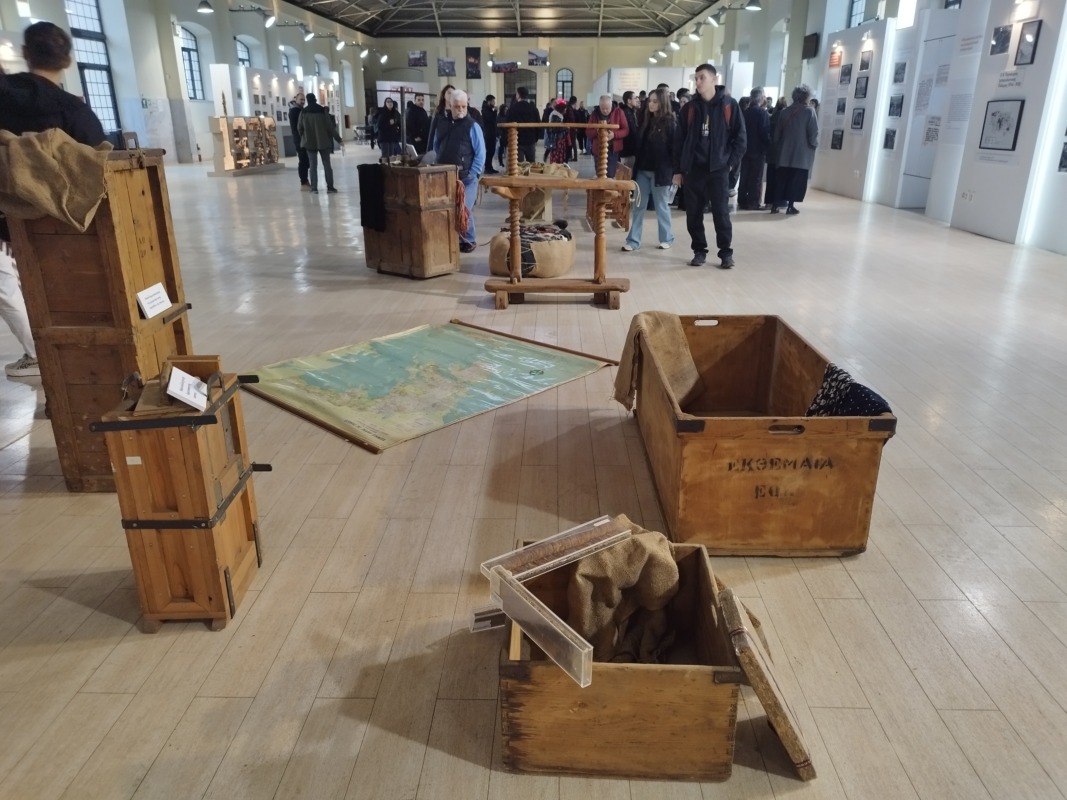
The report, stressed the Secretary of the Central Macedonia Region Committee of the KKE and member of the Central Committee Secretariat, Thanasis Christides, is not limited to a simple list of photographs. It is a multi-layered experience, with archival material, rare documents, exhibits from the Kavala Tobacco Museum that depict the working conditions of tobacco workers, audio clips, videos and interactive applications, which compose a narrative that brings the visitor as close as possible to the climate of the era.
«It was a big strike that started with the tobacco workers and became a case of the whole city», Christides said, stressing that the memory of those days serves as a source of inspiration for today.
The reasons for the development of the struggles that led to May ’36 must be sought months before the uprising.
From January to March 1936, strikes broke out all over the country, with more than 200,000 demonstrators.
On 22 March, tobacco workers present their demands in an organised way and the tobacco merchants respond with a lockout, leaving 1,600 workers on the street.
On 5 April, 24 unions gather at the first Tobacco Workers' Union Congress, forming a common front with demands for increases, sanitary conditions at workplaces, processing of tobacco within the country and the establishment of rights.
Tension peaks at the end of April. On the 29th, 12,000 tobacco workers in Thessaloniki - including 7,500 women - go on strike. The strike wave spreads in the following days: Serres, Volos, Drama, Xanthi, Kavala follow.
On 30 April, the strike spreads across the country. A large movement of solidarity with the strikers develops. Strikes are prepared by the unions of builders, electricity, leather, artisans and barbers. Students are also actively involved in the workers' struggle.
May Day becomes a resounding nationwide workers' pulse that permeates the whole country. Ten thousand workers demonstrate in Athens-Piraeus and twelve thousand workers in Thessaloniki.
On 2 May, the strike continues and spreads to Agrinio, Komotini, Samos, Sidirokastro, Prossotsani, Nigrita, Lagada, Siatista, Karditsa and Piraeus. Thessaloniki, however, is the city of concern, because the strike is supported by a wide range of workers in other sectors.
The press of the time writes on May 5 that «the rubber-strike continues in the Eden and Macedonian factories and is about to break out in the employer's third factory and “the labour inspector still does not want to intervene”. The machinists at Hadjidimula also went on a work stoppage and went on strike the next day because their employer insists on keeping one day's wages as a guarantee. At the same time, the strikers are demanding a wage increase.
And on May 4, 40 chair workers demanded with their strike «9 drachmas for green chairs and 5.5 drachmas for white chairs». Of these, 10 went back to work after their demands were accepted.
In the next few days, the climate gets even heavier.
At the Administrative Court of Thessaloniki, the Governor General of Macedonia, Pallis, together with prosecutors and police officers, tries to warn openly that «the state will be imposed», because the national product is at risk. The police are even escalating their attacks on tobacco workers' unions. In one such attack, the worker Sophia Konstantinidou was seriously injured.
On 6 May, the police attacked the strikers with great violence, and organised fascist groups appeared on the streets to act against the strikers. On 7 May, the then Prime Minister and, after a few months, dictator, Ioannis Metaxas, passes through Thessaloniki and gives a clear order.
On Saturday 9 May, the most dramatic page is written. The great all-worker strike begins. More than 30,000 strikers flood the centre. On the march to the Governorate, the police, on the orders of Police Commissioner Dakou, open fire. The motorist Tasos Tousis is killed. Shortly afterwards, others. Among them was Anastasia Karanikola, trade unionist and member of the KKE.
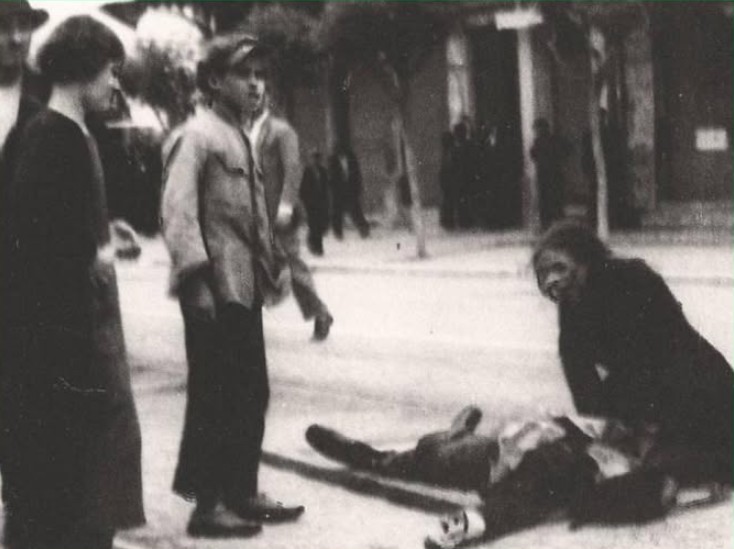
The photograph of Toussis« mother, bent over the body of the first dead man, will make the rounds of the country and inspire Yannis Ritsos to write »in only three days and nights« the »Epitaph". Chaos ensues. The policemen are confined to their stations as the river of strikers swells with feelings of anger and indignation for the victims of the struggle.
For about 36 hours, Thessaloniki is paralysed and virtually under the control of the strikers. Soldiers from Thessaloniki, descended from families of striking workers, refuse to shoot and join the crowd. The next day, on 10 May, Rizospastis writes on its front page about thirty or even fifty dead.... The dead will eventually be fewer, thirteen, but the wounded more than two hundred. At the funerals of the victims,which take on a mass character, 150,000 people attend and sing the “Funeral March’.
But the government urgently wants to suppress the revolt, because its messages are now beginning to disturb the rulers and employers, who see production being lost and devalued and their profits disappearing.
On 11 May, military reinforcements from Larissa arrive in Thessaloniki and a massive wave of arrests begins. In this climate, the Enotic GSEE, after persistent efforts by the KKE, announces a nationwide strike for the next day. On 13 May, the response comes nationwide: around 500,000 workers go on strike, while in Thessaloniki alone 150,000 people flood the streets.
«The heroic May ’36 shows the power of organized struggle and gives valuable lessons for today,» said Thanasis Christides, saying that the exhibition aspires to convey this experience to the new generation through modern means.
The exhibition was visited by the Mayor of Thessaloniki, Stelios Angeloudis, who congratulated the organizers for the initiative and noted that «this is an important exhibition that highlights a crucial moment of the labour movement and its close connection with the history of the city».
KKE MP Yannis Delis commented that «the events of May ’36 do not only belong to the past; they are a reference point for the understanding of social conflicts and the demands of every era».
The exhibition will run until 10 May and will be open daily from 9:00 in the morning until 9:00 in the evening, while guided tours will also take place, leading visitors step-by-step through the history of those days.
Fanis Gregoriadis