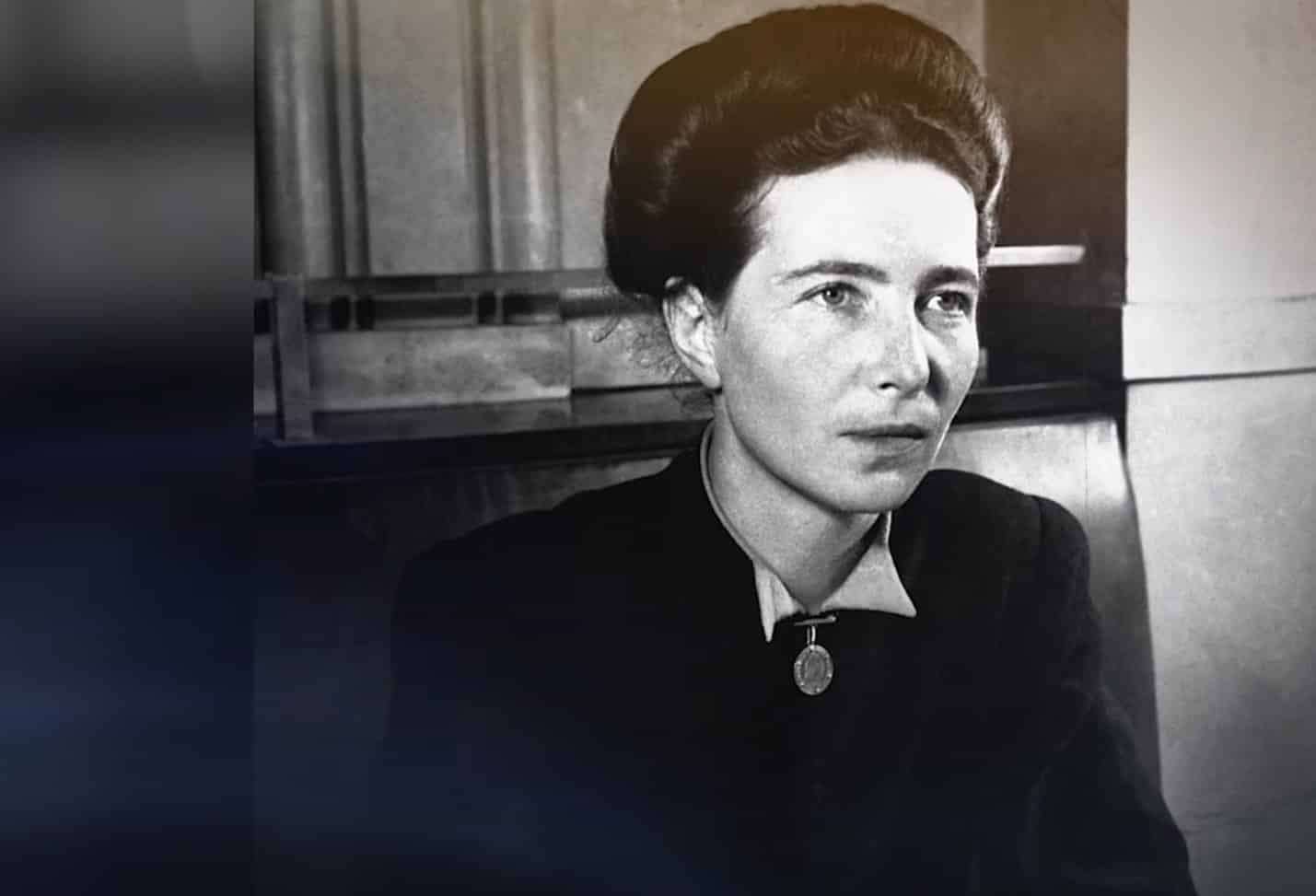
The narrative begins with an interesting story: «One day in 1927 the Simone de Beauvoir had a disagreement with her father about what it means to be in love. At a time when society expected women to primarily seek marriage and motherhood, 19-year-old Simone was reading philosophy and dreamed of finding a philosophy school she could attend. Her father claimed that to fall in love was to ”offer service, affection and gratitude.” But she disagreed, arguing with a certain sneer that love was more than gratitude -not something we owe someone because they did something for us. ”Many people,” Beauvoir wrote in her diary the next day, ”have never known love!”».
Simone de Beauvoir (1908 - 1986) is considered one of the most influential intellectuals of the 20th century. As symbol of women's liberation, inspired and scandalized her generation through her unconventional relationships.
As philosopher and Author, won major literary awards and changed the way we deal with gender issues with her book «The second sex». Despite her successes, however, she wondered if she was underestimating herself.
Although her relationship with Jean-Paul Sartre has been recorded in the legendary love affairs of the last century, for Beauvoir had its cost, as for decades remained in the shadow of the existentialist philosopher.
«Beauvoir saw herself as a process of evolution that never stopped. Time passes, dreams change. But if there is one thing we can learn from her life, it is this: No one evolves alone, no one becomes herself alone.».
In recent years diaries and letters have come to light that reveal the ingenuity of her own philosophy and the place of the other lovers in her life.
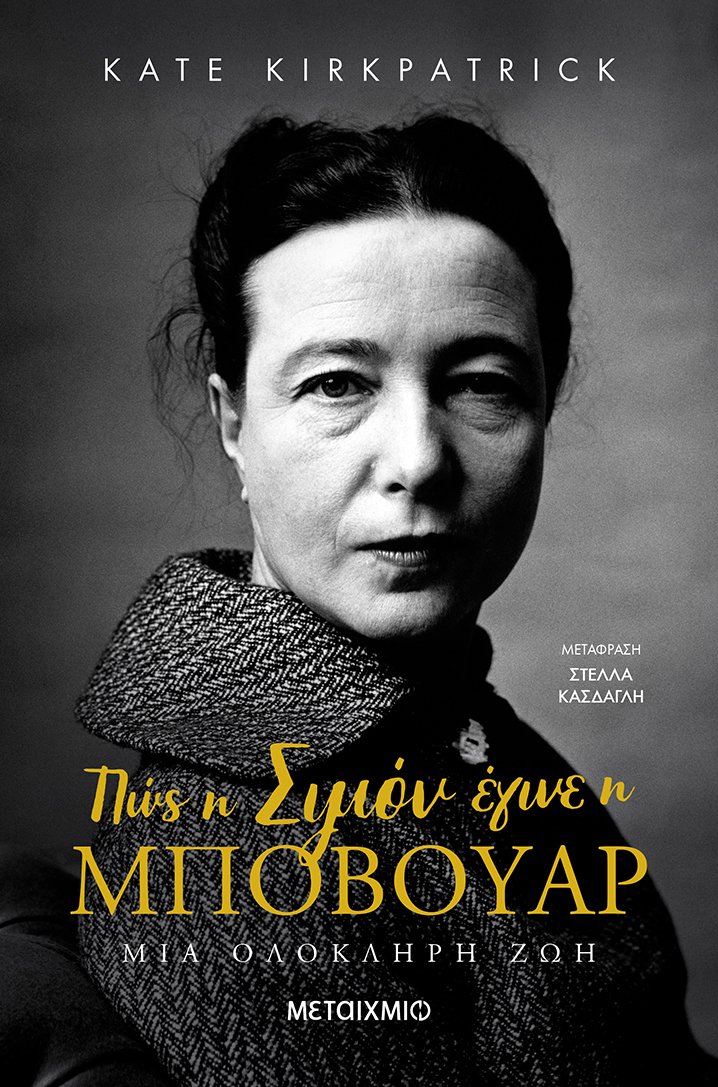
Her new biography «How Simone became Beauvoir: A whole life» of Kate Kirkpatrick (Metamihmio publications, translation Stella Kasdagli) Retrieved from material from unpublished sources to tell the fascinating story of how Simone became Beauvoir, the woman who still challenges and inspires today.
Kirkpatrick, who teaches Philosophy and Christian Ethics and is also Director of Philosophical Studies at Regent's Park College, Oxford, has written several books on the lives of Jean-Paul Sartre and Simone de Beauvoir.
In this subversive biography that begins with the introduction - the question «Who is Simone de Beauvoir?» and concludes with an epilogue also asking «What will become of Simone de Beauvoir?», Kirkpatrick reexamines the life and politics of this great woman with new tools -«this is the first biography of her that draws from the history she did not reveal herself»- while explaining how her public persona was shaped to the point of distortion by two stories she recounted in her memoirs.
«... Beauvoir lived a legendary life: she was worldly and her path had crossed that of Picasso and Giacometti, Josephine Baker, Louis Armstrong and Miles Davis, not to mention the monumental number of legendary figures she had met in 20th century literature, philosophy and feminism. Charlie Chaplin and Le Corbusier came to parties in her honour in New York [...] But without philosophy, Simone de Beauvoir would not have become Simone de Beauvoir, and this is important for two very important reasons: because the myth that Beauvoir was a pupil of Sartre has been perpetuated for quite a long time now, and because their disagreements and their constant discussions formed a huge part of her own path to self-realization.”.
«Beauvoir is buried next to Sartre in the Montparnasse Cemetery, with her red turban, red robe and Algren's ring. He has been honoured by groups all over the world, from the Socialist Party of Montparnasse to universities in America, Australia, Greece and Spain. At her funeral, the crowd sang the words of Elizabeth Badinter: ”Women, you owe her everything!”.
They may have spoken with the exaggeration that mourning lends, but Beauvoir was the first to admit that some women found her ideas ”strange”. Just days after her death, the last prologue she had written for a novel entitled Mihloud. The book told a love story between two men, which touched on issues of sexuality and power. Like many other stories to which Beauvoir had lent her name in this way, it was dangerous to make it public: the Holocaust, the torture and rape of Algerian women, the struggles of feminism, the alienation of a charismatic lesbian, all these were aspects of humanity that many found difficult to see in person.».