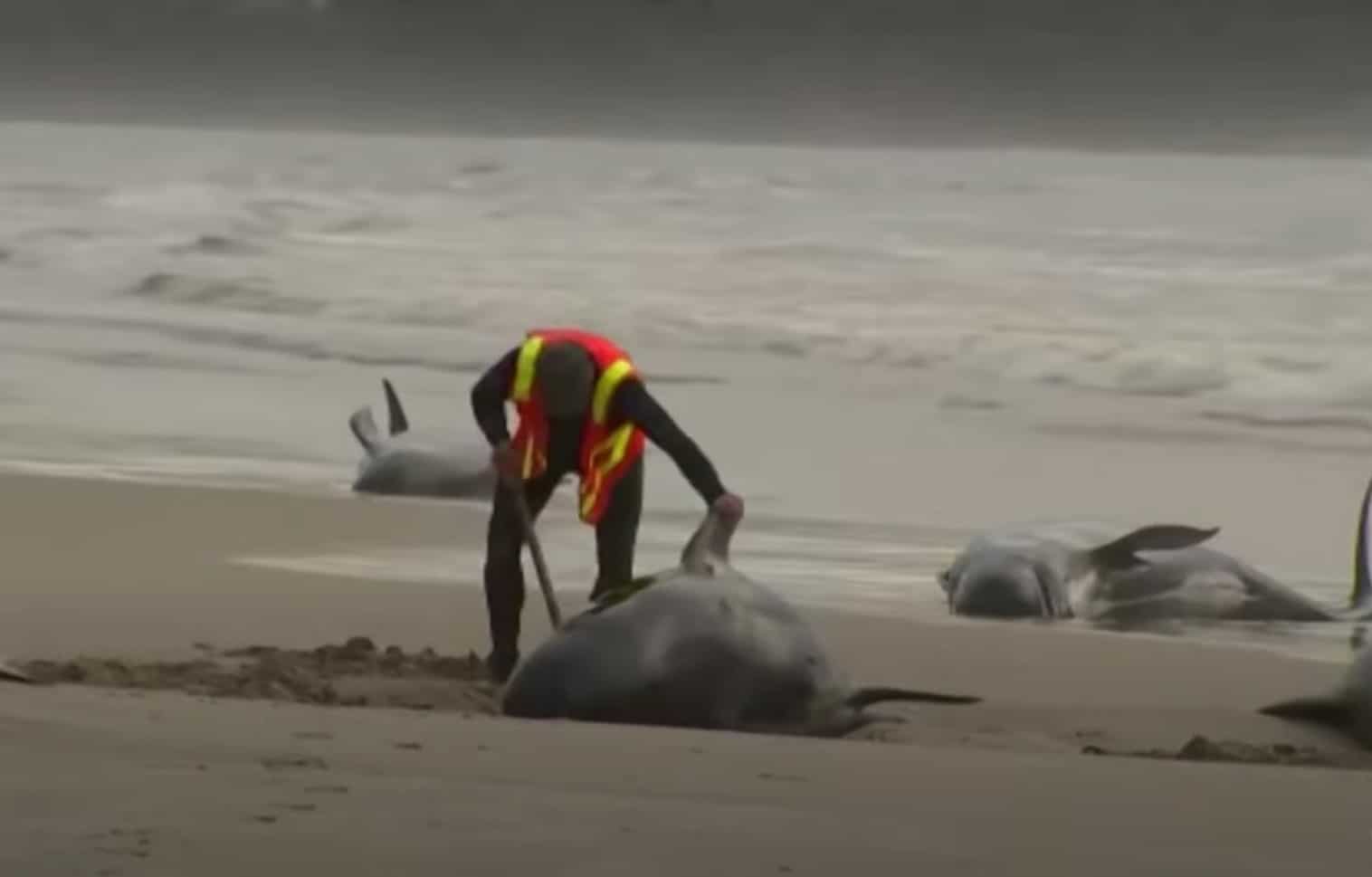
Around 200 pilot whales have died after becoming stranded on a beach in Tasmania, South Australia, two years after a similar incident also occurred on the west coast of the island.
Only 35 of the approximately 230 whales spotted on the beach yesterday (Wednesday) are still alive, said Brandon Clark operations director of the state wildlife agency.
Images taken show dozens of black cetaceans along a huge sandy beach at Ocean beach.
«There are still about 35 animals alive on the beach and this morning the main objective will be to rescue and release them,» added Clark who is leading the operations.
«Unfortunately, the mortality rate in such incidents is increased. It is mainly due to the conditions prevailing on Ocean beach,» he stressed.
The inhabitants had covered the cetaceans with blankets and sprinkled them with water to keep them alive.
The whales were stranded near Makari harbour, where another similar incident involving almost 500 cetaceans occurred about two years ago. More than 300 whales had died then, despite the efforts of dozens of volunteers who battled for days in Tasmania's icy waters to free them.
Clark estimated that conditions are more difficult this year than two years ago because the whales were «in much more protected waters» then.
Rescuers have been examining the cetaceans to assess which ones have a better chance of surviving, he added. «Today the focus will be on rescue operations and their release,» he noted.
The causes of these incidents are not known.
Scientists think it may be due to the fact that groups of cetaceans overlap after foraging very close to the shore. After all, pilot whales are very social animals and often follow members of their group as they wander, putting them at risk.