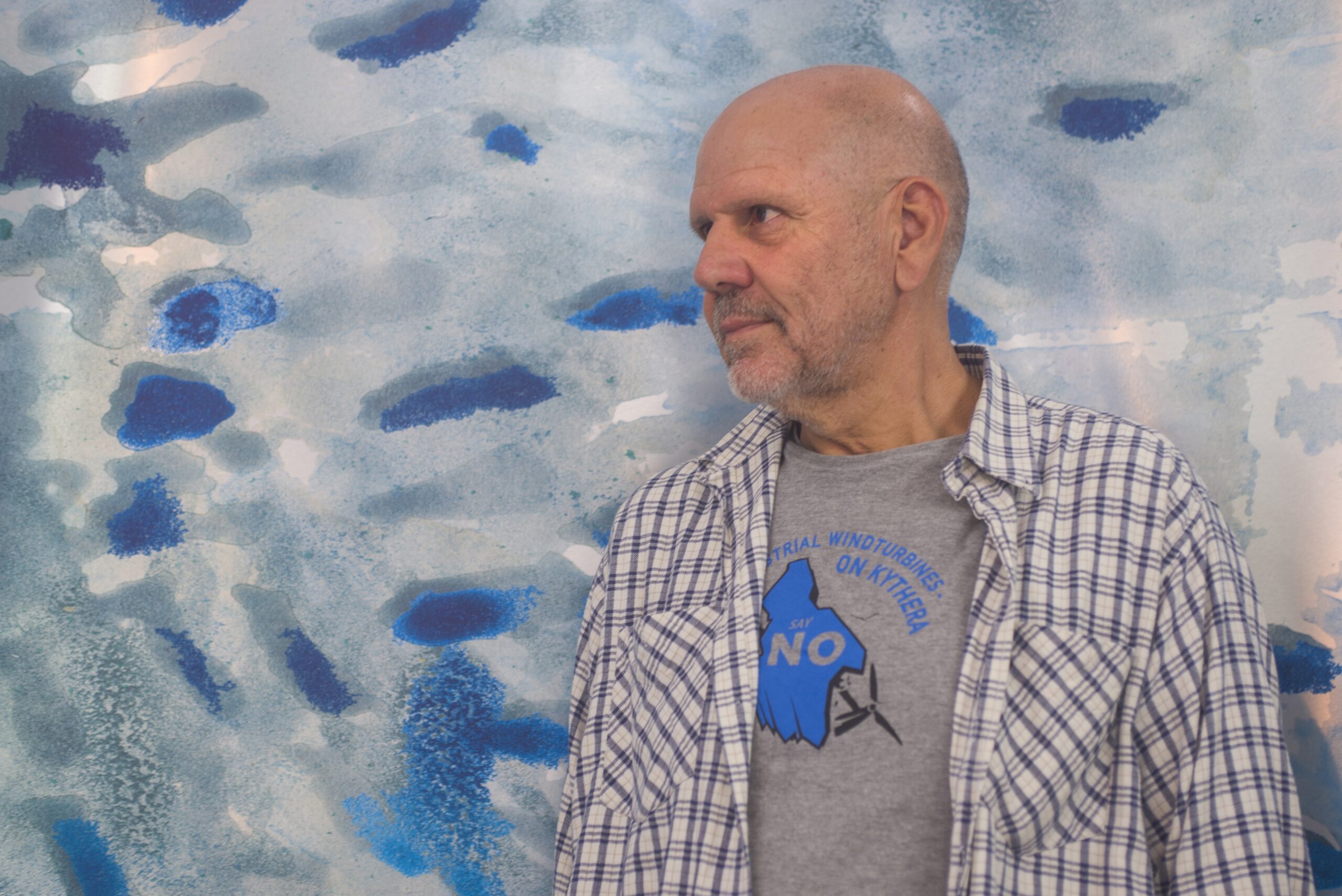
Manolis Charos loves literature almost as much as he loves painting. The great painter always manages in a way to combine his two great loves and at every opportunity he turns to Greek writers for inspiration.
This time the combination of the two worked perfectly. Manolis Charos presents the exhibition «Dionysios Solomos...two flames...Manolis Charos» in the Makriyannis Wing of the Gennadius Library and the result is impressive.
Manolis Charos« visual art works and the selection and presentation of texts published with engravings in contemporary bibliophilic publications (artist book), as well as works of mixed techniques in large dimensions, invite the public to visit and reconsider the youthful work of D. Solomos. In particular, the Dialogue and a series of lyric poems from the early period. These works have been the subject of extensive commentary, mainly as evidence of Solomos» linguistic ideas and his 'apprenticeship years'.
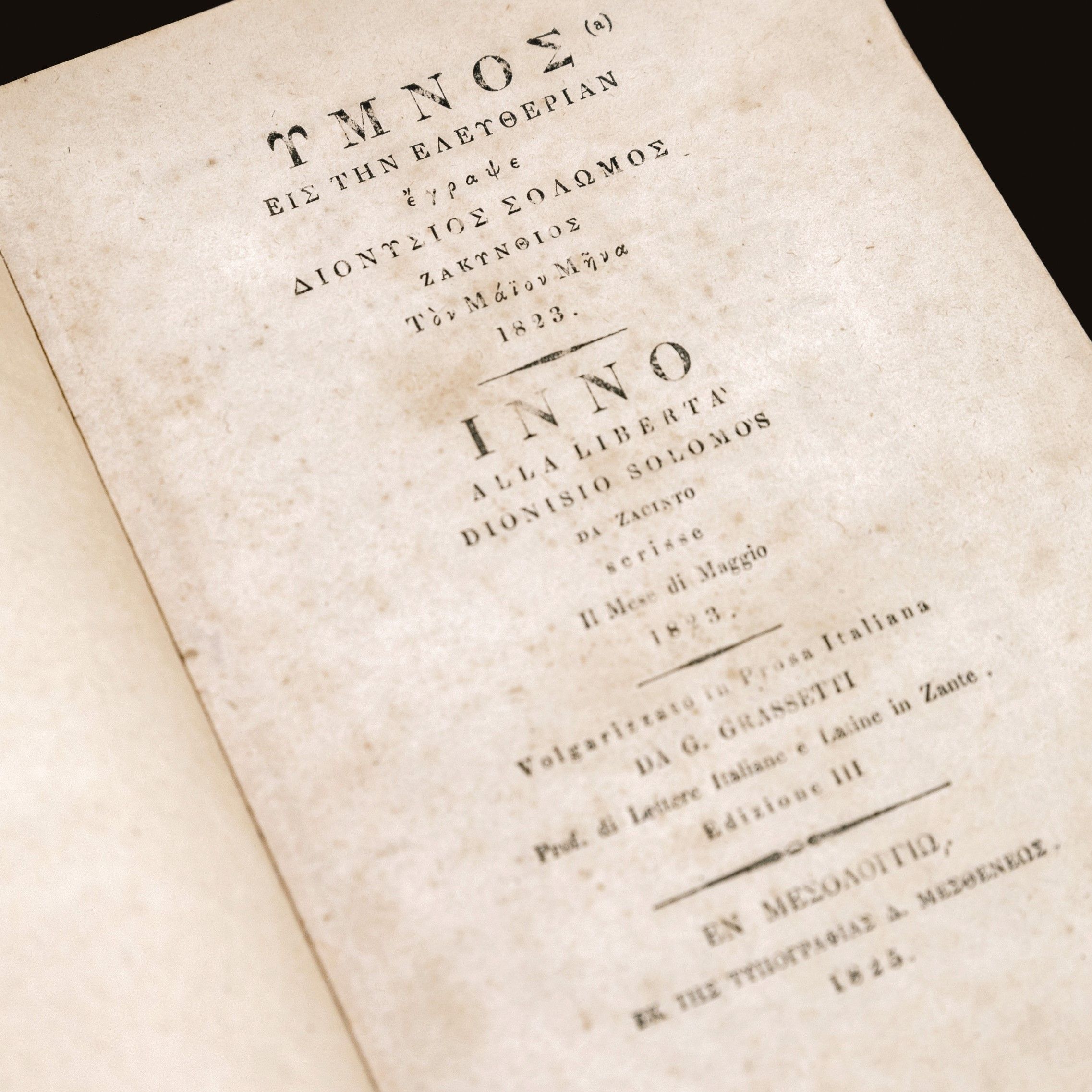
The aim of the exhibition is to place these works in the wider artistic and intellectual context of the era and to propose a new reading of the themes of the revolution, individual artistic creation and the creation of new collectives. In this way he presents Solomos, already from his early years after his return to Zakynthos, as a major poet of the Age of the Revolutions, creating a dialogue with contemporary artistic events and concerns.
Manolis Charos spoke to in about Dionysios Solomos and the revolution today.
What will the visitor see in the exhibition?;
The visitor will see a series of artworks that came from my engagement with the work Dialogue by D. Solomos. Starting to make the engravings for a bibliophile edition (in 80 copies) of Solomos' text and entering into this wonderful text about our language and freedom, I made, in addition to the engravings, the paintings that accompany the edition. There were also three other, bibliophilic editions (33 copies) of three young poems by D. Solomos.
In the exhibition there is also a very special edition (33 copies) of his poem «The Cretan». Finally, the exhibition includes displays of publications from Solomos' era, from the collections of the Gennadius Library, which demonstrate the spirit of the time (Poetry and Revolution) as well as the controversy surrounding the language issue (Freedom and Language), and manuscripts by Solomos from the National Library.
What does the title of the exhibition symbolise for you?;
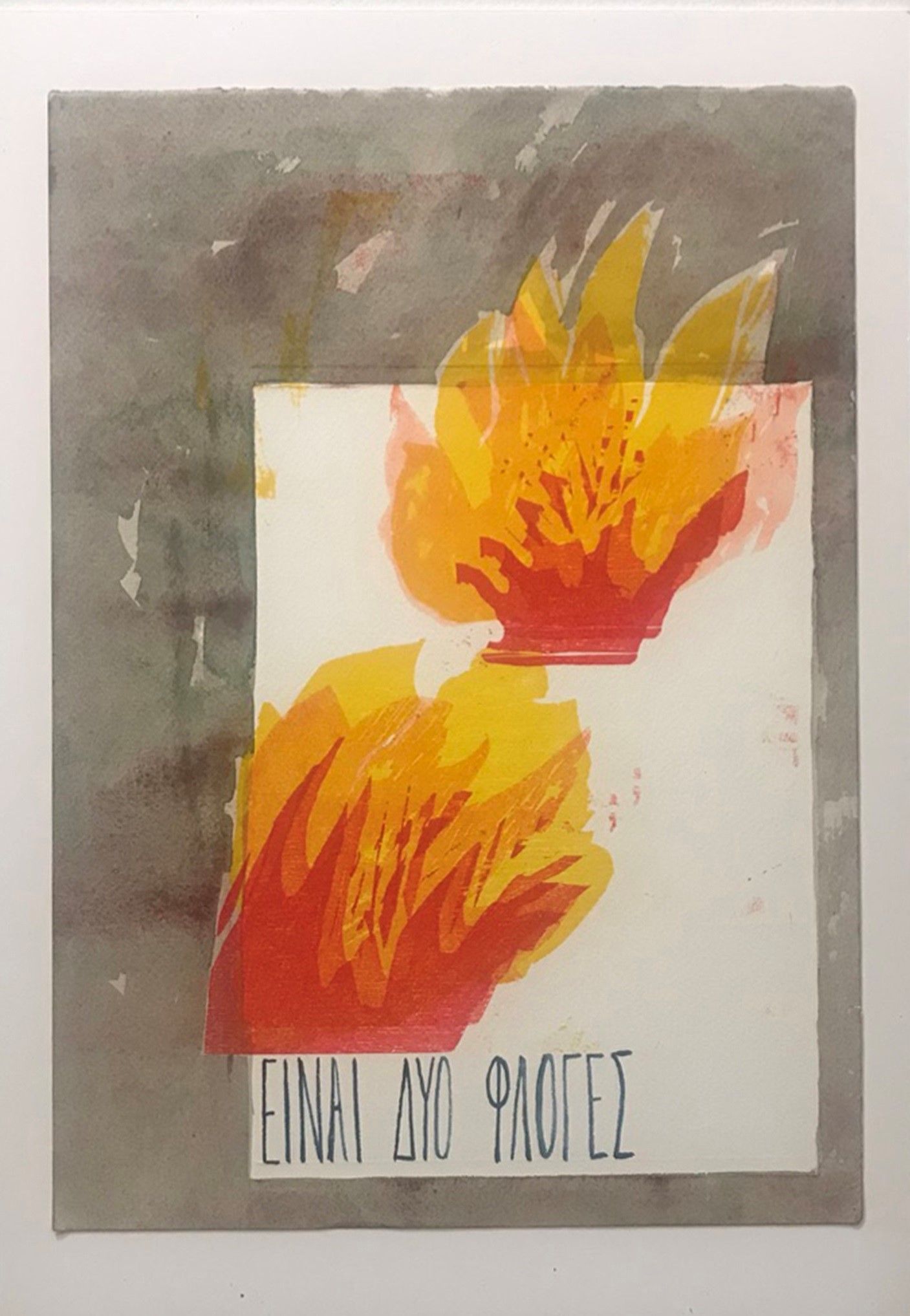
The «...Two Flames...» mentioned by Solomos in the Dialogue «one in the mind, the other in the heart, kindled by nature in some people» is the definition of the driving force for art, for revolution, for every high act of man. And because the whole exhibition, this whole series of works began as a dialogue with the poetic work, but it evolved into something much broader. For me, the flames are the fires that burn in every man, for life, for loves, for what are his beliefs. This burning flame is the real life for man.
The exhibition presents Solomos as a major poet of the Age of Revolutions. What is the revolution today? How is the connection with the now?;
Today, revolution is the resistance to the logic of the mass, of mass consumption, of existence without reason. Today the revolution is the preservation of sentiment, the refusal of cynicism, the concern for the inhuman and absurd things that happen around us, as if they were normal and human.
The movement of the Romantic poets, Romantic poetry, I think for many people is something unknown. Romanticism has been identified with drinking at sunset. But it's not like that in any way. It is the thoughts of people who think, live and die for the ’high«. Who see it in the uprising and serenity of nature and its beauty, in man and his ideas, who actively seek a reason to live and to die. Then in the century of revolutions and now, similar were the themes for both poets and revolutionaries. Human sensibility and voice know no temporal identity.
Tell us about the material you use in your works.
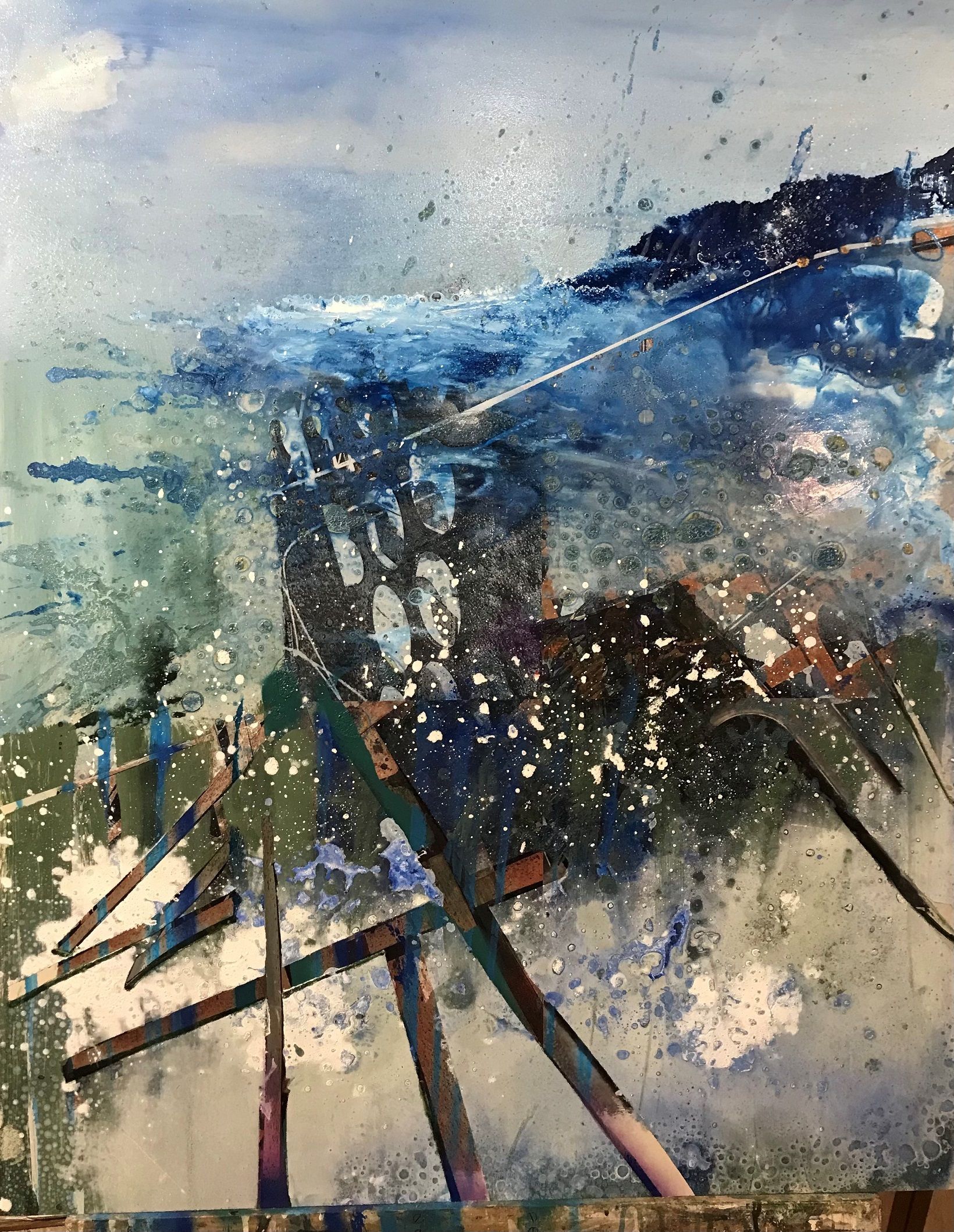
Images, that's what I was always looking for, no matter what medium I used. Painting-characteristic-draft-contemporary digital media. It's all in the hands of the contemporary visual artist. Either original works, which I exhibit and want to keep the feel of the paper, or bibliophile editions, (limited edition prints with inlaid prints). In the very large works, because of their size they impose the rhythm on the space, they are mixed media works and depending on the occasion they are painted on canvas, aluminium or Plexiglas. I think they really show the imagery and the mood I took in from the poetic work. However, always the poet is for me a library book and paper. The Dialogue, the three books of Solomos' three young poems and finally the work on the Cretan, are in my mind visual works that will be housed not on walls but in libraries. The visual arts together with the poetic works are a different coexistence, a different dialogue.
Which of your works stand out and why?;
I would say that I would single out the huge red work, monumental in size, which is like a giant poster from the wall of the streets of Athens. A work on paper and then on canvas, quite complex in its construction, which for me is «Indescribably Bloody». Alive and on fire. A monument, in my eyes, to the fire that exists and burns in some souls, for different reasons.
What are your future plans?;
For the next three months, I really want the exhibition to convey all my longing and love for the revolutionary poet Dionysios Solomos. In October I have an exhibition in Paris and of course the work in the studio never stops.