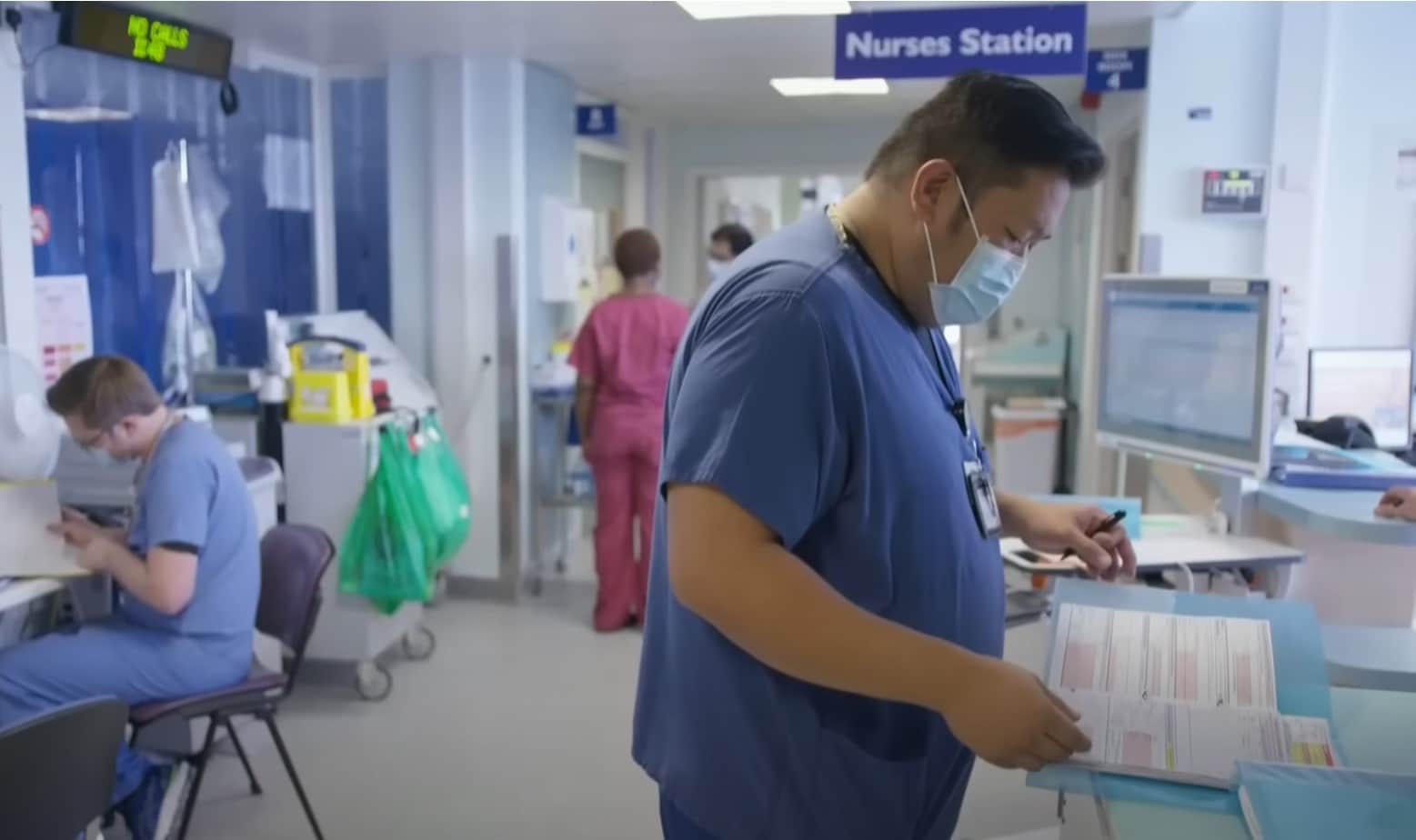
Waiting for care that is getting longer and longer, staff shortages, chronic underfunding and now an unprecedented strike action by nurses. In the United Kingdom, the public health system is blowing its top.
The nurses' strike action from 15 to 20 December - for the first time in 106 years - sheds a cold light on the crisis plaguing the National Health Service (NHS), a beloved institution of the British people, but one that has been brought to its knees after years of austerity, a pandemic and record inflation.
«The winter is expected to be harsh,» the chief executive of the NHS Confederation, which represents England's hospitals, has already warned.
Around 7.1 million people are queuing for care in the UK, a record number for the country.
Austerity
Difficulties in replacing staff who are beyond the point of exhaustion have brought the chronic crisis to a head, at a time when record inflation and recession are synonymous with cuts in public spending.
But the financial crisis adds to a series of problems facing the UK's long-standing National Health Service, an institution created in 1948 and funded by taxes.
Because the system, which costs £190 billion a year (€221 billion) and employs 1.2 million people in England alone, has been underfunded for many years.
According to Richard Sullivan, a cancer specialist professor at King's College London, the NHS crisis has been wrong «for years».
«When you start overheating the engine, you wear it out,» he says, summing up the situation. «I think there are some very difficult years ahead.».
According to health experts, the crisis has been exacerbated by 12 years of fiscal constraints imposed by successive Conservative governments, as well as Brexit (a large proportion of medical staff come from the European Union) and the pandemic, which has imposed delays in non-emergency cases.
Low morale
The cost of living crisis and record inflation in the UK have triggered mobilisations in all sectors of the economy, from transport and justice to the health sector.
«I don't know what to do, I don't know what my colleagues will do,» says Amira, a nurse in London, at a time when real wages are in free fall due to the rising cost of living.
«Struggling to feed their families, they resort to food banks,» he explains.
Nurses are doing chain shifts because of staff shortages created in part by new immigration rules implemented post-Brexit.
The National Health Service in England is facing 130,000 vacancies, including 12,000 hospital doctors and 47,000 nurses.
Nurses normally take on four patients per shift, but they are asked to double the number of patients by doing chain day and night shifts.
«We have only two eyes. Morale is very low,» says Amira.
Collapse
The shortages in hospitals are compounded by the lack of general practitioners. As a consequence, more and more people are failing to get appointments and are resorting to the emergency room.
«I've never seen such an influx of patients who need help they can't get,» says Amira. «There are constant queues that go all the way to the street. The National Health System is on the verge of collapse.».
Underfunded, the NHS is not free from scandals that have followed one after another in recent years and have brought to light inefficiencies and breaches in the day-to-day management of services.
This year, numerous reports have revealed «inefficiencies» in maternity hospitals, inefficiencies that have contributed to the deaths of babies who could have survived if they had received better care.
According to Richard Sullivan, there are no short-term solutions to all these problems and the UK should emulate countries like Denmark and Sweden and abandon a market-oriented health care system.
The sector «needs better organisation, better infrastructure, better leadership and better policies», he concludes.