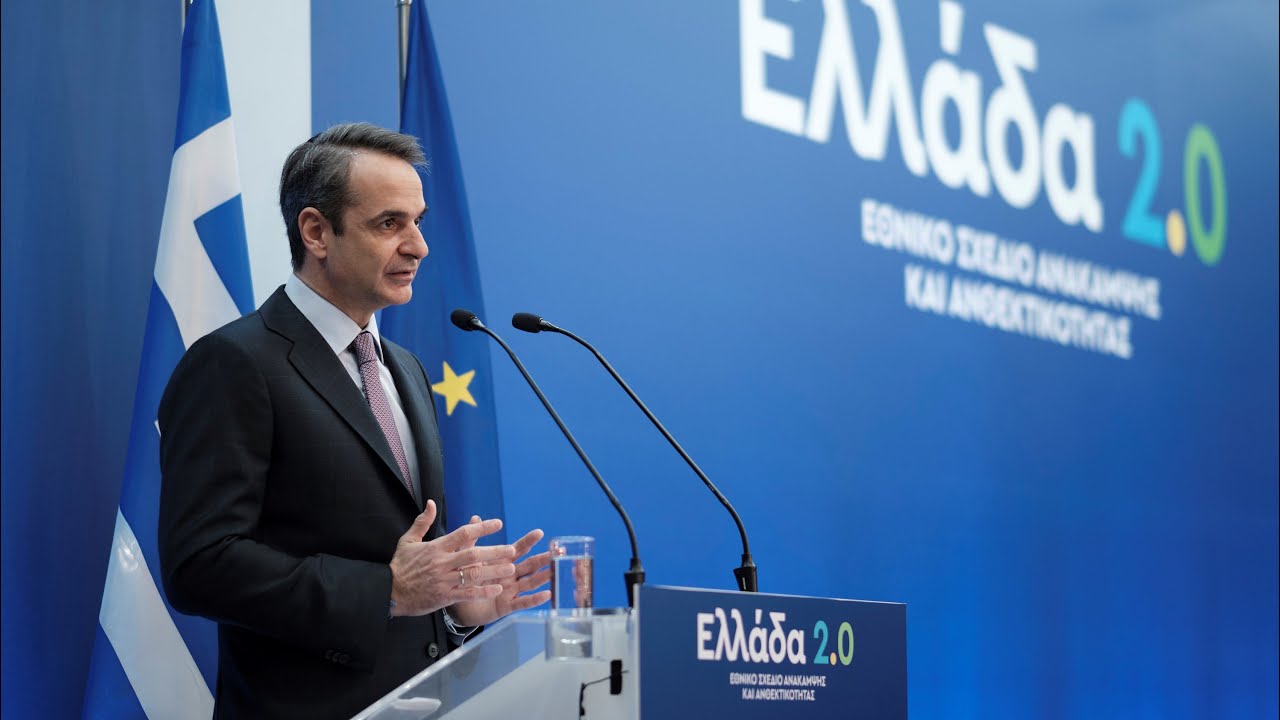
The image of «success» that the government is painting around the Recovery Fund (Greece 2.0) is crumbling spectacularly in the face of the inescapable facts, revealing the very real danger that a historic opportunity could turn into a historic failure. According to Panos Kosmas’s in-depth report in today’s edition of the Journal of the Editors, the government’s narrative conveniently limits itself to recording disbursements, while carefully concealing the harsh reality: the gap between the European fund and the heart of the real economy remains vast.
Eurostat data through the end of 2025 serve as a wake-up call, ranking Greece seventh from the bottom among the 27 countries of the European Union. While total disbursements appear to reach 80%, the percentage of funds that are «used» on paper barely exceeds 55%. Even more dramatic, however, is the picture of actual absorption. The funds that have actually reached the final beneficiaries and businesses are estimated to be limited to a disappointing 40%, while the clock is ticking dangerously fast, with just four months remaining until the program’s expiration at the end of August.
The real scandal, however, lies not only in the delays, but in where the money ultimately ends up. This is an unfolding development tragedy. Instead of these European funds laying the groundwork for a new, productive economy, they vanish without any tangible benefit to society. The disparity is chaotic: when it comes to grants, even a 60% translates into tangible investments and infrastructure. But when it comes to loans, Greece sets an infuriating, Europe-wide precedent. An unimaginable 97% of these loans is lost in a “black hole” of vague “other costs,” which cannot even be classified as normal expenditures. How much of this borrowed money went toward net, new investments or direct support for the real economy? Absolutely nothing.
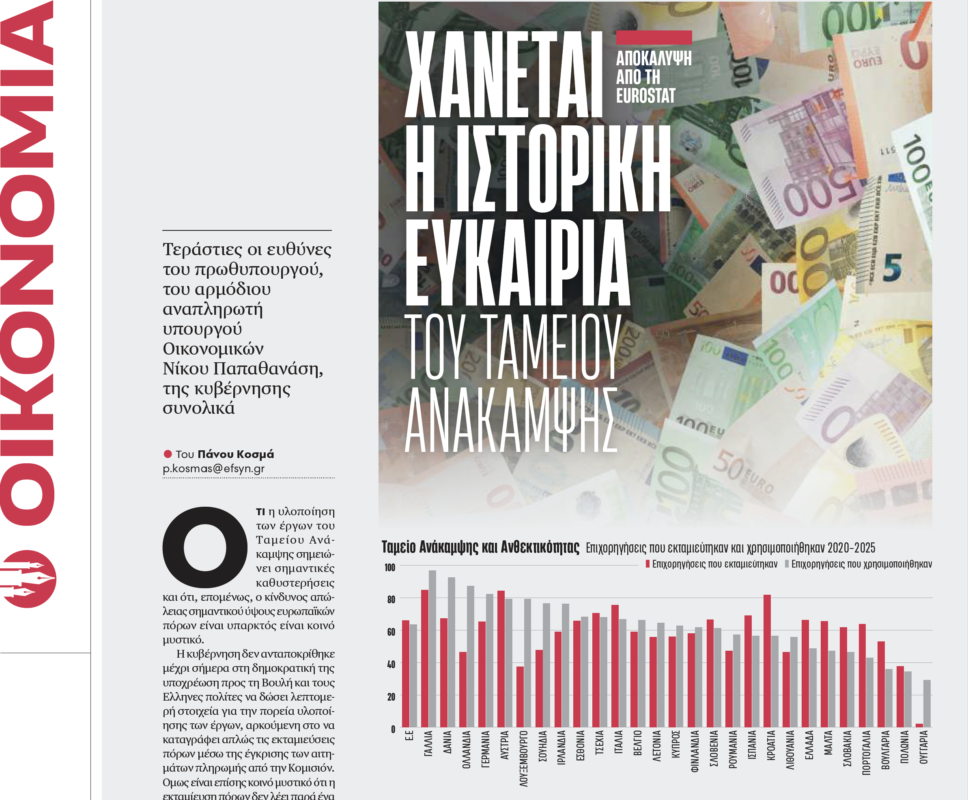
For this glaring failure to make use of such a large sum of money—especially by a country with extensive administrative experience gained through successive NSRFs—the responsible parties can be identified by name. The blame falls primarily on the government itself and the Deputy Minister of National Economy, Nikos Papathanasis. According to the report, a plan was devised to create an overly centralized and strictly controlled mechanism, dismantling the experienced staff to replace them with individuals handpicked by the leadership. The Recovery Fund was treated as an opportunity to serve the interests of «our own people.» Added to this equation of failure is a domestic business class, addicted to a state-dependent mindset and lacking the capacity to lead a technological leap forward, as well as the domestic banking system. Despite their staggering profits and excess liquidity, the banks kept the floodgates of financing tightly shut to the majority of businesses that did not already have a flawless credit profile.
The end result of this short-sighted strategy is a frantic, haphazard distribution of resources at the last minute. Driven by panic over the permanent loss of European funds, the government is now trying to throw money around blindly, simply to use it up any old way before the deadline expires. Even if this desperate tactic manages to slightly reduce the accounting shortfall, it cannot erase the historical fact that an unprecedented opportunity for a radical change in Greece’s production model was sacrificed on the altar of petty political expediency.