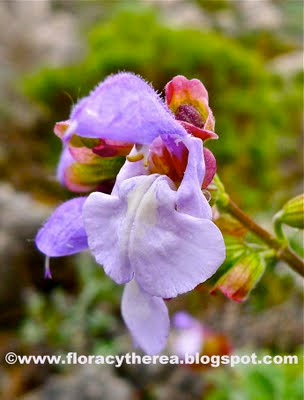
Salvia fruticosa Mill. ( Salvia triloba) L.
The genus Salvia includes about 900 species of plants distributed in the temperate and tropical regions of the world. Several of them, with large, impressive flowers, are grown as ornamentals. In Greece there are 23 native species Salvia with common names such as sage, hawthorn, alyssphalia, alliphacia, verbena, ayannis, gorgogiannis, etc. The most important native species in Greece are Salvia officinalis ( rare ) and the Salvia fruticosa (triloba) (common).The second is probably the elephant of Theophrastus. (see below).
The name salvia was first used by Pliny the Elder and comes from the Latin verb salvare = to save, to rescue. The new Greek word sage is derived by permutation from the Greek word "sage". Sfakomilea = sphakos + melea ( Babiniotis 1998) Sphakos is an ancient word that denoted either sage or a kind of lichen with a pleasant smell but very bitter taste. The word remains in many South Greek dialects ( Crete, Kythera) and usually denotes something very bitter. ( spaka, agriospaka = the bitter laurel in Kythera)
The Arabic saying is well-known now: “Why should a man die when he has sage in his yard?”. The great medicinal properties of sage have been around since ancient times. The Romans called it a “sacred plant”, and believed it prevented death. It is mentioned in Theophrastus, who distinguishes between two species, “sfacon” and “elephascon”.
“And the carcase and the elephant differ as the one tame, and the other wild. For the flesh of the carcass is leaner and firmer and sharper, and the elephant's flesh is coarser.”
Theophrastus On the history of plants, 6,2,5
It also refers to Hippocrates, Dioscorides, Aetius, Galen, etc.
The French hold it in high esteem and use it in various ways in their famous cuisine, as a flavouring in pickles and smoked meats. The Chinese call it “Greek tea” and often consider it superior to their own.