The scientific team of the study consists of Andrew Bevan, Evangelia Kyriatzi, Carl Knappett, Evangelia Kappa and Sofia Papachristou. The excavation took place in the summer of 2000 as a collaboration between the Kythera Island Project (KIP) and the 2nd Ephorate of Prehistoric and Classical Antiquities, under the direction of C. Broodbank and A. Tsaravopoulos.
Summary
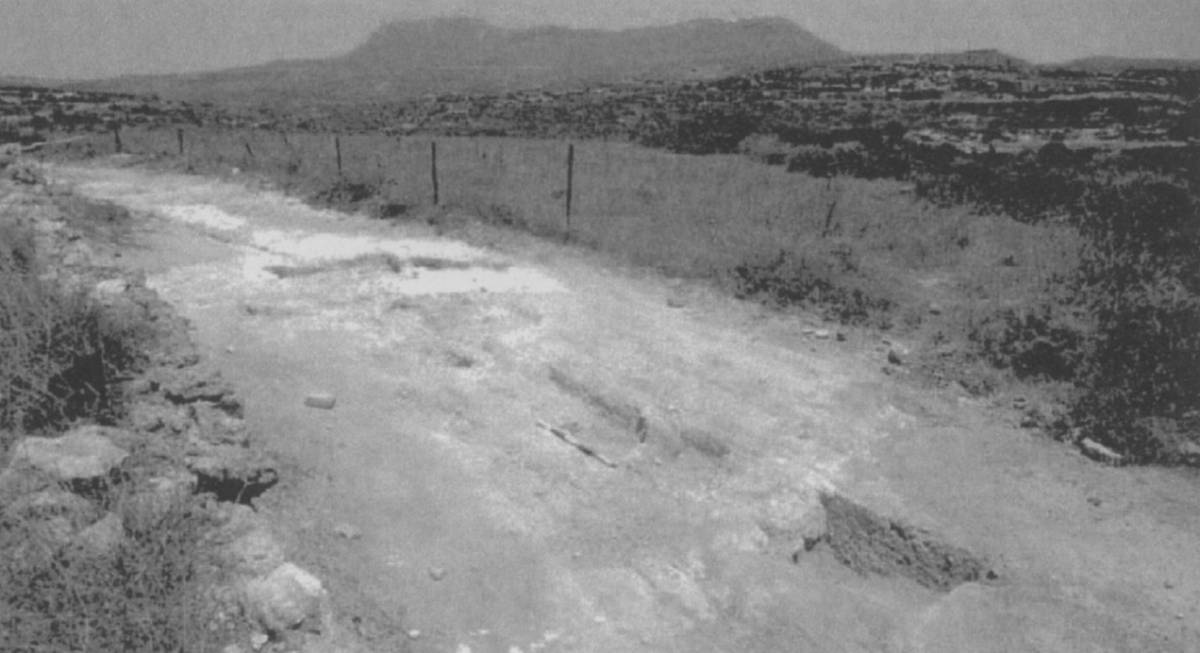
The study presents the results of a short rescue excavation at the site «Tholos», in the area of Kastrios Kythera, which was triggered by the discovery of pottery on the surface of a rural road. The finds, consisting almost exclusively of pottery, indicate that the excavated carvings in the natural rock are the remains of destroyed Minoan chamber tombs of the Neo-Anacostal period. This identification is supported by comparison of the finds with the 1960s excavations by Coldstream and Huxley in the same area.
The pottery assemblage includes more than 250 vases, with the conical cup being the dominant shape (218 of the 259 catalogued vases). The detailed analysis of the conical cups revealed two distinct types (Type A and Type B), which appear to have chronological significance, allowing the deposits to be distinguished into two phases of the Late Minoan period, YM I A and YM I B. Apart from the bowls, shapes such as blossom bowls, bins, tumblers and ring-handled basins were identified, which are typical grave goods of the tombs of Kastri and are rare in the settlement.
Of particular interest is the phenomenon of sacramentalism, as many of the ceramic vessels imitate stone or metal models, indicating a local ideology of social promotion through the copying of precious materials. Despite the absence of human bones, attributed either to later erosion or to the use of specific chambers as storage areas for burial paraphernalia, the survey confirms the existence of an extensive burial landscape along the Kastri ridge. The study concludes that the excavations at Tholos significantly enrich our understanding of the burial practices and material culture of Kythera during the Minoan influence on the island.