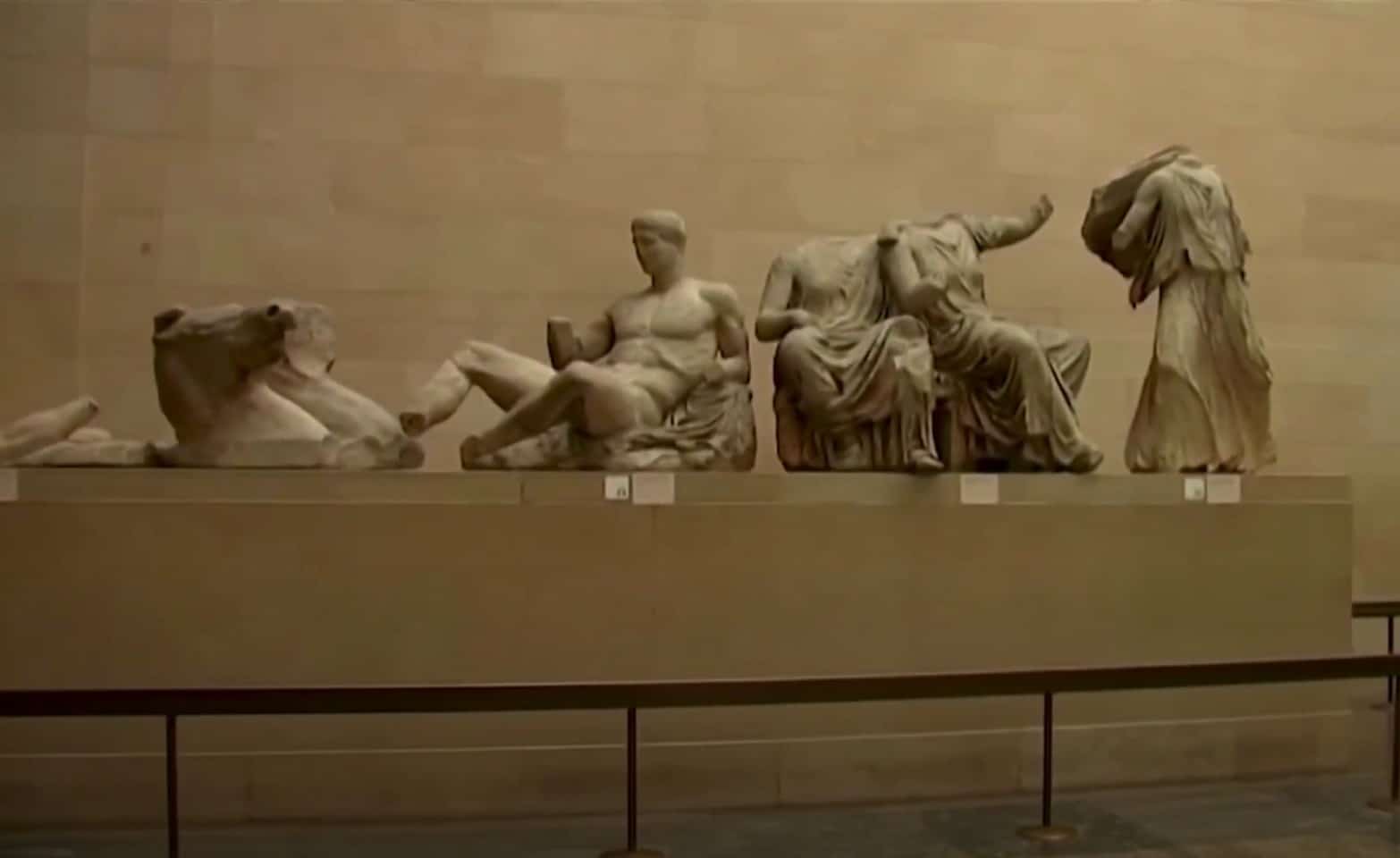
A replica of a piece of the Parthenon Sculptures - carved in the same marble used in the originals 2,500 years ago - was on display in London for the first time on Tuesday and could eventually persuade the British Museum to return the sculptures to the country.
The sculpture is a highly accurate replica of the head of the fourth horse of the chariot of the Moon, part of the collection of marble sculptures by Phidias, made to decorate the Acropolis temple 2,500 years ago. The Chariot of the Moon decorated the right end of the eastern pediment.
The creation of the 3D robot replica reopens the conversation between the UK and Greece about the much-needed return of the Parthenon Sculptures to a new home.
The sculptures that decorated the Parthenon temple were removed and stolen by the Earl of Elgin, Thomas Bruce in the early 19th century, when he was British ambassador to the Ottoman Empire.
The pieces - also known as the Parthenon Marbles - are currently in the British Museum, despite Athens having repeatedly asked the UK to return them.
In an attempt to find a new way to resolve the dispute, the Oxford-based Institute of Digital Archaeology (IDA) used 3D cameras and a giant robot to carve the head of the marble horse of the Chariot of the Moon onto marble provided by Greece, creating a near-exact replica of one of the sculptures.
The IDA team, led by Roger Mitchell, developed 3D robotic machining technology in an attempt to create «faithful replicas of great historical objects».
They believe that the British Museum should exhibit their copy and return the original Marbles to Greece.
The new horse sculpture is now on display at the Freud Museum in London and is no different from the original, according to the IDA.
«It is the product of about 9 to 10 weeks of work in terms of scanning and building the 3D model. Then the robot took over, sketching the sculpture for about 7 or 8 days and then the craftsmen worked on it for 3 weeks to make it perfect. The last 3 to 5% is all the handwork and certainly the most critical,» said Michelle.
The robotic sculptor is housed in a specialised workshop in Carrara, Italy, and could recreate the entire Parthenon sculptures in about 18 months, according to the IDA.
«In this way, the Greeks will be able to recover their cultural heritage and the British Museum will be able to maintain its position as the museum with the largest historical collection in the world,» the IDA added.