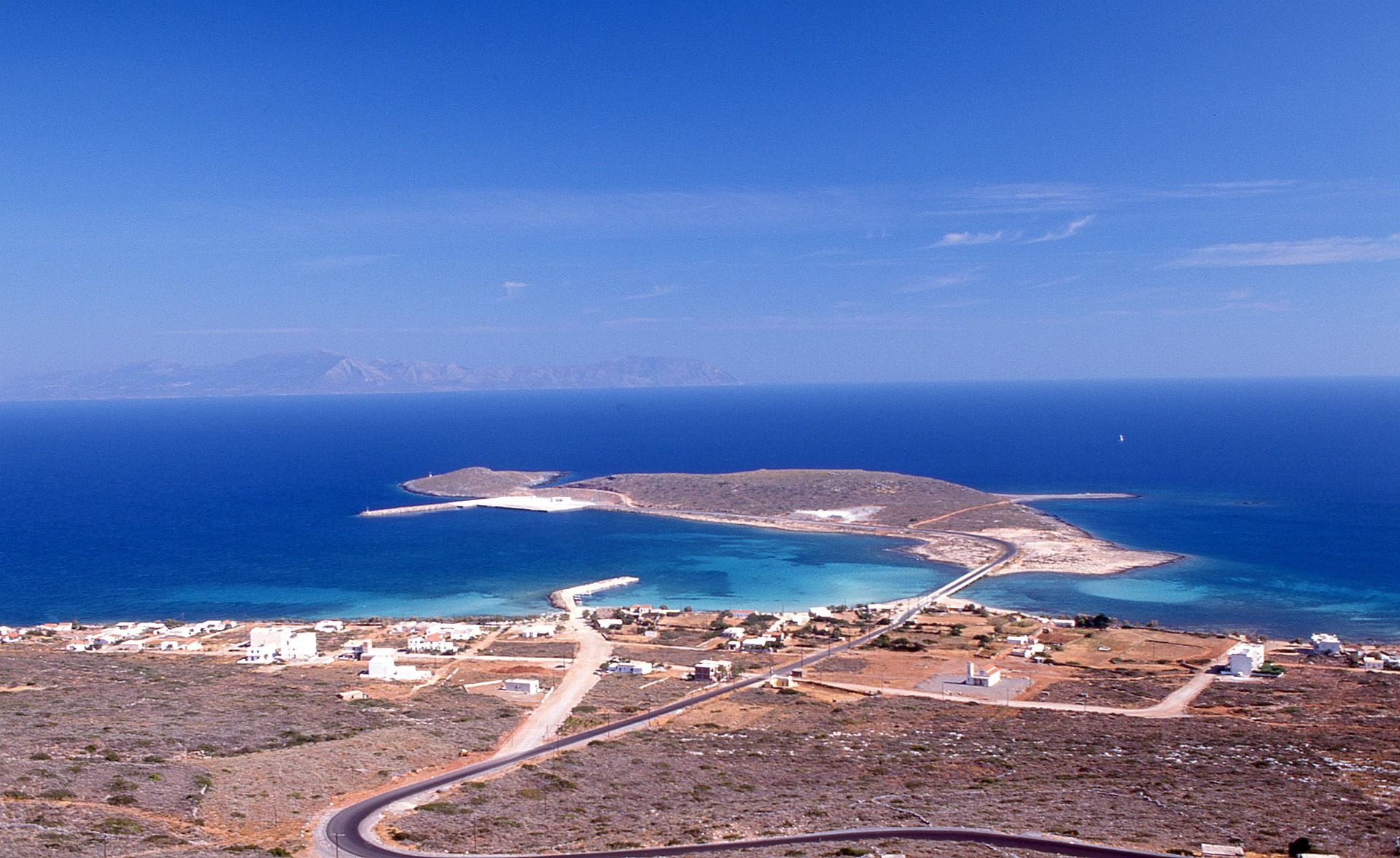
«And Kythera is an island, and Laconia is about to become Maléan.» This passage of
Thucydides describes with «laconic» accuracy the two-dimensional nature of Kythera, a decisive element in all historical periods.
In a theoretical approach, Kythera is an island, that is, it is a landmass that is located entirely within the liquid element, which in their case is the sea, without maintaining any connection with the land. As a rule, an island is inscribed in the geographical periphery of a continental shelf, in this case Laconia. According to these general definitions, islands in general are places that are enclosed, autonomous and to some extent isolated. However, as subsections or fragments of larger spatial areas or sets, islands, especially in the case of the Aegean, are rarely isolated or even self-contained. This peculiarity, the so-called «insularity», the ambivalence between identity and otherness, autonomy and heteronomy, isolation and communication, characterise the nature of islands. In this context, and if historical conditions are favourable, islands thrive, participate in events, develop their own cultural languages, but never actually manage to escape their nature. Kythera is considered to this day to be the spatial extension of Laconia to the south. They were the ones that essentially sealed off the deep Laconian Gulf from the south. This was, after all, their main defining element according to ancient writers and geographers, their proximity to the opposite coast. This geographical element also determined the fate or history of the island.
Read below the full study by Dimitris Sourlas.
Dimitris Sourlas is Dr. of Classical Archaeology, University of Athens, Archaeologist of the Athens Ephorate of Antiquities
Full Copy