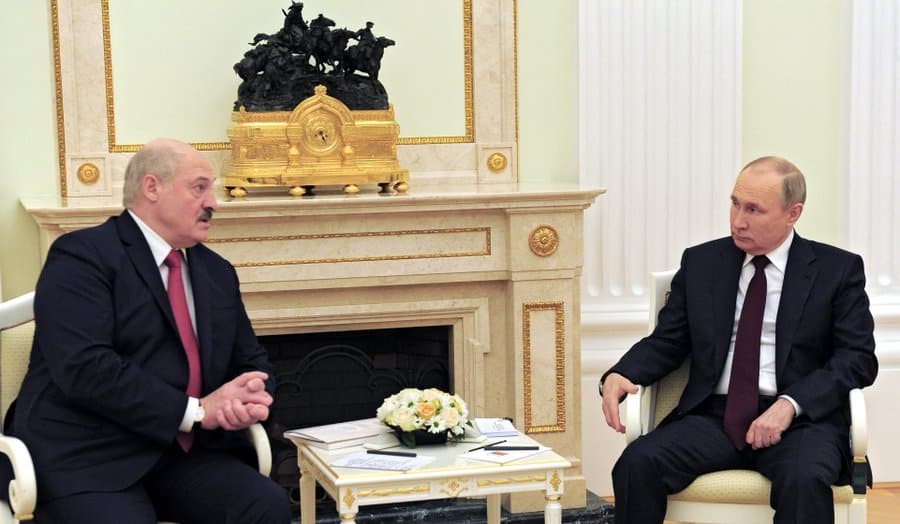
Lukashenko and Putin meet today at the Sochi Black Sea, amid the storm caused by the hijacking of its aircraft RyanAir from the scheme of Belarus, which has led to the adoption of a series of measures causing the international isolation of Minsk, while the International Civil Aviation Organization (ICAO) is conducting an investigation into the Belarusian action.
Aleksandr Lukashenko will be officially received at the Russian president's summer residence to discuss «integration» between the two former Soviet republics and «joint, mainly economic, projects», at least according to the Kremlin's website.
Although the tone was set yesterday by Sergei Lavrov who warned the West «to stop demonising those it doesn't like» and Kremlin spokesman Dmitry Peskov, who endorsed the Belarusian regime's claims about the absolute legitimacy of the diversion of the RyanAir aircraft due to a bomb threat, the unpredictable Lukashenko remains a major headache for Moscow, an unreliable and problematic ally.
Minsk is highly economically dependent on Russia, owing much of its income to its geographical position as a transit zone between Russia and the European Union. Taking advantage of this very geographical position, Lukashenko has for decades been manoeuvring between East and West, sometimes turning towards Moscow and sometimes cultivating its relations with the European Union and the USA.
In the present crisis, Russia is rushing to the aid of Belarus, but it is not obvious that their interests are converging.
Vladimir Putin may not be indifferent to threats from Brussels to impose a new package of sanctions against Minsk, which would probably affect the transit of Russian gas through Belarus.
Moscow seeks to expand the Russian zone of influence in Belarus through the long-term plan of unification of the two countries. But the mood of Aleksandr Lukashenko, who has invested in imposing an iron fist for his survival, is not necessarily favourable to a plan that would undermine his power.