
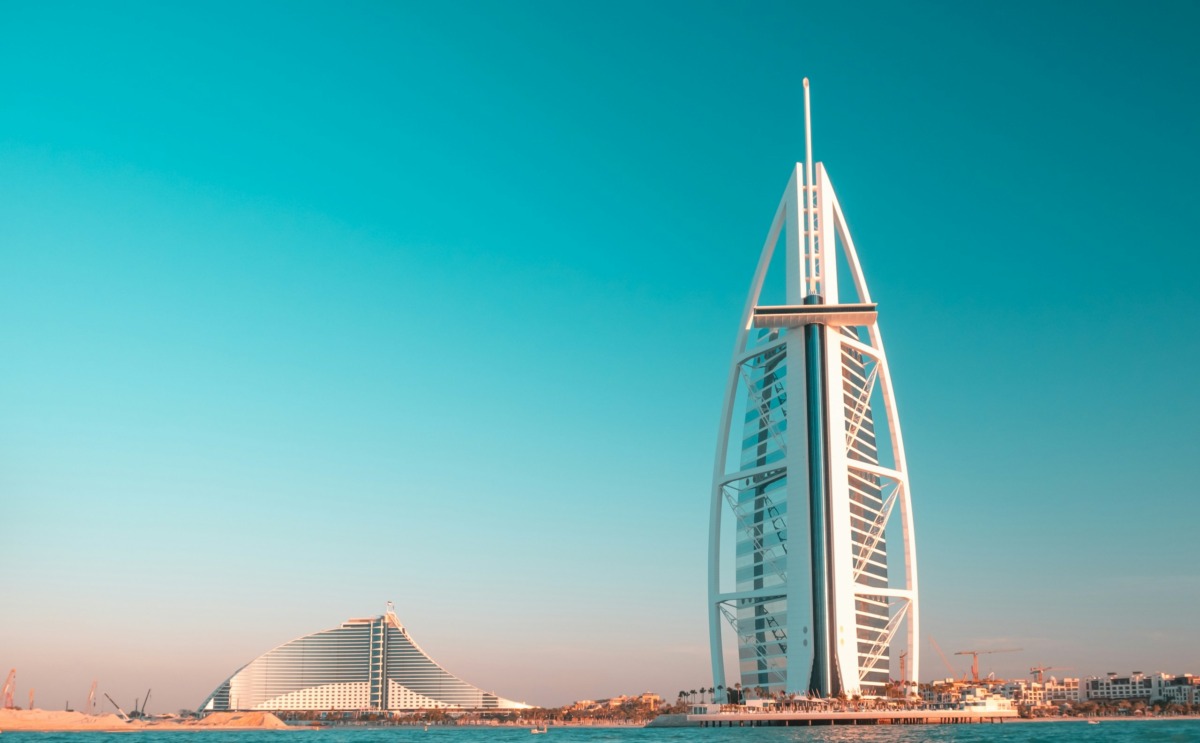
There is an old, deep bourgeois delusion that history happens elsewhere. On the periphery. In the «unruly» South. In the distant Middle East, in the Persian Gulf, in the dust of Mesopotamia.
Where wars are, supposedly, something of an exotic spectacle for the news and think tanks. Something like a reality show of geopolitics.
Except that the war has one bad flaw, it doesn't read economic analysis.
And suddenly we discover that a few cheap drones can stop airports, paralyze ports and bring down the energy stock market. Globalization, this miracle of technology and the market, has turned out to be also the globalization of vulnerability.
The same roads by which goods travel, crises travel.
What is burning today is not just a region of the planet. It is the very fantasy of capitalist immortality that is burning.
For decades the world of oil and financial speculation has built an artificial Eden in the Persian Sea. Skyscrapers that seemed to grow out of the sand. Palm-shaped islands. Airports-hubs that looked like space stations.
The miracle of globalisation.
Only this miracle had one small detail, it had no communion.
In most emirates 80% of the inhabitants are temporary workers. People with no political rights, no roots, no future. Modern proletarians of the global market.
Luxury skyscrapers are literally built on top of armies of migrants from Bangladesh, India, Pakistan and the Philippines.
But that never bothered the liberal world. Because when exploitation wears a designer suit, it's called «development».
Modern capitalism does not create cities. It creates «non-places»: airports, malls, resorts, logistics zones. Places where people are not citizens but customers.
And history has a bad habit of returning to where people ceased to exist as a society.
The empire learned this lesson already in the Vietnam War, when it lost control of the image of war and the journalists showed what it means to bomb villages.
Since then the wars have become TV shows. The 1991 Gulf War was presented as a videogame, «precision» missiles, «surgical strikes», digital cleaning.
Except that every «surgical strike» leaves behind a crippled state.
Iraq has been turned into a decomposition laboratory. Libya in a geographical sense without a state. Syria into a global field of proxies.
The method is simple, if you can't control a country, you dismantle its state.
This is not a military failure. It's an economic strategy.
Because broken states produce the most useful product of the world economy, people without rights. Refugees, mercenaries, cheap labour.
The Mediterranean has thus become the graveyard of globalisation. From Libya to Greece, Europe's borders have become the most cynical frontier in the world, where markets are free but people are not.
And now history is playing its favourite game, irony.
The «non-places» of luxury are beginning to resemble the «non-places» of misery.
The skyscrapers of the emirates discover that they have no shelters. The airports-hubs that they are perfect targets. Energy infrastructures that they are glass.
The global economy is proving to be more fragile than thought.
And herein lies the great dialectical irony.
Capitalism has created a planet of absolute mobility, commodities, capital and data travel everywhere.
But with them travels instability.
The same pipelines that carry oil also carry the crisis. The same seas that carry goods also carry refugees.
Globalisation promised a world without borders. What it has created is a world where crisis has no borders.
And so we understand something simple.
Hell is not somewhere far away in a deserted corner of the Middle East. Hell is embedded in the very system that created these wars.
A system that can no longer expand without destroying. That cannot rule without destroying.
And that is why the future he plans is simple, a few pockets of luxury in a decaying planet.
If this reminds you of an empire, you are not mistaken.
The difference is that the old empires conquered territory. Today's empire destroys societies.
And then he sells the reconstruction.
That's how modern history works, first the world burns and then the investors come in.













quite rightly.
And just to put it in numbers somehow:
The 6 countries that make up the GCC (Gulf Cooperation Council, Bahrain, Kuwait, Oman, Qatar, Saudi Arabia and the United Arab Emirates (UAE)) are home to around 62 million people.
Of these, 35 million, more than their total population, are foreign workers, mainly from South Asia.
Distribution of countries of origin:
India: 9.1 million
Bangladesh: 5 million
Pakistan: 4.9 million
Egypt: 3.3 million
Philippines: 2.2 million
Yemen: 2.2 million
Sudan: 1.1 million
Nepal: 1.2 million
Syria: 694,000
Sri Lanka: 650,000
Panagiotis does not write them from his glove. He knows and he writes them very well.