As natural gas prices have skyrocketed along with electricity and oil prices, many households in Greece and the rest of Europe have turned to firewood as an alternative for heating this winter. However, when consumers will be asked to buy wood, they should pay special attention to certain points, as Dr. Georgios Dalos, wood technologist and professor at the University of Thessaly in the Department of Forestry, Wood Science and Design, stresses to the Athens-Macedonian News Agency.
Types of firewood
Beech
Beech, efficient in burning, is ideal for a fireplace, as it gives a larger flame, but without causing the smoke problems that conifers create. Be careful though because it traps moisture in pockets, causing it to «pop» during combustion and throw up burning pieces of charcoal
Oaks
Oak should be preferred for continuous use. It is not one of the woods that grabs easily, it is not suitable for tinder, but it burns slowly and efficiently and keeps the fire longer.
Olive tree
Olive, like oak, should be preferred, as it has a longer burning time.
Pine tree
In general, conifers, such as pine and fir, «catch fire» quickly, give a large flame and have a very high heat capacity. They should be used mainly for tinder. Caution should be exercised when used as the main fuel because they can lead to unpleasant results that may even result in a chimney or roof fire.
Fir
Woods that are most commonly used for tinder have low density, burn quickly and give a large flame.
According to Mr. Dalos, these four types of firewood are the main ones, but there are also other species such as chestnut, poplar, holly, eucalyptus, lemon trees, etc.
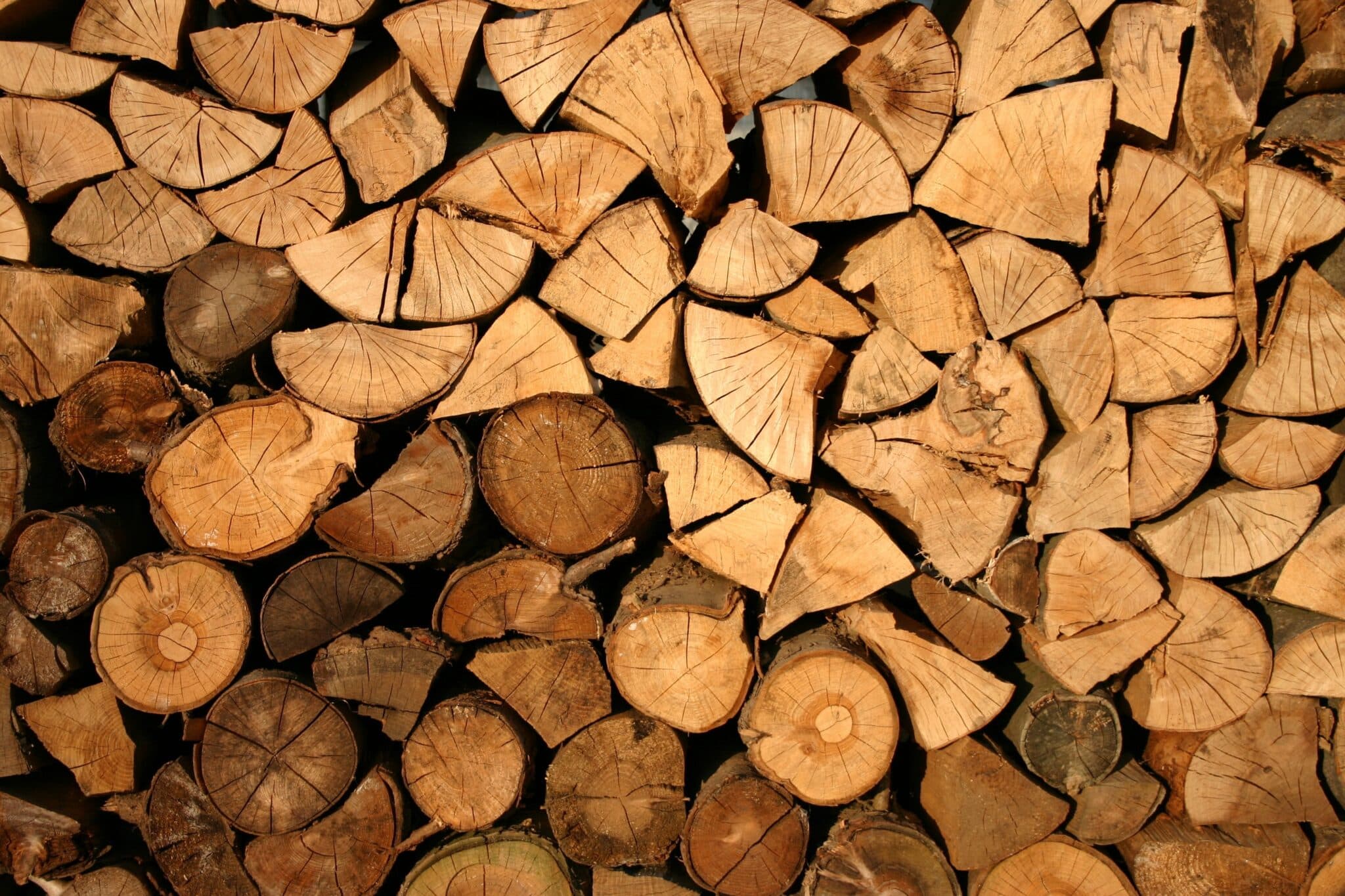
Because this year firewood will be sold by the cubic, according to Mr. Dalos, consumers should focus on the way of stacking, making sure it is dense.
They should also ask for movement documents, since smuggling is no longer a criminal act only for the holder, but the person who supplies the goods is also prosecuted for complicity.
It is also advisable to buy beech, oak and broadleaves in general and be careful not to buy coniferous trees, especially pine, since burning them can lead to a fire in the house. .
For pellets, consumers should pay attention to the color of the wood, to be light if it is from coniferous trees and a little dark from broadleaf trees, notes Mr.Dalos and adds that in both cases buyers should check the smell, which should refer to fresh wood.
Particular reference is made to the natural drying of logs. Logs begin to lose water in winter, but the maximum water loss (about 10%) occurs in March. In particularly hot summers, fresh wood that is split in December and stored under cover can, as early as June, reach moisture levels of 20% and thus be suitable for marketing as ready-to-use dry wood. However, in the case of wet summers the detectable differences are minimal and the 20% value will be reached, but one month later.
Stumps, as Mr Dalos explains, stored under cover dry relatively more quickly during the first months of winter. This advantage of covered wood is offset for uncovered wood during the summer months. The presence of a wooden shed, especially in very rainy areas, is advisable as it helps to limit the amount of moisture recovered during the following autumn-winter period. Provided that the structure allows sufficient ventilation (slotted walls), it is highly recommended that wood be stored under cover. Compared to ripped wood, non-ripped wood will reach a moisture content of 20% two months later. Thus, in order to achieve 20%, with a higher degree of safety, and in order to maintain this moisture content until autumn, it is recommended that low quality round logs are split into firewood with a diameter of more than 10 cm before natural drying.
During wood processing and preparation for stacking of firewood, it is important to avoid, as far as possible, the layering of other materials on the firewood logs. The processing area must have a stable floor (cement or asphalt). The natural drying of the logs may take place either in open areas or in covered and ventilated areas, but in any case they must be protected from soil moisture and rain.
Finally, the data on the heating value of wood are interesting.
The maximum amount of heat produced from a mass of 1 kg of fully combusted dry wood (calorific value) varies between 3900-5100 kcal/kg. Broadleaf wood has a lower calorific value than coniferous wood, with average values of 4350 kcal/kg and 4700 kcal/kg, respectively. Higher density woods have a higher calorific value. Coniferous species with resin give wood with a higher calorific value because the resin has a high calorific value (about 8500 kcal/kg). The chemical composition of the wood is also important. Lignin is characterised by a high calorific value, 6100 kcal/kg on average, while cellulose ranges between 4150 - 4350 kcal/kg. Research has shown that the average calorific value of broadleaves is higher in wood than in bark, while the reverse is true for conifers, concludes Mr Dalos, speaking to the AP-MPA.