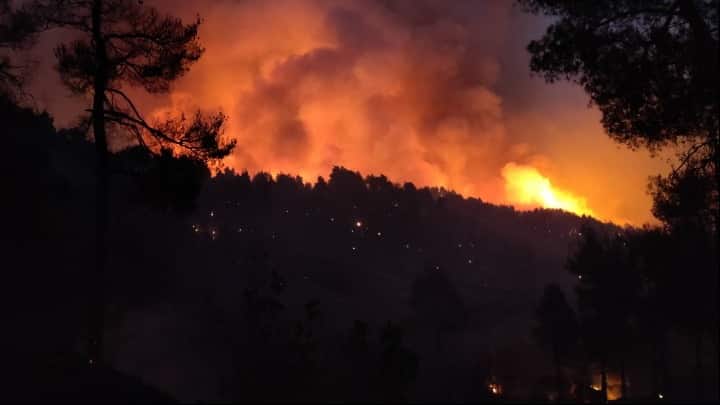
Πυρκαγιά σε δασική έκταση ξέσπασε το βράδυ της Κυριακής στην Ανατολική Μάνη, στην περιοχή Πύρριχος δυτικά της Αρεόπολης. Η έντονη μυρωδιά στην ατμόσφαιρα των Κυθήρων προκάλεσε ανησυχία στους κατοίκους του νησιού, καθώς οι άνεμοι μεταφέρουν τον καπνό από την Μάνη.
Οι πληροφορίες αναφέρουν ότι «η πυρκαγιά ξέσπασε σε χαράδρα δασικής έκτασης και συγκεκριμένα σε δύσβατη περιοχή» ενώ τόνισε ότι «δεν βρίσκεται κοντά σε οικιστικό κομμάτι».
Σύμφωνα με την πυροσβεστική στο σημείο επιχειρούν επίγειες δυνάμεις με 44 πυροσβέστες, με 11 οχήματα και 3 ομάδες πεζοπόρου τμήματος ενώ συνδρομή παρέχει και η αυτοδιοίκηση με υδροφόρες ΟΤΑ.
Συμβουλές της Πολιτικής Προστασίας στους πολίτες:
Παράλληλα, η Γενική Γραμματεία Πολιτικής Προστασίας συνιστά στους πολίτες, μερικές χρήσιμες συμβουλές που μπορούμε όλοι εύκολα να ακολουθήσουμε, ιδιαίτερα τους θερινούς μήνες, για την επίτευξη του στόχου αυτού είναι:
Για να μην προκαλέσουμε πυρκαγιά:
Αποφεύγουμε τις υπαίθριες θερμές εργασίες, που ενδέχεται να προκαλέσουν πυρκαγιά (οξυγονοκολλήσεις, χρήση τροχού ή άλλου εργαλείου, που εκτοξεύει σπινθήρες)
Δεν ανάβουμε υπαίθριες ψησταριές (barbeque) κατά τους θερινούς μήνες εντός των δασών, ούτε σε χώρους που υπάρχουν ξερά χόρτα και κλαδιά
Αποφεύγουμε το κάπνισμα των μελισσών και δεν εγκαταλείπουμε τα αναμμένα υπολείμματα καύσης στην ύπαιθρο, διότι ενδέχεται να αναζωπυρωθούν και να προκαλέσουν πυρκαγιά
Σε καμία περίπτωση, δεν καίμε ξερά χόρτα, κλαδιά, καλάμια και σκουπίδια στην ύπαιθρο
Δεν πετάμε ποτέ αναμμένα τσιγάρα και σπίρτα, από το παράθυρο του αυτοκινήτου, ούτε όταν βρισκόμαστε στο δάσος
Δεν αφήνουμε σκουπίδια στο δάσος, διότι υπάρχει κίνδυνος ανάφλεξής τους, ούτε γυάλινα μπουκάλια, διότι ενδέχεται να προκαλέσουν πυρκαγιά σε ξερά χόρτα, μέσω της ηλιακής ακτινοβολίας
Δεν προβαίνουμε σε χρήση βεγγαλικών – πυροτεχνημάτων, σε περιοχές που βρίσκονται σε μικρή απόσταση από δασικές εκτάσεις
Δε σταθμεύουμε ποτέ το όχημά μας σε σημεία που υπάρχουν ξερά χόρτα. Ο καταλύτης των αυτοκινήτων διατηρείται υπερθερμασμένος για αρκετό χρονικό διάστημα, μετά το σβήσιμο της μηχανής, καθιστώντας ορατό τον κίνδυνο έναρξης πυρκαγιάς
Έχουμε υπόψη μας ότι οι σπινθήρες που προκαλούνται από τις εξατμίσεις όλων των τύπων οχημάτων μπορούν να δημιουργήσουν συνθήκες ευνοϊκές για πυρκαγιά
Πάντα συμμορφωνόμαστε με τις απαγορευτικές πινακίδες πρόσβασης στο δάσος, σε περιόδους υψηλού κινδύνου
Οι ενέργειες, στις οποίες πρέπει να προβούμε, μόλις αντιληφθούμε μια πυρκαγιά:
Τηλεφωνήστε ΑΜΕΣΩΣ στον αριθμό κλήσης 199 και δώστε σαφείς πληροφορίες για την τοποθεσία και το ακριβές σημείο που βρίσκεσθε, καθώς και πληροφορίες για τη συγκεκριμένη θέση που βλέπετε την πυρκαγιά.
Περιγράφουμε το είδος της βλάστησης που καίγεται
Προσδιορίζουμε την κατεύθυνση της πυρκαγιάς
Ενημερώνουμε για την ένταση και τη διεύθυνση του ανέμου στην περιοχή
Η κλήση στον αριθμό αυτό είναι χωρίς χρέωση τόσο από σταθερό όσο και από κινητό τηλέφωνο. Επίσης, στα καρτοτηλέφωνα δεν απαιτείται η εισαγωγή τηλεκάρτας. Σε περίπτωση που το κινητό τηλέφωνο σας δείχνει την ένδειξη «κλήσεις έκτακτης ανάγκης» ή «εκτός δικτύου» τηλεφωνήστε στο 112, το οποίο είναι επίσης αριθμός έκτακτης ανάγκης για όλη την Ευρωπαϊκή Ένωση. Η χρήση του είναι επίσης δωρεάν, από όλα τα σταθερά και κινητά τηλέφωνα.
Παράλληλα, η Γενική Γραμματεία Πολιτικής Προστασίας συνιστά στους πολίτες:
If you are in the countryside
Do not burn rubbish or dead grass and branches during the summer months.
Do not light outdoor barbecues in forests or areas where there are dry grasses in summer.
Avoid operations that may cause a fire (e.g. welding, using a wheel or other tool that creates sparks).
Do not throw away lit cigarettes.
Do not leave rubbish in the forest. There is a risk of ignition.
Respect access restrictions during periods of high risk.
If your home is in or near a forest
Create a firebreak around the house by clearing a radius of at least 10 metres of dead grass and leaves, pine needles and branches.
Prune the trees up to a height of 3 metres, depending on their age and condition.
Remove dead branches from trees and bushes.
Do not let tree branches touch the walls, roof and balconies of the house. Prune them, leaving at least 5 metres from the house.
Thin the tree vegetation so that the branches of one tree are at least 3 metres away from the branches of the other. For even greater protection, remove the trees and bushes around the building at a distance of at least 10 metres, provided that the clearing of natural vegetation required for the protection of buildings does not in any way contravene the provisions of forestry legislation.
Do not place plastic gutters or pipes on the walls of the house.
Do not place shutters made of combustible materials on windows and balcony doors.
Make sure that the covers on chimneys and vents in the house are made of non-combustible material to prevent sparks from penetrating.
Do not store flammable items near the house.
Place firewood in closed and protected areas.
Do not build uncovered fuel tanks near the house.
Get the right fire extinguishers and make sure they are maintained.
Equip yourself with a watering hose with a length proportional to the area you want to protect.
Equip yourself with a water tank, a simple pump that works without electricity and a water hose.
If the fire is approaching your home
Keep your cool.
Move all combustible materials from around the building to enclosed and protected areas.
Close all passageways (chimneys, windows, doors, etc.) so that the combustion gases do not penetrate into the house.
Turn off gas and liquid fuel supplies inside and outside the house.
Gather the awnings on balconies and windows.
Facilitate fire truck access by opening the garden door.
Place a ladder on the outside of the house, opposite the direction of the fire so that there is direct access to the roof.
Connect the watering pipes and spread them out to cover the perimeter of the house.
If visibility is reduced, turn on its interior and exterior lights to make it visible through the fumes.
Once the fire has passed
Get out of the house and immediately turn off the remaining small stoves.
Check the perimeter and the outside of the house for at least 48 hours, at regular intervals, for the possibility of reignitions.
If the fire has reached your home
Do not leave the building unless your escape is fully secured.
Do not get into a car. The chance of survival in a house made of flammable materials is much higher than in a car surrounded by smoke and flames.
If you stay at home:
Close doors and windows tightly.
Block the cracks with wet cloths to keep the smoke out.
Remove the curtains from the windows.
Move furniture located near windows and external doors inside the rooms.
Close the intermediate doors to slow the spread of the fire.
Fill the bathtub, sinks and buckets with spare water.
Gather together in one room.
Make sure you have a torch and spare batteries with you in case of a power failure.
If your house is wooden, seek shelter in a built house.
If evacuation of the area is ordered, follow the instructions of the authorities and the routes given to you.