
Low-carbohydrate diets have become a very popular tool for weight loss in recent decades. While much of the scientific rationale behind why they are used for weight loss, such as the carbohydrate-insulin hypothesis, has been shown to be largely flawed by the scientific literature, low-carbohydrate diets are still used quite extensively to achieve weight loss.
The reason they are used is probably because low-carbohydrate diets show some effectiveness in weight loss, especially in the short term. However, there is still a lot of confusion and myths around how to accurately set carbohydrate goals, exactly how these diets may or may not work, and what things to consider when adopting a low-carb diet or making recommendations to clients.
This information is particularly important for Weight Loss Specialists and Nutrition Coaches.
Recommended daily carbohydrate intake for weight loss
Daily recommendations for carbohydrate intake are based on two main criteria: total daily calorie intake and intensity/volume of physical activity. Higher total daily calorie requirements are accompanied by higher total daily carbohydrate intake recommendations, while lower total daily calorie requirements are accompanied by lower recommendations. In addition, as the body relies heavily on carbohydrate intake for moderate to higher intensity physical activity, carbohydrate recommendations will increase as total volume and intensity of activity increases.
Total daily calorie intake can be calculated using one of the estimating equations for total daily energy expenditure. The most common are the Harris and Benedict and Mifflin-St Jeor equations. However, there are also online tools that can be used. Such as the NASM Online Calorie Calculator. This can help individuals determine how many calories they should consume daily.
After that, the number of grams per unit of body weight can be estimated based on current guidelines from the American College of Sports Medicine and the Academy of Nutrition and Dietetics. These recommendations are generalized as follows:
- Low Intensity Activity: 3-5 g/kg/day
- Moderate Activity (1 hour of moderate exercise): 5-7 g/kg/day
- High Intensity Activity (1-3 hours of intense endurance exercise): 6-10 g/kg/day
- Very High Intensity (4-5 hours of intense endurance exercise): 8-12 g/kg/day
How to read food labels for carbohydrates
Food labels have recently been updated, giving a clearer picture of the actual nutritional content of a particular food, especially the carbohydrate content of a food. Carbohydrate information on a food label includes total carbohydrates, dietary fibre, total sugars and added sugars.
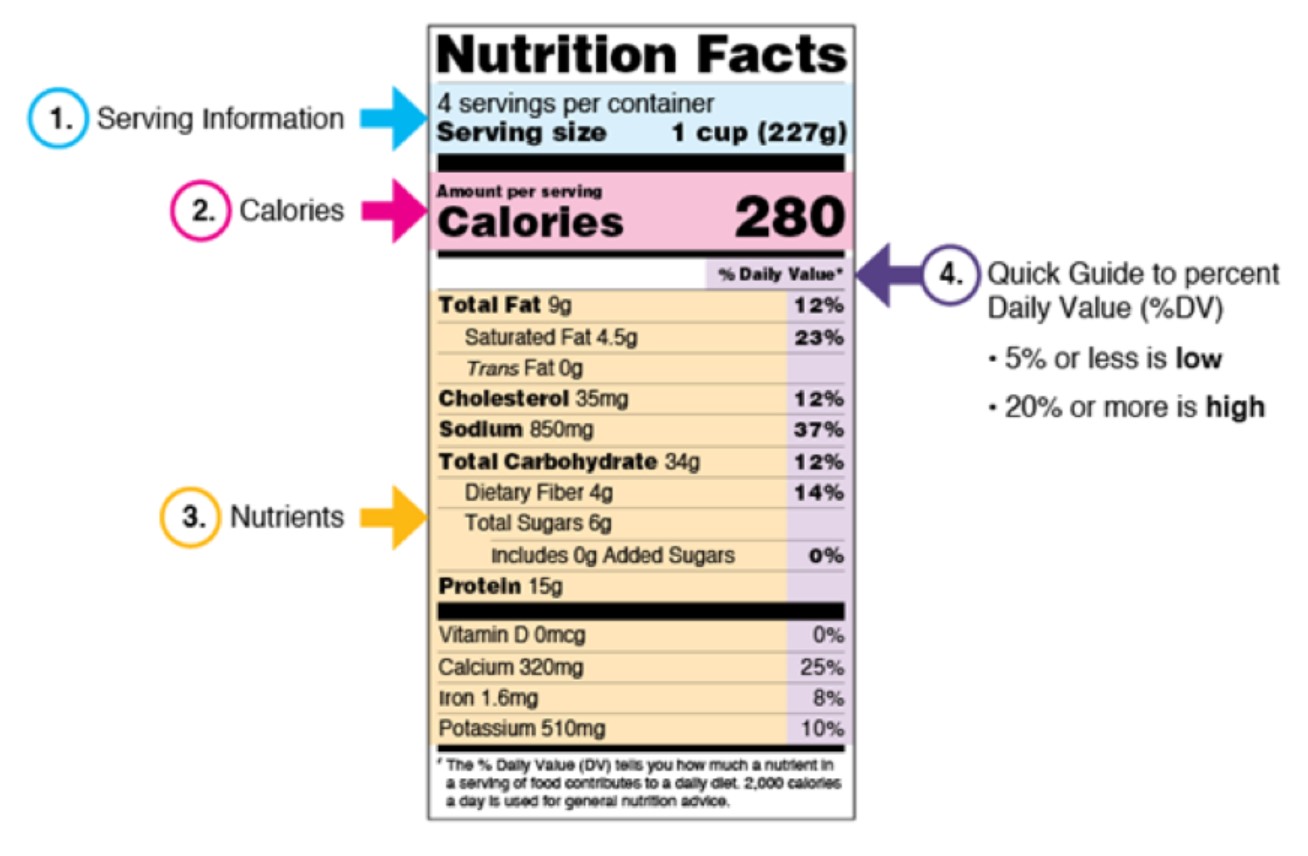
The way food labels work is that total carbohydrates represent the total number of carbohydrates in the food. Each of the subcategories adds up to the total amount. For example, in the following label provided by the FDA, the total carbohydrate amount is 34 grams. However, of those 34 grams, 4 of them come from fiber and 6 of them come from sugar (monosaccharides and disaccharides). The added sugars represent added sugar added to the food during processing.
This means that there are about 24 g of carbohydrates (34 g total - 4 g fibre - 6 g added sugar = 24 g) which are complex carbohydrates (polysaccharides).
Calculating net carbohydrates for weight loss
Although many nutrition labels count all carbohydrates in calorie intake, the truth is that not all carbohydrates provide a significant number of calories, as the human body does not assimilate and extract energy from all forms of carbohydrates. This is the idea behind the concept of pure carbohydrates.
In most cases, dietary fibre is considered a non-digestible carbohydrate and does not contribute to overall carbohydrate intake. Therefore, in many cases, fibre is subtracted from the total carbohydrate intake. In the figure above, 4 grams of fiber is often subtracted from the total carbohydrate (34 grams) to give a total of 30 grams of usable carbohydrate.
What are the different types of carbohydrates
Carbohydrates can be classified into many different categories. The main classifications used are based on the following: simple versus complex and processed versus unprocessed.
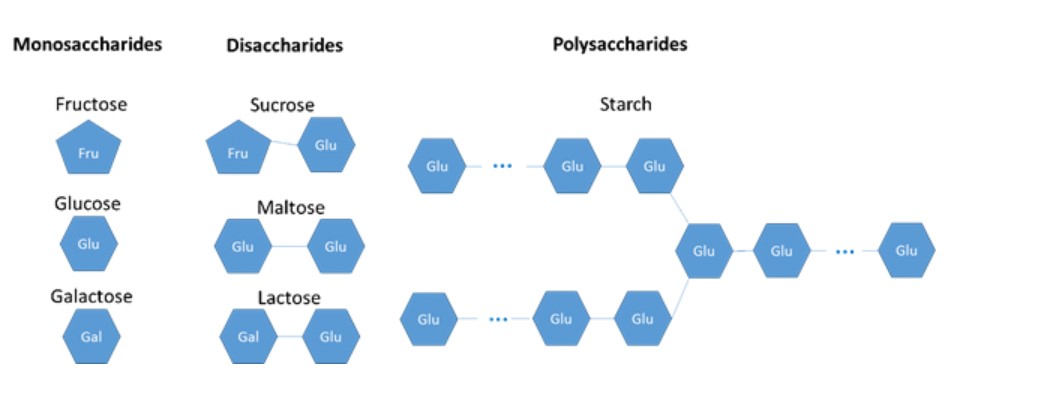
Simple & Complex: Simple and complex carbohydrates are defined by the types of carbohydrates found in food. Carbohydrates can be described in terms of their molecular structure, which simply means how many individual sugar molecules are combined.
Monosaccharides & Disaccharides: Monosaccharides are carbohydrates of one sugar unit. Disaccharides are two carbohydrates of sugar units linked together. Polysaccharides are long chains (usually 12 or more) linked together.
Processed: Processed carbohydrates are generally foods that have been processed by industrial means to create food from basic carbohydrates. For example, bread is a processed carbohydrate where wheat is processed to produce flour and then made into bread.
Unprocessed: Unprocessed carbohydrates are generally foods that are eaten close to their natural state, although some cooking is often required. For example, potatoes are an unprocessed carbohydrate when simply baked or boiled and eaten. Fruits and vegetables are also considered unprocessed carbohydrates.
What types of food can you eat on a 100-carbohydrate diet per day
There are no foods you can't eat, regardless of the exact amount of carbohydrates you need to consume each day for your specific goals. Whether you need to eat 50 grams a day or 500 grams a day, you can consume all types of carbohydrates. Ultimately it depends on the amount of a given food you consume.
It is often helpful for people following a low-carbohydrate diet to know and pay attention to the carbohydrate density of different foods. Some carbohydrate sources have many more carbohydrates per gram of food than others. Therefore, some food choices make it harder to stay under a lower carbohydrate limit than others.
There is a spectrum of carbohydrate density and some foods fall on the very high end, others in the middle and others on the low end. For example, foods like rice cakes, bagels and white bread tend to be at the higher end of the carbohydrate density spectrum. Foods like multigrain bread, oatmeal and white rice are in the middle of the spectrum. Root vegetables such as parsnips and potatoes, and fruits such as apples, oranges and watermelon are at the lower end of the carbohydrate density spectrum.
Is a low-carbohydrate diet necessary for weight loss?;
Low-carbohydrate diets are not necessary for weight loss, nor are they in themselves sufficient for weight loss. Carbohydrates do not necessarily control body fat after all. Over the past few decades, dozens of scientific studies have been done comparing low-carbohydrate diets to other diets to test their effectiveness. These studies range from experimental animal studies that make very precise biochemical measurements to highly controlled metabolism studies to free, real-world studies.
The main findings from these studies were:
- Low-carbohydrate diets are not necessary for weight loss. Almost all types of diets can and do lead to weight loss when there is a negative energy balance (i.e. an energy deficit).
- In terms of body fat mass, diets that include a low amount of carbohydrate may result in lower fat mass reductions in short-term diets.
- Adherence to low-carbohydrate diets is no better or worse than most other forms of dieting.
- Low-carbohydrate diets often lead to more immediate water weight loss and glycogen depletion than moderate-carbohydrate diets.
KETO theories
Very low-carbohydrate diets can often lead to a condition called ketosis. This occurs when dietary carbohydrates are low enough or fat is high enough that the body begins to produce ketones at a level that allows them to build up.
It is often claimed that being in ketosis increases fat loss, but there is no good evidence to suggest that this is true. In fact, a recent study showed that fat loss is similar, if not inferior, in ketosis. If you choose to adopt a low-carb diet, ketosis may be a result of this process, but it should not be the primary focus.
In addition, there is some evidence that if one is a higher intensity, higher volume athlete, ketogenic diets should be avoided as they can be detrimental to performance.
How many carbohydrates per day is too low
For otherwise healthy individuals without underlying medical conditions, there does not seem to be a true minimum amount of carbohydrate that should be consumed daily. However, diets too low in carbohydrates can have undesirable and potentially dangerous side effects when followed for prolonged periods. For example, heart dysfunction, impaired physical activity, hair loss, nausea, digestive problems and lipid abnormalities are all common side effects.
It is often recommended to consume more moderate carbohydrate intakes (1-3 g/kg/day) even in the context of weight loss.