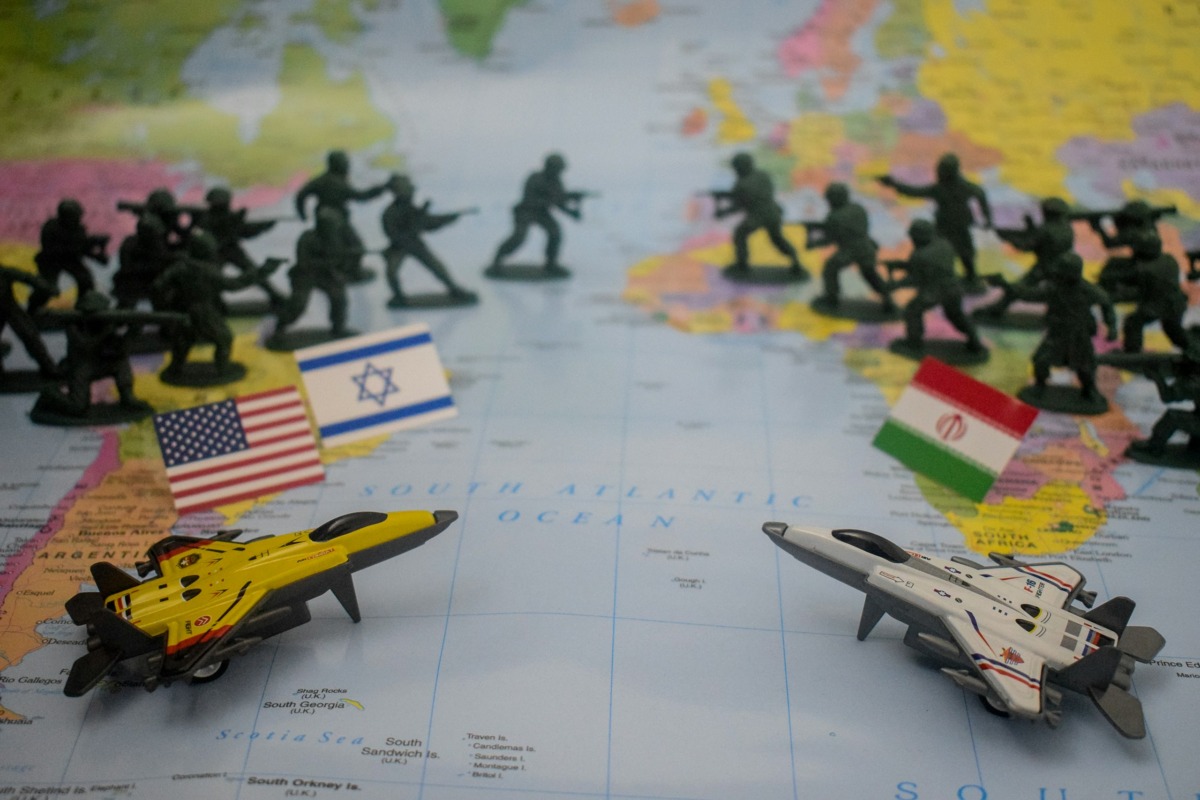
The war in the Middle East between the United States and Israel against Iran is not just another regional crisis.
Its uncontrolled escalation, combined with the ideological and religious confrontation characteristics projected by Tehran, signals profound changes in the already unstable geopolitical environment of the wider region, with direct implications for the global economy, security and the power relations of the international system.
Of particular note is the fact that several countries in the Middle East and Europe, without intending to do so, have already become part of the conflict, either because of the presence of US military bases on their territory, or because of their involvement in maritime security and safety operations, or because of their geopolitical position.
Moreover, the tension recorded in critical energy and shipping routes such as the Straits of Hormuz, combined with the mobilisation of military forces across the Eastern Mediterranean, shows that the conflict is now taking on broader regional characteristics.
At the same time, Iran's use of armed organisations, such as Hezbollah, which act as its proxies (proxies), creates an environment of asymmetric threats, making the war even more complex, unpredictable and possibly long-lasting.
It should also be noted that this war is not only affecting the stability of the Middle East, but has already begun to affect the energy security of Europe and the rest of the world.
In particular, increases in energy prices, uncertainty in international markets and the closure of the Straits of Hormuz are already tangible consequences of the conflict, with repercussions not only for the European but also for the global economy, and affecting political stability in several countries.
In this rapidly changing environment, Greece cannot consider itself to be outside the sphere of influence or too far from the operational field of the war in the Middle East.
The attack by Iranian drones on the British Base in Cyprus proves the point, underlining that Greece's geographical proximity and strategic position, combined with its participation in international organisations and its strategic relationship with the US and Israel, make it an integral part of the wider regional turmoil.
The crucial question is not whether Greece is affected by the war in the Middle East.
This is already a given and is not limited to the possibility of a direct military strike on critical infrastructure, such as the Souda Base.
The effects of the war are already manifesting themselves in the Greek, European and global economy, energy, shipping and maritime transport safety, while the shift in the geopolitical balance in the Eastern Mediterranean is bound to reshape the balance of power in the region.
Therefore, the real question for Greece is how it will manage the consequences of the war and what strategies it will choose to protect its national interests. and strengthen its position in the wider geopolitical environment.
In the above perspective, Greece is called upon to remain a reliable ally of the West and a factor of stability in the region, on the one hand, and to ensure that it does not become a field of escalation or a target of asymmetric threats, on the other.
The main implications of the war in the Middle East for Greece range from security and the economy to shipping and the management of regional pressures, affecting both social stability and the country's international standing.
In this context, the possibility of a small-scale attack or sabotage on civil and military infrastructure such as Souda or Alexandroupolis cannot be ignored, but its likelihood remains limited thanks to strict security measures and the vigilance of the competent authorities.
At the same time, there is a risk of terrorist acts or organised cyber attacks targeting state networks, energy infrastructure, transport or even military systems.
As already mentioned, the closure of the Strait of Hormuz by Iran has a direct impact on global trade and maritime transport.
Therefore, the rise in oil prices, disruption of energy flows to Europe and route changes, combined with rising transport costs; and logistics, are bound to affect both Greek shipping and the overall economic activity in the country.
The instability in the wider Mediterranean region is also expected to affect Greek tourism, which is a key pillar of the Greek economy.
At the same time, in case of further escalation of war or destabilisation of states in the region, Greece is likely to face increased migration flows again, which it will be called upon to manage effectively in order to maintain internal security and avoid incidents of social tension.
Finally, the possible reshaping of the balance of power in the geopolitical environment of the Eastern Mediterranean, combined with the geopolitical upgrade of Greece and its strategic relationship with the US and Israel, may provoke reactions from Turkey, which adds another factor of uncertainty to the already complex regional environment.
However, the analysis of the above implications alone is not sufficient to fully understand the significance of the developments in the Middle East war.
It must be understood that any major geopolitical change creates both risks and strategic opportunities for countries that can adapt in time to the new circumstances.
In this context, the war in the Middle East has already highlighted a significant strategic gap in the European security system, which creates conditions for a more active and targeted Greek strategy.
The EU appears once again without a unified strategic approach to a major international conflict, which highlights the structural weaknesses of the common European defence and foreign policy and creates a gap in the regional security architecture.
It is typical that, despite initial reservations and the attempt to maintain political distance from the conflict, the three major European powers-United Kingdom, France and Germany-have adjusted their positions under the weight of developments in the war and the expansion of threats from Iran.
At the same time, Turkey's attitude has highlighted a different strategic choice.
Ankara condemned both the US and Israeli attacks and Iran's retaliation, and banned the use of its air, land and sea space for operations against Iran.
The combined effect of these differentiated attitudes creates a window of strategic opportunity for Greece, allowing it to showcase its regional role and promote more coherent and integrated security policies in the Eastern Mediterranean.
In particular, Greece, as a member state of the EU and NATO, with a stable orientation towards the West and a strategic relationship with the USA, France and Israel can play a more active role as a pillar of stability and security in the Eastern Mediterranean.
In this context, the decision of the Prime Minister Mr. Kyriakos Mitsotakis to send two frigates of the Navy and four aircraft to the island of Cyprus, is considered to be correct and of particular importance. F16 for the protection of Cyprus, helping to deter potential threats to the island's military and critical infrastructure.
Responding to the request to address the increased threats in the Eastern Mediterranean, Greece with this move expresses its solidarity with the brotherly Cypriot people and its support to a key ally and partner.
At the same time, highlights its role as an essential guarantor of the security of the Republic of Cyprus and sends a clear message that it is determined to defend both its own national interests and those of its allies at a critical juncture for regional security.
Through this initiative, Greece confirms that it has the will and the operational capacity to play an active role in security issues that go beyond the narrow limits of its national territory, contributing to the development of a stronger deterrent framework in the Eastern Mediterranean.
The war in the Middle East also highlights the geopolitical importance of the Greek infrastructure and especially the military installations linked to NATO and the United States.
In this context, the role of the Souda base in Crete is of particular importance, especially at a time when the war in the Middle East is escalating and the strategic use of critical infrastructure is becoming a crucial element for the stability of the region.
The increasing use of the base by the US and NATO proves that Souda now functions as one of the key strategic support hubs in the South-Eastern wing of the Alliance, reinforcing the country's importance in the overall Western security system for surveillance, support and power projection operations in the Eastern Mediterranean.
It also reflects the value to the allies of Greece's geographical position in the
the crossroads of Europe, the Middle East and North Africa.
This development, apart from its deterrent dimension, can strengthen Greece's negotiating power both within the Alliance and in the context of European discussions on defence and security.
The impact of the war on the energy sector also creates new facts, on Greece's role as an energy hub in the wider region.
In particular, Greece has a unique opportunity to become a pillar of energy security and stability for the West and South-Eastern Europe, assuming the role of a critical energy transit hub, making a decisive contribution to the process of European energy autonomy and independence.
Furthermore, the instability in the wider region makes the regional partnerships that Greece has developed even more important in recent years with states in the Eastern Mediterranean and the Middle East.
Deepening these partnerships can help create a security and stability matrix that will act as a deterrent against revisionist or destabilising forces.
Finally, this situation offers Greece the opportunity to strengthen its international image as a country that operates with strategic consistency, credibility and stability in an environment of increased uncertainty.
These opportunities, however, are not exploited on their own, but require a clear and multidimensional strategic plan, which combines the strengthening of the country's deterrent power with an active diplomatic presence and the exploitation of its geopolitical advantages.
In this context, Greece's top priority concerns the further strengthening of national defence and the protection of critical infrastructure, particularly those linked to allied operations, but also to energy or transit activities of strategic importance.
At the same time, Greece needs to intensify its diplomatic action at European and international level, promoting initiatives that will strengthen stability in the Eastern Mediterranean and highlight the country's role as a reliable interlocutor and factor of stability and security.
Given that many Middle Eastern states and Turkey are attempting to upgrade their role through de-escalation and mediation initiatives, Greece must move methodically and build on its credibility within the EU and NATO, promoting initiatives that will strengthen diplomacy and stability in the Eastern Mediterranean.
Specifically, the country can actively contribute to the development of a European framework for crisis management, taking a coordinating and policy initiative role, which will further strengthen its geopolitical footprint and limit the scope for other regional powers to monopolize the role of mediator.
At the same time, the exploitation of regional cooperation, the deepening of strategic relations with countries in the region and the strengthening of energy and defence cooperation can transform the current situation from a period of risks to a period of geopolitical upgrading for Greece.
Finally, at this difficult and particularly dangerous juncture for international security, it is it is crucial for Greece to maintain its internal stability and strengthen its national resilience.
Given that the resilience of a state depends not only on its military strength but also on the cohesion of society, the effectiveness of its institutions and its capacity for crisis management, preparation to counter hybrid and all forms of threats - together with timely information and psychological preparation of public opinion - is a key prerequisite for maintaining national security.
In conclusion, for Greece, the war in the Middle East is at the same time threat and opportunity.
Threat, because the escalation of military operations creates increased risks to the security, economy and stability of the region, requiring enhanced deterrence and multi-crisis management capability in an unstable geopolitical environment. Opportunity, because for the first time in many years, the country's geographical position, its strategic partnerships and its credibility within the West constitute a framework that can lead to a substantial geopolitical upgrade.
In light of this, if Greece continues to move forward with consistency, strategic planning and national unity, it can become a key pillar of security and stability in the Eastern Mediterranean.
The crucial issue for Greece, therefore, is not just to monitor developments, but to participate actively alongside those who shape them.
In today's international reality of increased geopolitical volatility, where international law is subordinated to the law of the strong, the power of a state is not only determined by its operational capabilities.
It is mainly determined by its ability to perceive changes in time and to position itself strategically within them.
And that's exactly what she is the challenge, but also the historic opportunity that Greece is called upon to manage.
To turn its geographical position, its alliances and its credibility into a real strategic asset, making the country a pillar of security, stability and influence in the Eastern Mediterranean, capable of shaping developments rather than following them.
Author of the article:

Political Scientist – International Relations Specialist
Former Director General - Directorate General
National Defense and International Relations Policy (GDPAAD)
Ministry of National Defense (YPETHA)