«The only goddess who is good to mankind is Hope. The other gods have abandoned us and gone up to Olympus,» wrote the elegiac poet Theognis of Megara in the late Archaic period. These lines linger in your mind as you walk through the alleys of Kontoskali in Istanbul. In the Kontoskali of the Romans, in what is now Kumkapi (meaning «the gate of sand»), a direct descendant of the quay of Constantine I, the New Harbor of Julian, the harbor of Sophia, the Katirga Harbor. The harbor of the galleys and those condemned to hard labor… They finally named it Kontoskalion, which means “small pier.”.
There are now only a few Greeks left in Kontoskali, and a few more Armenians (this is also the seat of the Armenian Patriarch). Inscriptions on public buildings of the once-glorious Greek community—schools and cultural centers, churches, large and imposing. Now they stand alone… Alone and on the verge of collapse, along with many of the homes of the Greeks…
At some point, you clench your fist and insist on «Hope, the only goddess who is good to humankind. Because the other gods have abandoned us and gone up to Mount Olympus.».
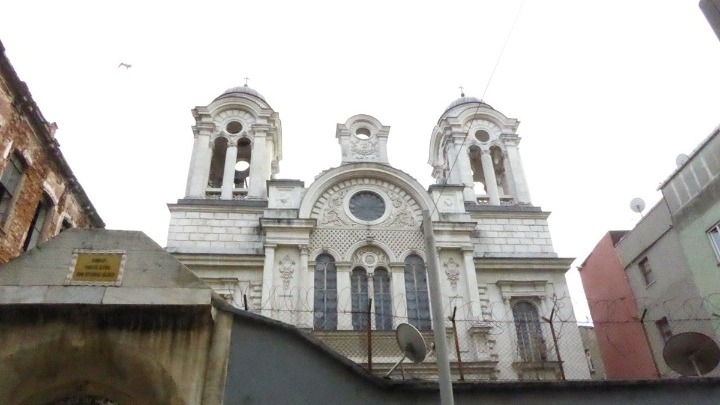
Walking up the main street of Koum Kapi, lined with taverns, very close to the Byzantine walls of Marmara, behind a tall retaining wall that seems to be crowned with barbed wire, you can make out a section of the facade of an impressive church. Amid beautiful rosettes and tall windows that strongly resemble those of Gothic cathedrals, you can make out two letters: P and E.
If you're lucky, either you'll find the door open or you'll run into someone who knows, you’ll learn that the letters «P» and “E” projected into the Istanbul sky stand for “Panagia Elpida.” You smile… “The only goddess for humankind. There she is…” you mutter to yourself.
The site where the current imposing church stands has been a place of Orthodox Christian worship since the 14th century. The literature on Panagia Elpida indicates that the original church was destroyed in the early 15th century. It was rebuilt as «Panagia of the Desperate,» only to be destroyed again and rebuilt in 1652. In the 17th century, it was destroyed in the great fire of 1865 that ravaged the area.
The foundation of the current building was laid on June 4, 1895, and it was built according to plans by Vasileios Tsilenis, also known as «Kalfa Vasilis.».
With two large bell towers, one on the north and one on the south side of the west facade, Panagia Elpida is a splendid example of architectural eclecticism in Constantinople in the late 19th century. It combines elements from different architectural styles (Byzantine, Ottoman, and Western European), leading contemporary scholars to speak of a «Parisian» elegance reminiscent of buildings in Western Europe around 1900.
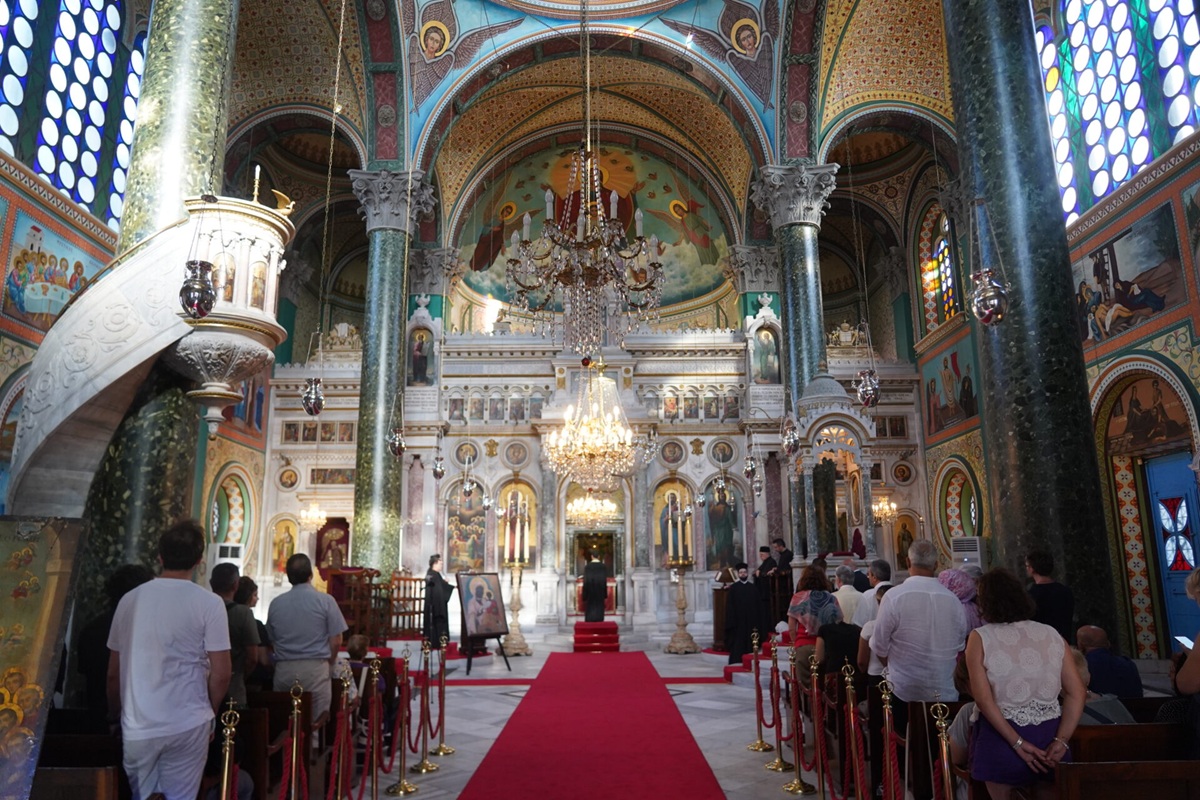
The interior of the church is just as impressive. The dome is supported by four large arches, while light enters the church from above, as the architect placed numerous windows at the base of the dome, allowing light to stream vertically into the church and thus creating a solemn atmosphere.
Elaborate murals and decorative elements featuring geometric shapes contribute to the atmosphere of reverence.
The church's iconostasis also combines Orthodox tradition with Western European influences.
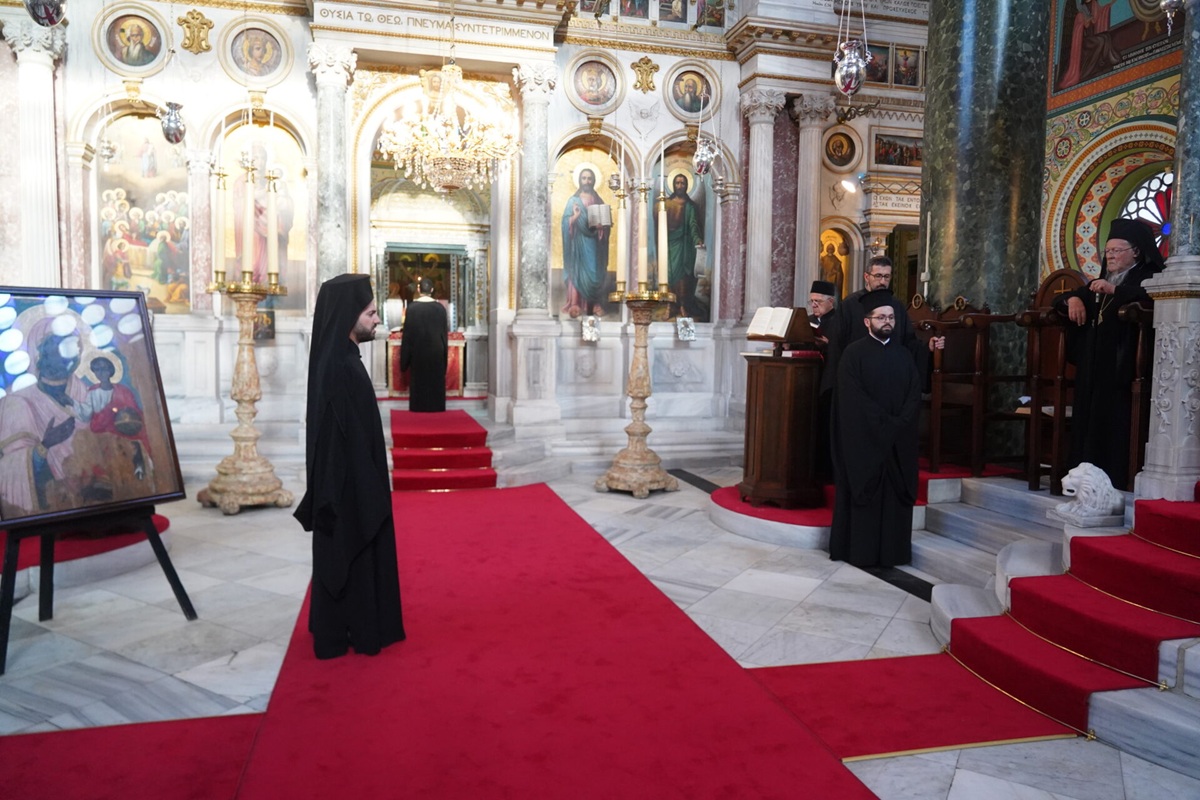
In the enclosed courtyard of Panagia Elpida in Kontoskali, surrounded by high stone walls, the Community’s historically and functionally significant elements were designed and constructed. The historic Greek school, the PARISH SCHOOL “ELPIS,” which has been closed since 1957, still stands but has fallen into disuse and now faces serious structural problems. Within the courtyard there is a traditional holy water font, as well as the New Community Hall, a modern event hall designed to meet the needs of the now-small Roman Catholic community, which was renovated by a private sponsor and inaugurated on August 10, 2025 by Ecumenical Patriarch Bartholomew.
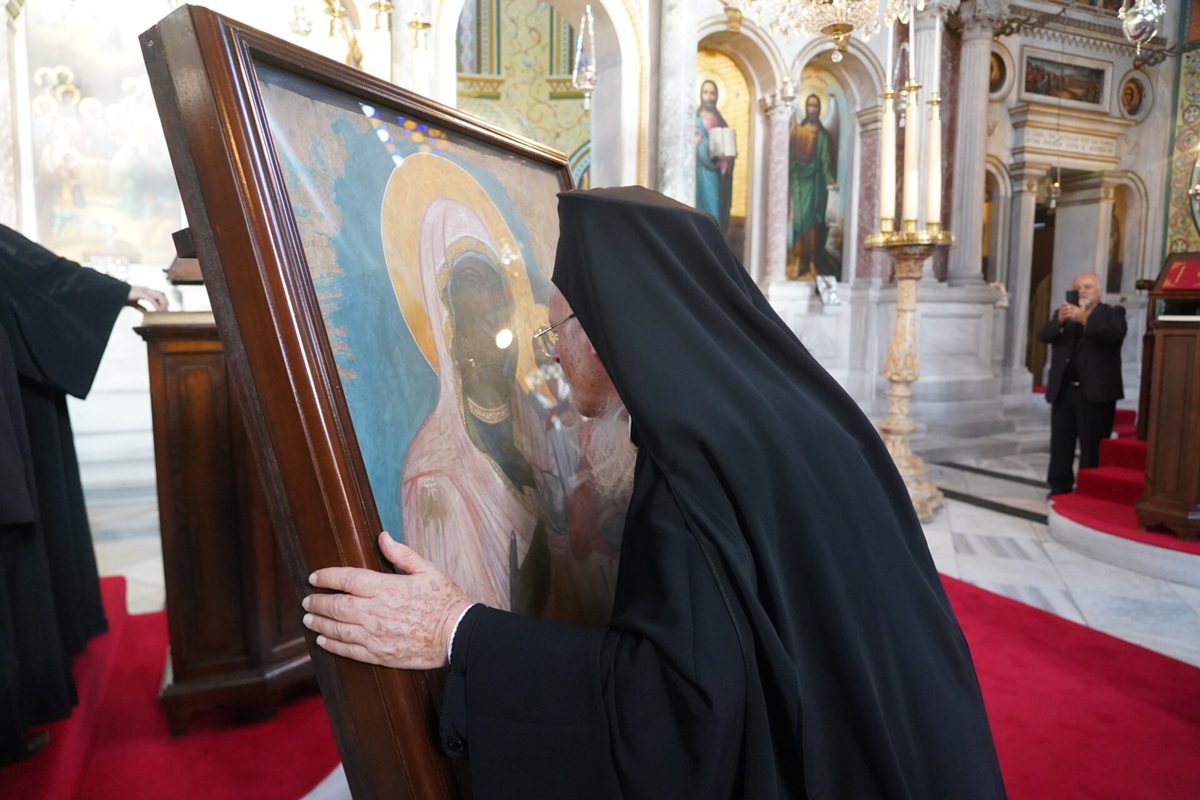
Today, despite the dramatic decline of the local Roman Catholic community, Panagia Elpida remains a living monument to the community as well as to the multicultural heritage of Istanbul. Around August 15, it reopens its doors for prayers to the Virgin Mary. «The only goddess who is good to humanity is Hope. The other gods have abandoned us and departed for Mount Olympus.» Since ancient times…
Stratis Balaskas