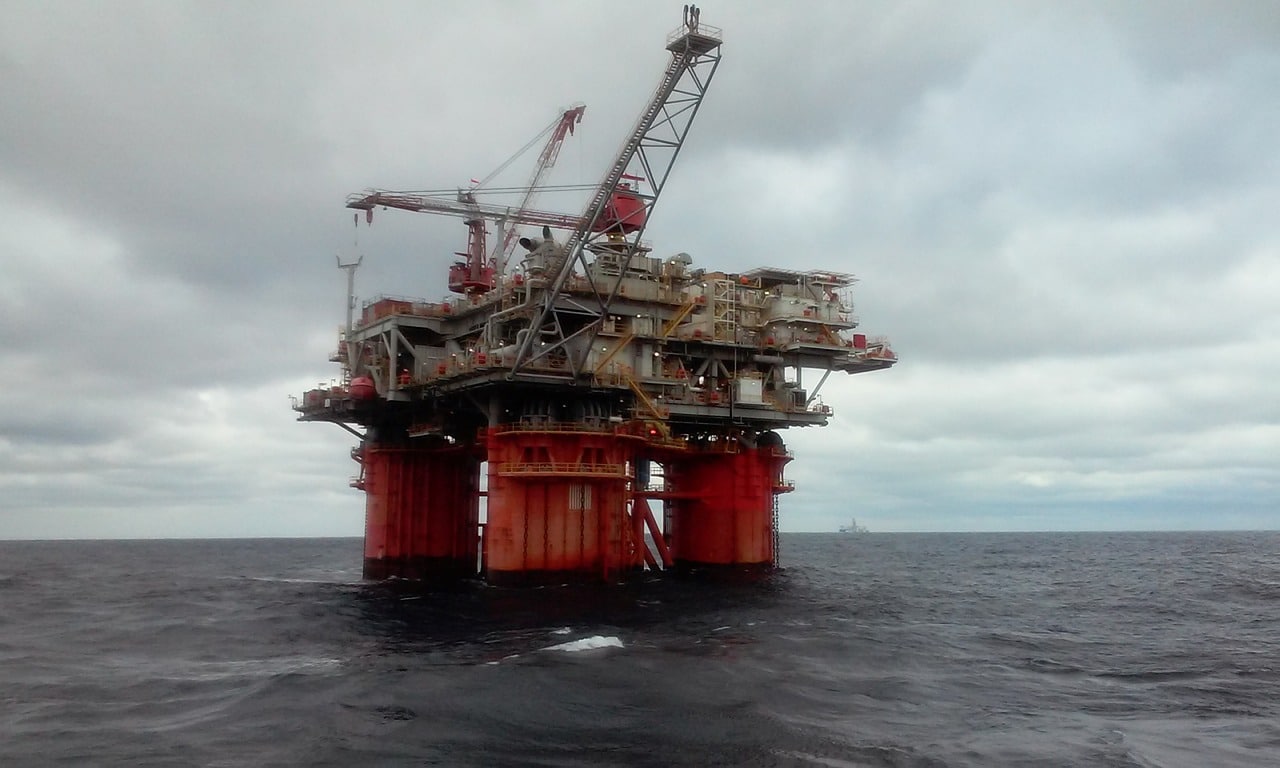
Multiple economic and geopolitical benefits can accrue from the exploitation of domestic hydrocarbon deposits, provided of course that they are identified and exploitable.
According to the official estimates of the Ministry of Environment and Energy, during the period of signing the concession contracts for exploration in Western Greece, for every 100 million barrels of oil and assuming an oil price of 90 dollars per barrel, the state receives 6 billion euros. It should be noted that the estimate for the existence of reserves of this size is considered modest as, for example, the Prinos area has so far produced 120 million barrels of oil equivalent.
The revenues of the State as provided for in the contracts signed and ratified by the Parliament come from the tax, which is a fixed 20 % on net taxable income plus 5 % which is the regional tax, the per hectare compensation which is a fixed amount per square kilometre of area, the signing and production bonuses and the rent in kind or in cash calculated on hydrocarbon production.
As to the size of the deposits that the Greek subsoil may host, several estimates have been made from time to time.
For example:
-According to the Hellenic Hydrocarbons and Energy Resources Management Company, «the potential value of Greece's natural gas reserves could generate a turnover exceeding 250 billion euros» (related https://www.greekhydrocarbons.gr/news_gr/PR_REL_040222.html)
-The estimates of the Energy Committee of the Academy of Athens, speak of «reasonable chances to identify and produce significant quantities of natural gas that could reach 5 trillion m3 within a 35-year horizon and fully replace the imported natural gas in our country, but also to make the country a producer of «Blue Hydrogen» during the transition period 2021-2050» (related http://www.academyofathens.gr/el/announcements/press-releases/20220203 ).
-According to the report «Economic and Geopolitical Benefits of Hydrocarbon Exploitation in Greece» by the Energy Institute of Southeast Europe: «In the marine areas where reconnaissance seismic surveys have been carried out, more than 30 potential exploration targets have already been specified, which with complementary surveys could become exploratory drilling targets for the discovery of hydrocarbon deposits. If we consider that a quarter of the drilling in the geological structures identified in the Ionian Sea and south and west of Crete will be successful, these structures could potentially host reserves in the order of 70-90 trillion cubic feet of gas, according to EDEY data, capable of covering 15%-20% of EU consumption».
The same report, in addition to the obvious economic benefits (increased government revenues, investment, increased employment, reduced costs of importing hydrocarbons, improvement of the trade balance, benefits for local communities) also points out, among others:
-The geopolitical shielding from the participation of very large international companies in the field of hydrocarbon exploration and exploitation.
-Energy security by reducing dependence on imports.
-The development of international commercial services for the transit of hydrocarbons.
K.Voutsadakis