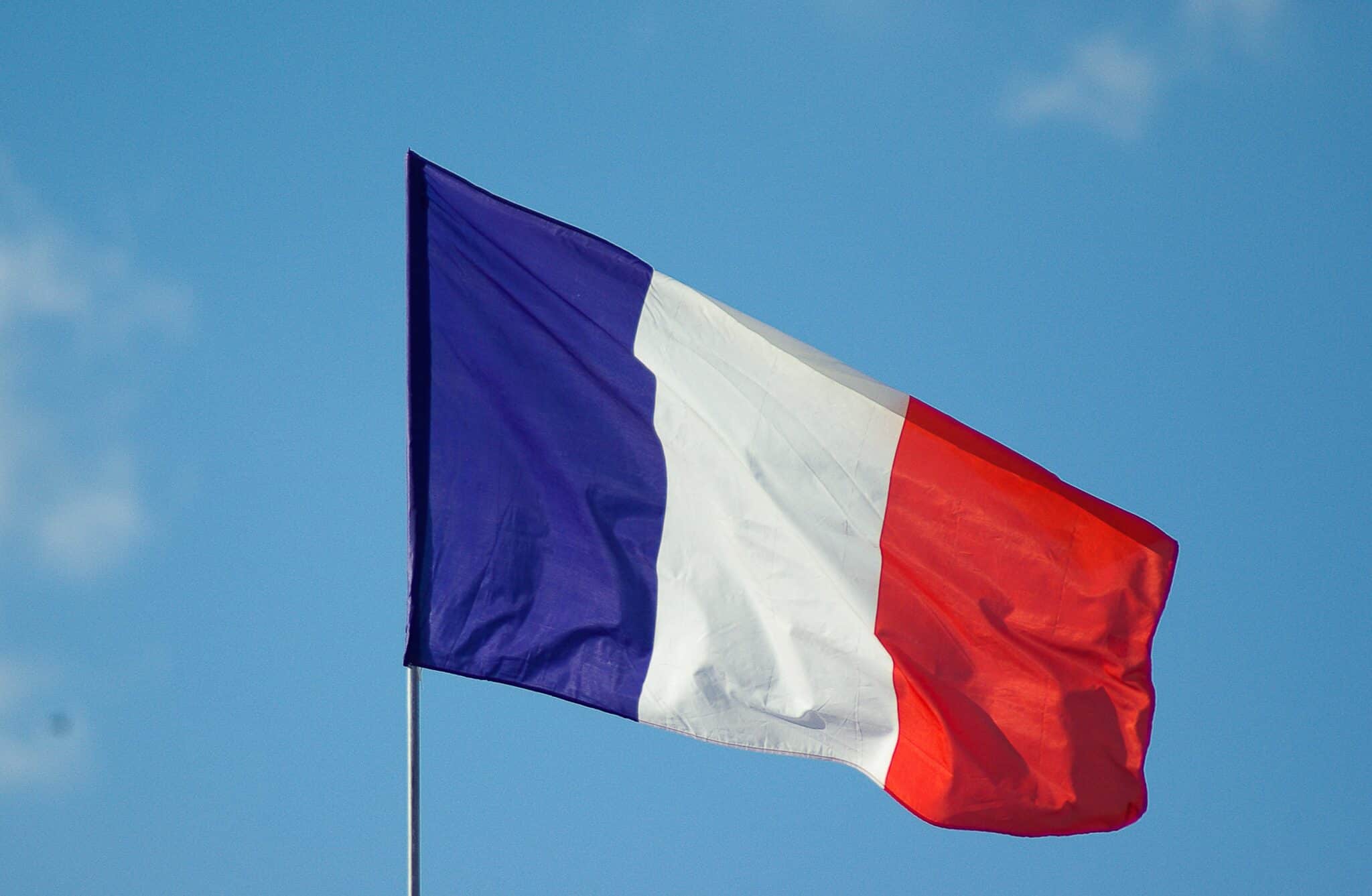
The French left-wing alliance New People's Front will take between 184 and 186 seats in the new French National Assembly, according to a new estimate by French television station BFM. 160 to 162 deputies will be from the party affiliated to French President Emmanuel Macron.
Marine Le Pen's far-right faction will have between 141 and 143 MPs. The Republican Party is estimated to have between 65 and 67 MPs. On the left, the LFI is estimated to have between 73 and 80 MPs, the Socialist Party between 60 and 64 MPs, the Ecologists between 33 and 36 and the Communists between 11 and 12 MPs.
In the presidential party, the component close to President Macron is estimated to have around 100 MPs, while between 50 and 60 will be MPs from allied parties.
Based on these results, there will be three major political forces in the National Assembly, and for the formation of an absolute majority, two, or at least their larger parts, will have to cooperate.
President Macron will take his decisions after the National Assembly has been constituted and after his return from the United States where he will represent France at the NATO summit.
Prime Minister Gabriel Atal said he would resign but would offer his services as long as necessary.
The appointment of a new prime minister in France is the responsibility of the president - but the National Assembly has the power to remove him or her if he or she passes a motion of impeachment by an absolute majority.
For President Macron, the debacle has been avoided, but the future is complicated
As his alliance came second, above the far right, in yesterday's parliamentary elections, French President Emmanuel Macron avoided the debacle predicted by pundits, but the future is predicted to be complicated - at home, on the French political scene, and internationally.
According to polling institutes, the coalition of the Renaissance presidential party and its centre-right allies is expected to win between 150 and 180 seats in the National Assembly, behind the French left-wing alliance (171 to 187). But, above all, ahead of the far right, Marine Le Pen's Rassemblement national party, which had long been rumoured to be the favourite but eventually came third thanks to the ’democratic front« that was formed between the two rounds.
In any case, the Macronist camp, which had a relative majority of 250 seats in the French national delegation, suffered a decline in power. And its leader, who had enjoyed since assuming the presidency in 2017 unchallenged power in practice, lost his aura.
The head of state suffered the consequences of the disappointment, if not the anger, of his own loyalists, since he decided to dissolve the National Assembly on 9 June, essentially on his own, after the painful defeat of his party in the European elections. And now his ’vertical« way of exercising power is openly criticised. His own Prime Minister Gabriel Atal, who ran the campaign and can be partly credited with the result, said yesterday that »I did not choose this dissolution«, but »I refused to suffer it«.
Macron, who reminded some time before his re-election in 2022 that France does not have a «parliamentary system», will from now on have to make up with his political opponents, without whom no majority, not even a relative one, will be possible.
Nevertheless, there was a certain relief in the presidential camp. «The centrist faction is indeed still alive,» sources close to the head of state explained, while stressing that «prudence» was needed in analysing the results.
Contrary to what Eliezer thought, the French left was not divided, at least as the elections approached, but rather rallied under the banner of the New Popular Front.
While the French president, who promised to fight against the «extremes» when he was elected in 2017, sees his second and last five years tainted by the historic rise of the far right (from 134 to 152 seats).
Will the Macronists turn to the left, which is claiming a mandate to form a government but has not stopped attacking them during the campaigns for the European elections and the first round of parliamentary elections?;
The presidential camp will «impose conditions on any discussion» in view of the formation of a new majority, warned the leader of the Renaissance, Stefan Cesourne, insisting on the popular character of the state, the European project and support for Ukraine. Declaring that «Jean-Luc Mélenchon and some of the allies will not (be able to) govern France».
The leader of France Insurgent France (LFI, a faction of the French left alliance), Mr Melanson, is anathema to centrists. His party has been repeatedly accused by parts of the French political scene of flirting with «anti-Semitism».
The right-wing Gaullists, les Républicains (LR), seemed to be banging on the door to the possibility of an alliance with the Macronists. «For us there will be neither alliance nor compromise,» Laurent Vauquier, a figure in the party, summed up.
Yesterday's elections may also weaken the French head of state on the international stage. The performance of the far right in the first round has put France under the spotlight, with European governments making no secret of their concern, but others, such as that of Italy under Giorgia Meloni, expressing a keen interest in an EU presided over until December by Hungarian right-wing nationalist Prime Minister Viktor Orbán.
For its part, Moscow openly congratulated the far right after its performance in the first round.
The day after Wednesday, Emmanuel Macron will attend the NATO summit in Washington, D.C., accompanied, according to government sources, by the outgoing foreign and defence ministers, namely Stéphane Cesourne and Sebastien Lecornoux.
«The fear» was and remains that France would be «blocked, absent, unproductive at a very difficult time internationally», Claudia Major of the German Institute for International and Security Affairs (SWP) in Berlin assessed on Friday.
«What do we do if one of the leaders, admittedly difficult, is no longer there or becomes unproductive?» he asked. «If everything goes wrong, we'll find ourselves with (Donald) Trump (in the US presidency), the far right (dominant) in eastern Germany, Orban in the EU presidency and France in chaos.».
Riots after the unexpected victory of the left
Riots, some serious, broke out on the fringes of rallies in Paris and other French cities after the second round of the country's parliamentary elections, which were won by the surprisingly left-wing alliance New People's Front (NFP), according to pollsters' estimates.
In Paris, thousands of people gathered in the Place de la République, in the centre of the capital, to celebrate the victory of the left-wing alliance in the early elections, as it defied predictions that the far-right party National Rally (RN) would prevail (it came third).
According to French media, some of the demonstrators clashed with police officers, who used tear gas, while flaming barricades were also set up.
Many shops and banks in central Paris had their windows and windows boarded up as concerns were expressed about riots. Interior Minister Gerald Darmannin had announced that some 30,000 police officers would be mobilised yesterday to prevent riots, 5,000 in Paris and its suburbs.
Incidents were also reported in Lille (north) between far-left demonstrators and police officers, who used tear gas.
In Rennes (west), about 25 people were arrested in an intervention by law enforcement forces with riot gear against demonstrators shouting slogans such as «everyone hates the police».
In Nantes, a policeman was injured when protesters threw Molotov cocktails at him, according to the press. Protesters fired fireworks at law enforcement forces, who also used tear gas on this occasion.
Sanchez pleased with the «rejection of the far right»
The Spanish prime minister, socialist Pedro Sanchez, expressed satisfaction yesterday (Sunday) that Britain and France had chosen «the rejection of the far right» and «a strong commitment to a social left».
«This week, two of Europe's largest countries have chosen the same path that Spain took a year ago,» Sanchez said via X, referring to the parliamentary elections that took place in the United Kingdom and then in France in the last twenty-four hours.
Brazilian President hails victory «against extremism»
Brazilian President Luiz Inácio Lula da Silva hailed yesterday the triumph «against extremism» and the «maturity of the political forces» in France, after the left prevented the far right from winning the second round of early parliamentary elections.
«(I am) very happy for this demonstration of the greatness and maturity of the political forces of France, united against extremism,» the veteran of Brazilian politics commented via X.
Lula, who ruled Brazil from 2003 to 2010 before returning to power in 2023, said that the result of yesterday's elections in France, like Labour's victory in Britain last week, «reinforces the importance of dialogue between progressive sectors in defence of democracy and social justice».
These developments «should be an inspiration for South America», he added.
The alliance of the left, the New Popular Front (Nouveau Front Populaire, NFP) won the parliamentary elections in France yesterday, but the country is entering a period of uncertainty as to the composition of the next government, as no political party is expected to secure an absolute majority in the National Assembly.
In Britain, Labour ended 14 years of Conservative rule, taking 412 of the 650 seats in the House of Commons and 33.7% of the vote, surpassing the 326-seat threshold and securing an absolute majority.
On Friday, Lula congratulated the new British Prime Minister Kir Starmers. «You can count on Brazil to strengthen relations between our countries, sustainable development and democracy,» he said.