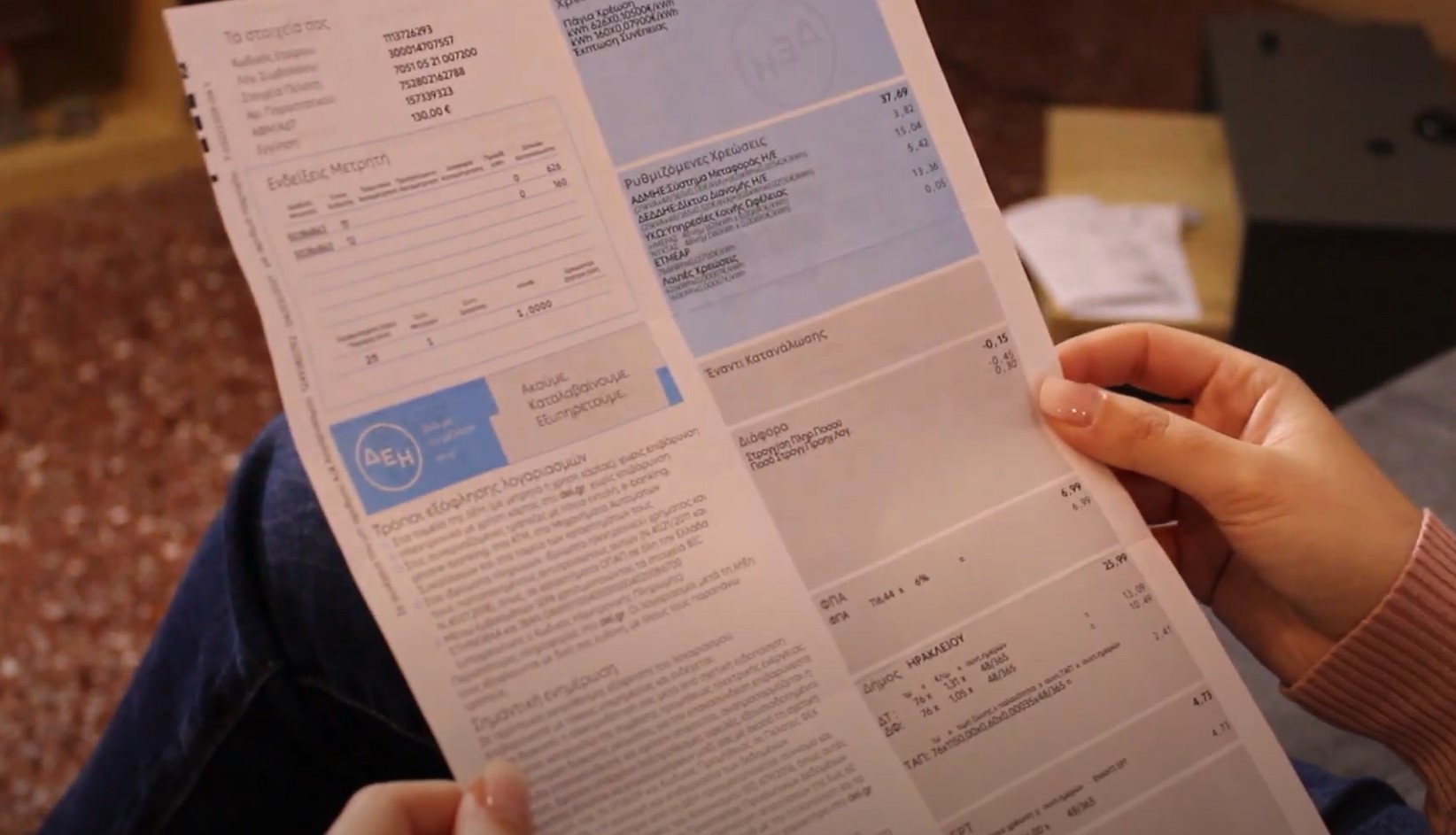
A number of suppliers are unilaterally adjusting the fixed electricity tariffs they have concluded with their customers, as a result of consumer complaints to RAE, using a provision in the Supply Regulation that allows such an action.
In particular, Article 30 states that the supplier may unilaterally change the terms of the contract, if this is provided for in the contract. In addition, Article 18(k) states that the contract must include: «A statement of the terms of the Supply Contract which may be modified unilaterally by the Supplier or at the request of the Customer, the procedure for modification and the minimum time limits for notifying the Customer».
Based on the above provision of the Supply Code, suppliers specify the possibility of unilaterally changing the terms of contracts “for serious reasons” in the contracts they conclude with their customers, which now enables them to free themselves from contracts that are loss-making for them and beneficial for their customers.
A condition for such a change is that six months must have passed since the signing of the contract and the consumer must be notified at least 60 days before the change so that he or she can choose another plan or supplier.
In this way, the last «castle» that consumers had (or thought they had), that of fixed tariffs, falls, as they now also follow the rise in energy prices.
It should be noted, however, that the number of fixed tariffs that alternative providers have in their customer base is small, given that these companies have always preferred to “sell” consumers variable tariffs in order to appear cheaper than those of the PPC. The variable tariffs are of course accompanied by the indexation clauses which in the current period with the explosion of wholesale electricity have led to very high charges.
On the contrary, the PPC has a very large number of fixed contracts with its customers (around 500,000 contracts), which, according to what it officially declares, has not proceeded to any adjustment of fixed tariffs until their expiry, nor does it intend to apply the possibility offered by the Commission Code.
“PPC's fixed contracts myHome Enter, myHome Enter+ and myHome Online have a fixed duration and price, which remains fixed until the expiry of the contract. These contracts are not subject to any clause and PPC has not made any changes to the terms of the fixed contract before its expiry for its more than 500,000 customers who have chosen fixed tariff products,” PPC said in a statement.
It should be noted that the Supply Code is a ministerial decision issued after an opinion of the Energy Regulatory Authority.
In yesterday's announcement, RAE said among other things:
A prerequisite for a lawful amendment of a contract is compliance with the procedure, i.e. individual notification of the Customer and completion of the notification 60 days before the entry into force of the amendments.
Individual information: Suppliers are required to notify their Customers on an individual basis. Therefore, announcements on the website or in the press concerning changes to contracts or tariffs obviously, due to their general and mass nature, do not satisfy the requirement of individual notification.
The way of individual information: Para. Article 30(3) of the UNCAC expressly requires that individual information be provided by letter. Alternative means of notification are allowed «if the Customer has consented». Therefore, Suppliers who - with the exception of the general direction - prefer to notify the consumer by email, sms, bill, etc., bear the burden of proving the consumer's consent.
The unilateral modification by suppliers of pricing terms - possible abuse: In the current circumstances, the increase in wholesale market costs is reasonably - to some extent - contributing to the modification of Low Voltage supply contracts. However, the right of the Suppliers to modify the contractual terms - on the basis of the above procedure - is subject to review as to whether it has been abused. In this context, Suppliers' practices of offering particularly attractive terms and subsequently revising them, can be seen as abusive strategies to increase their customer base, on the one hand, and on the other hand, they create a climate of insecurity among their customers, leading them either to constantly search for a supplier or to accept less favourable terms.
«Let there be no doubt, however, that violations of the Code of Conduct and abusive practices will be subject to appropriate sanctions. The Authority will ensure that the consumer's right to individual, timely and transparent information will not remain empty,» RAE said in its statement.