Every natural site is distinguished by its uniqueness, which is the result of the interplay of many natural, historical, and cultural factors, which contribute to shaping its overall history and create a specific landscape where the activities of its inhabitants unfold. The term «place» denotes a human-geographical unit, a part of the real geographical space where the natural is linked to the cultural, and mythical or historical memories are linked to the real or idealized characteristics that shape the various national, local, or utopian identities are shaped. The latter endow the place with a distinct aesthetic and ethical dimension that transforms the natural landscape into a “spiritual landscape.”.
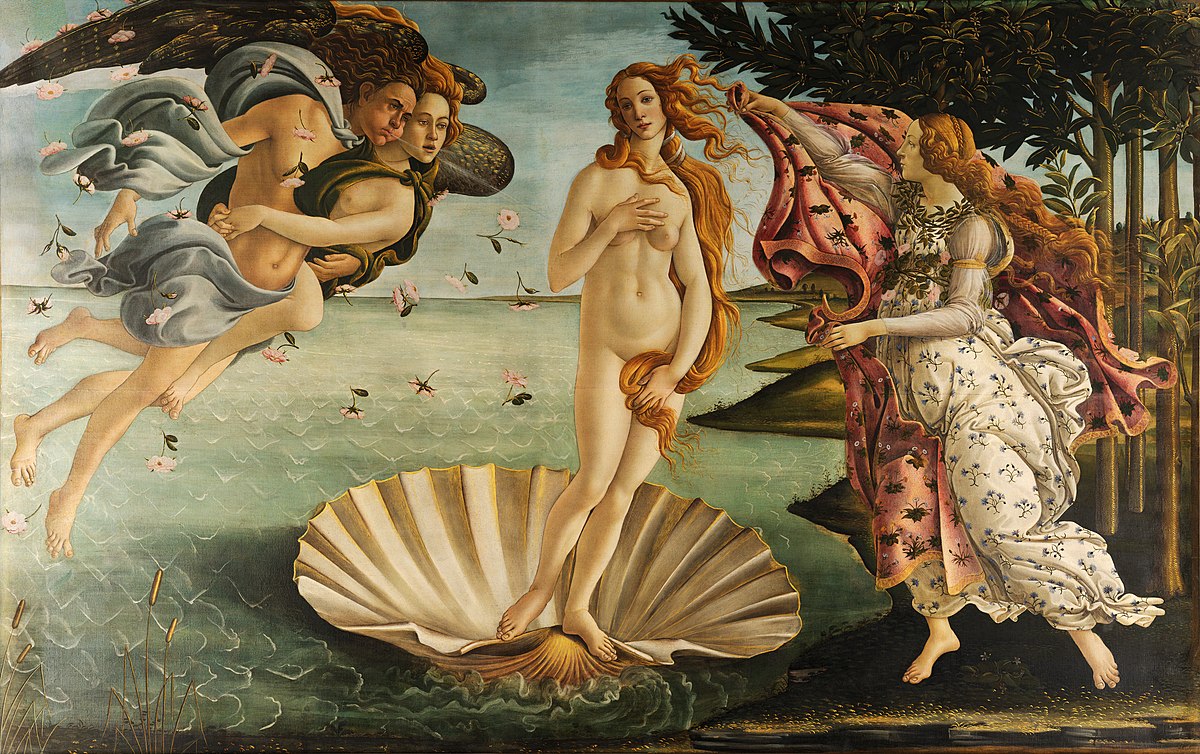
Kythira, like Arcadia, is perhaps a unique example of the transformation of a real place into a «spiritual landscape,» from Homer and Hesiod, with their references to Aphrodite of Kythira and the «zathia» of Kythira, all the way to the «Journey to Kythira» of Watteau, Baudelaire, and Nerval, and the contemporary uses of its name and symbolism in literature and the arts. Myth, allegory, and symbolism coexist in the literary and visual journey to Kythira undertaken by artists from antiquity and the Renaissance through to the modern era. Over the long course of history, Kythira has emerged as a place of mythological constructions, where the mysterious symbolism of the landscape carries particular weight; thanks to the myth of
The birth of Aphrodite has been associated with symbols that represent archetypal models and abstract ideas. Kythira, as a place and a landscape, has been associated par excellence with beauty, but also with the pastoral and the idyllic, the utopian and the dreamlike, the wintry,
the picturesque, yet also the repulsive and tragically sublime—aesthetic qualities that are particularly evident in Renaissance and modern landscape and mythological painting, as well as in the literary and poetic tradition. As an idealized place and a nostalgic ode to the joys of life, Kythira is depicted in J.-A. Watteau’s famous painting «A Journey or Pilgrimage to Kythira.» As a symbol of freedom, sensual and spiritual pleasure, Kythira is featured in literary and visual works, where the internal fiction concerning the hero and his society coexists with the external, that is, the one concerning the author’s relationship with his own society, while the myths associated with this specific place and the mythical symbols it has given rise to are reimagined, recreated, and redefined, producing different perspectives and interpretations of the mythological symbols and their allegorical representations. The place ultimately becomes a symbol because of the mythological characteristics and situations associated with it.
Read below the paper—a study by Professor A. Glykofrydi-Leontsini—as published in the First International Conference on Kythirian Studies, scientific editor . 5 volumes, Athens, 2003, vol. 5, pp. 91–108.
Athanasia Glykofrydi-Leontsini is a professor of Modern European and Modern Greek Philosophy at the National and Kapodistrian University of Athens.
Full CV