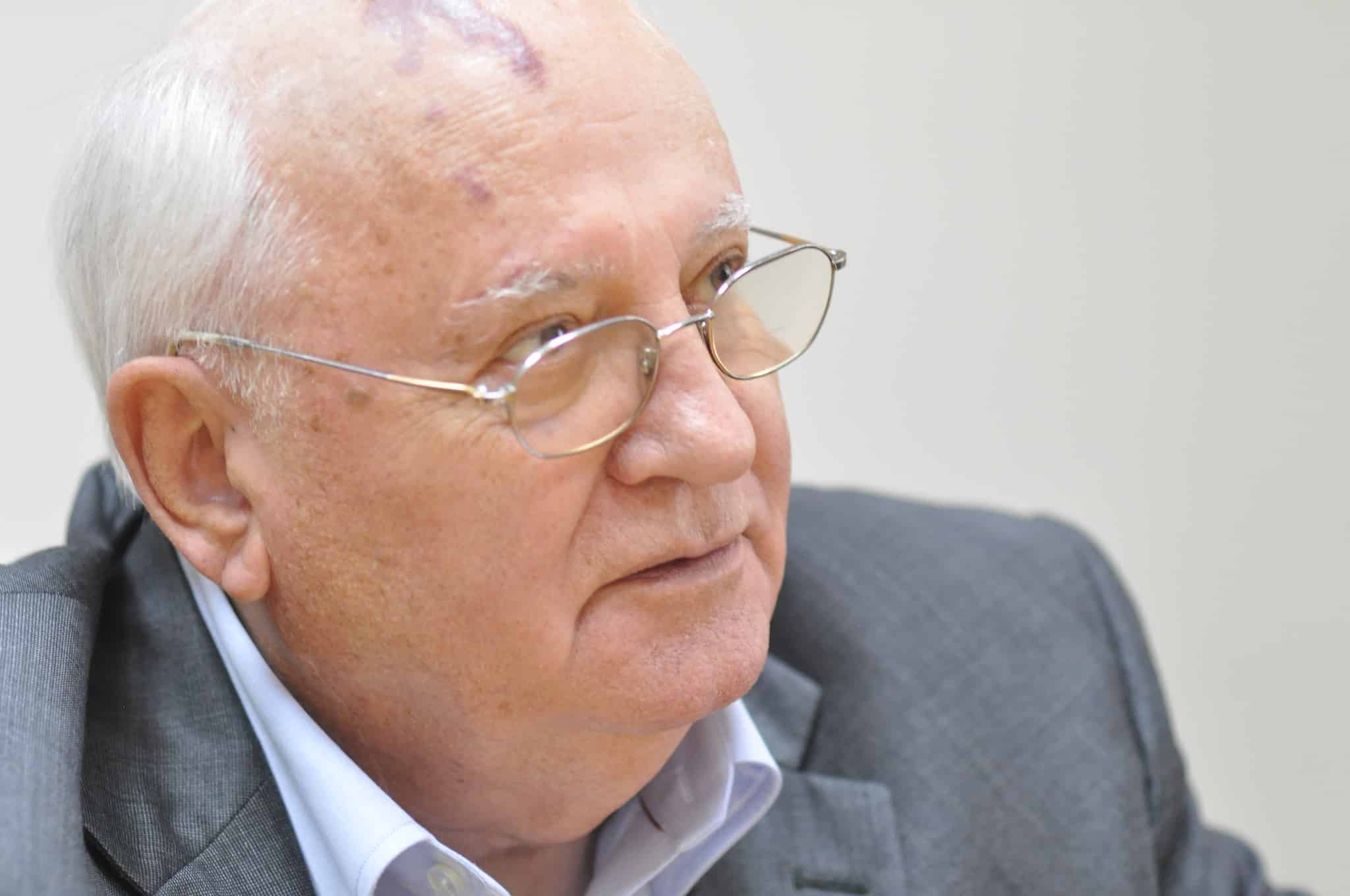
Mikhail Gorbachev, the last leader of the USSR and the leader who gave the order to end the Soviet Union's disastrous military campaign in Afghanistan, said today that the intervention in that country by the US and its allies was doomed from the start.
The 90-year-old Gorbachev considered the Soviet presence in Afghanistan a political mistake that wasted precious resources at a time when the Soviet Union was, as it turned out, living in the twilight of its own existence.
The Soviet-backed authorities in Afghanistan survived for three years after Moscow withdrew its main forces in 1989, but never recovered after the Russian decision to cut off aid to them following the collapse of the Soviet Union in January 1992 and fell later that year.
Gorbachev noted today, according to statements quoted by the Russian news agency RIA, that NATO and the Americans had no chance of success and had handled their own campaign in Afghanistan very badly.
«They (NATO and the US) should have admitted earlier that they failed. The important thing now is to learn lessons from what happened and ensure that similar mistakes are not repeated,» Gorbachev stressed in his statements to RIA.
«This (the US intervention) was a failed operation from the beginning, although Russia supported it in the early stages», he added.
«Like many other similar plans, at its heart was the exaggeration of a threat and ill-defined geopolitical ideas. To these must be added unrealistic attempts to democratise a multiracial society,» he said.
After the withdrawal of US troops from Afghanistan after 20 years of being there, the Taliban managed to regain control of the country on Sunday, entering Kabul without encountering resistance.
The US intervened in Afghanistan in 2001 as the Taliban sheltered al-Qaeda leader Osama bin Laden after the September 11, 2001 attacks on the US.
The USSR was also immersed for 10 years in a conflict in Afghanistan, which began with the Soviet invasion in 1979.
When he came to power, in the spring of 1985, Gorbachev found a country economically exhausted, in a quagmire in Afghanistan and unable to continue the arms race.
Gorbachev designed his policy of perestroika (reconstruction in Russian) to reorganise the Soviet system and decided to withdraw the Red Army from Afghanistan in 1989.
Then followed years of civil war which eventually brought the Taliban to power, some of whom are the heirs of the mujahideen who had fought the Soviet troops.