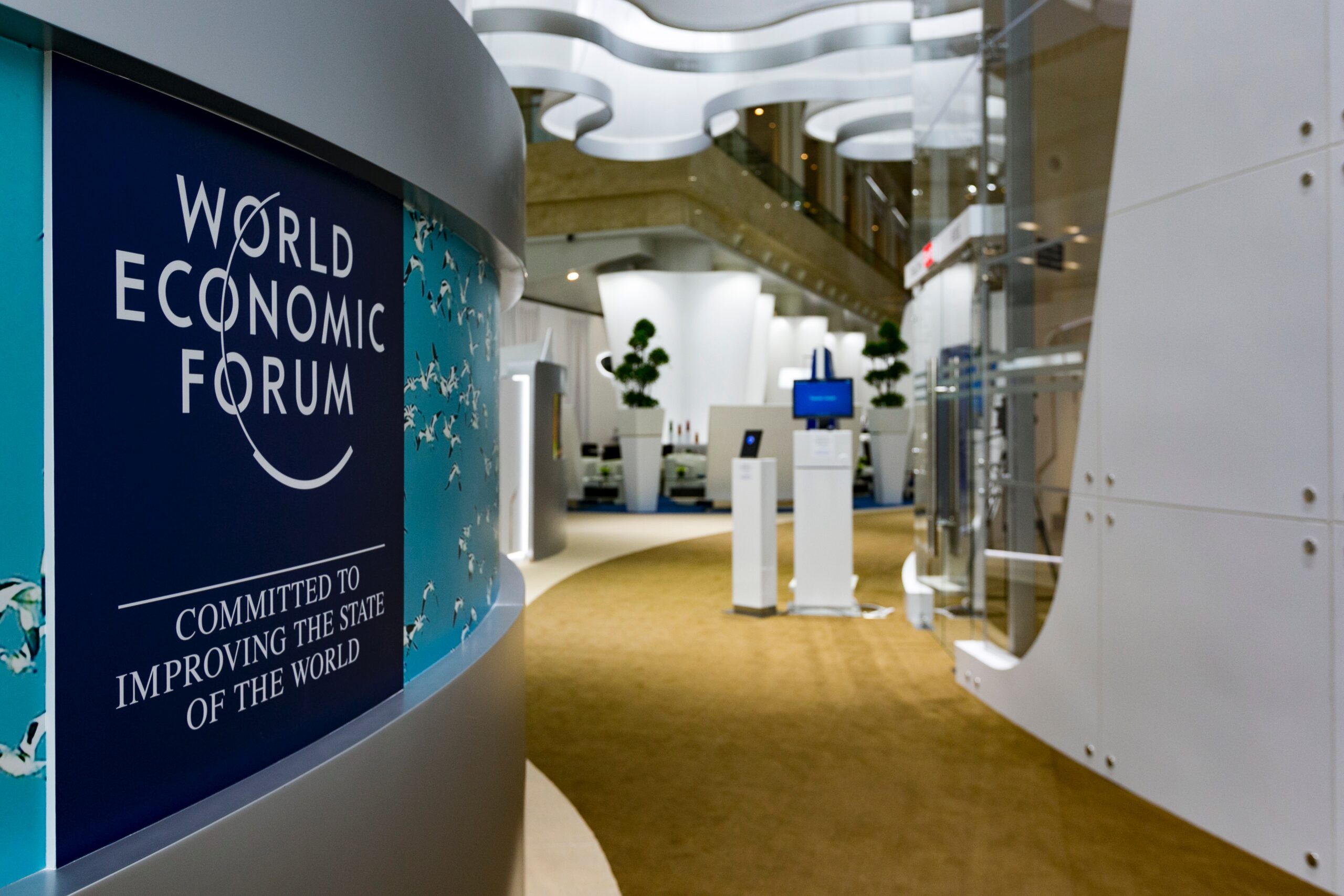
The global economy faces a year of sluggish growth prospects and uncertainty stemming from geopolitical tensions, tight financing conditions, and the disruptive impact of artificial intelligence, according to a survey of leading economists released today.
This survey of more than 60 leading economists selected from around the world from the private and public sectors is conducted annually prior to the annual meeting of the World Economic Forum (WEF) in the Swiss ski resort of Davos. It is an attempt to outline priorities for political and business leaders.
Approximately 56% of respondents expect global economic conditions to weaken this year, with a high degree of regional divergence. While majorities see moderate or stronger growth in China and the United States, there is broad consensus that Europe will see only weak or very weak growth.
The picture for South Africa and East Asia and the Pacific is more positive, with the vast majority expecting at least moderate growth for these regions in 2024.
Reflecting comments from the world's leading central banks that interest rates have peaked, 70% of respondents expect financing conditions to ease as inflation subsides and the current tightness in labor markets eases.
Artificial intelligence is considered to be leaving an uneven mark on the global economy: while 94% expect artificial intelligence to significantly boost productivity in high-income economies over the next five years, only 53% predict the same for low-income economies.
The World Economic Forum also published a study on the «quality» of economic growth in 107 economies, which concludes that most countries are growing in ways that are neither environmentally sustainable nor socially inclusive.
«The revival of global growth will be essential to addressing significant challenges, but growth alone is not enough,» says Saadia Zahidi, managing director of the World Economic Forum.
The WEF announced that it is launching a campaign to define a new approach to development and help policymakers balance it with social, environmental, and other priorities.