More than 200,000 are estimated to be farmers who will benefit from the government's intervention regarding Refund of the Special Consumption Tax on petroleum for 2022.
The measure concerns young farmers and farmers who are members of cooperatives. The fiscal cost amounts to €50 million for the coming year.
According to announcements made by finance ministers, Christos Staikouras and Rural Development and Food, Spilios Livanos, This measure is being implemented due to price increases in the petroleum market.
More specifically, as announced by the minister, «in 2022, the Special Consumption Tax on oil consumed by these persons for agricultural use will be refunded.
The refund will be made based on objective criteria., such as the type and extent of cultivation, in conjunction with the oil purchases made during that period. The relevant decision will be promoted within the next period.
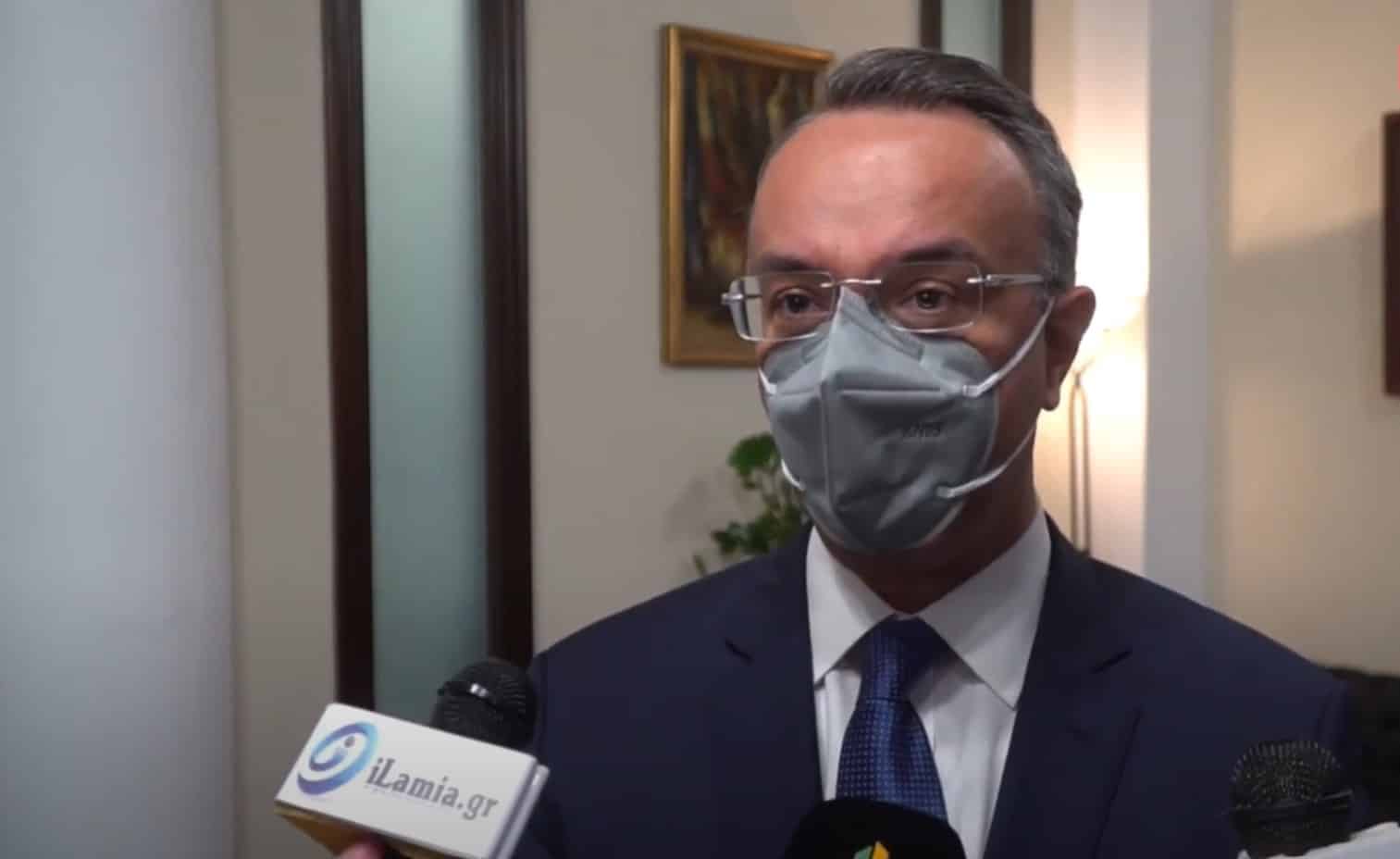
The Finance Minister's statement in detail:
«From the moment our country was confronted with a series of crises, crises of external origin, in the health, climate, and energy fields, the government cast a wide «net» to protect the economy, with measures to support society, create jobs, and strengthen social cohesion.
Measures – proven – of economic efficiency and social justice, covering affected households and businesses, including farmers.
This is because the primary production sector is, for the New Democracy government, a key pillar of the Greek economy.
This pillar has been significantly strengthened by the government through the implementation of a comprehensive set of measures based on four pillars.
1st Axis: Reductions in taxes and social security contributions.
All agricultural businesses and farmers – natural persons benefit from horizontal reductions in taxes and social security contributions, such as:
§ A 3 percentage point reduction in insurance contributions for employees of agricultural businesses.
§ The new tax scale for natural persons and professional farmers, with coefficients starting at 9%, instead of 22%.
§ The reduction of tax of agricultural enterprises, from 28% to 22%.
§ The reduction of advance tax 80% for legal entities and 55% for natural persons engaged in agricultural activities.
§ Suspension of payment solidarity contribution.
§ Reduction of taxation to 10% on the profits of collective agricultural schemes.
In addition, specifically for the agricultural sector, the following measures were taken:
§ Exemption from the obligation to pay business tax for farmers under the normal regime.
§ Permanent application of the super-reduced VAT rate of 6% to animal feed intended for animal production.
§ No additional charges ENFIA the value of agricultural land owned by natural persons, and therefore also by farmers.
2nd Axis: Aid to farmers affected by the coronavirus.
To date, €164 million has been paid out to support primary sectors that have suffered significant losses due to the pandemic, through a grant from the Ministry of Rural Development and Food from the special reserve kept at the Ministry of Finance.
Furthermore, An additional €40 million has been approved, to be granted by the end of the year, to support additional affected sectors of the primary sector.
Consequently, total support, excluding the budget of the Ministry of Rural Development and Food, amounts to €204 million, up from an initial forecast of €150 million.
In addition, through the seven cycles of the Refundable Advance Payment scheme, approximately 102,000 businesses in the primary sector have been supported, with a total amount of €258 million.
For example, 16,842 sheep and goat farmers have received €31 million in support, 14,875 wheat and cereal growers have also received €31 million, 12,486 olive oil producers have received €30 million, and 12,362 cotton producers have received €25 million.
3rd Axis: Compensation for farmers affected by natural disasters.
To date, the Ministry of Finance has provided emergency subsidies to the Ministry of Rural Development and Food and ELGA (Greek Agricultural Insurance Organization) amounting to €84 million in 2020 and €115 million in 2021.
In addition, further disbursements of €170 million are expected in the coming period to cover the remaining damage to the agricultural sector caused by the summer fires and spring frost.
Overall, aid to the primary sector for the restoration of natural disasters, excluding the budget of the Ministry of Rural Development and Food, is estimated at €370 million.
4th Axis: Aid to farmers affected by the energy crisis.
Due to price increases in the petroleum market, a regulation is being introduced to refund the Special Consumption Tax on diesel fuel used by young farmers and farmers who are members of cooperatives.
Specifically, in 2022, the Special Consumption Tax on petroleum consumed by these persons for agricultural use will be refunded.
The refund will be based on objective criteria, such as the type and extent of cultivation, in conjunction with the oil purchases made during the period in question.
The relevant decision will be promoted within the next period.
According to data from the National Register of Agricultural Cooperatives and other Collective Bodies of the Ministry of Rural Development and Food, as well as farmers participating in Contract Farming programs, the total number of beneficiaries is estimated at 176,000 farmers.
The fiscal cost of the intervention is estimated at €50 million for 2022.
In conclusion, the total amount of interventions to support the primary sector, excluding the budget of the Ministry of Rural Development and Food, reaches €900 million.
And this amount does not include a series of other interventions, such as reductions in taxes and insurance contributions.
This demonstrates, in practice, the particular importance that the Government attaches to supporting and strengthening the primary sector.
This is an area that must—and can—be developed further, leveraging its competitive advantages to contribute significantly to achieving sustainable economic growth, strengthening social cohesion, and stimulating regional development.