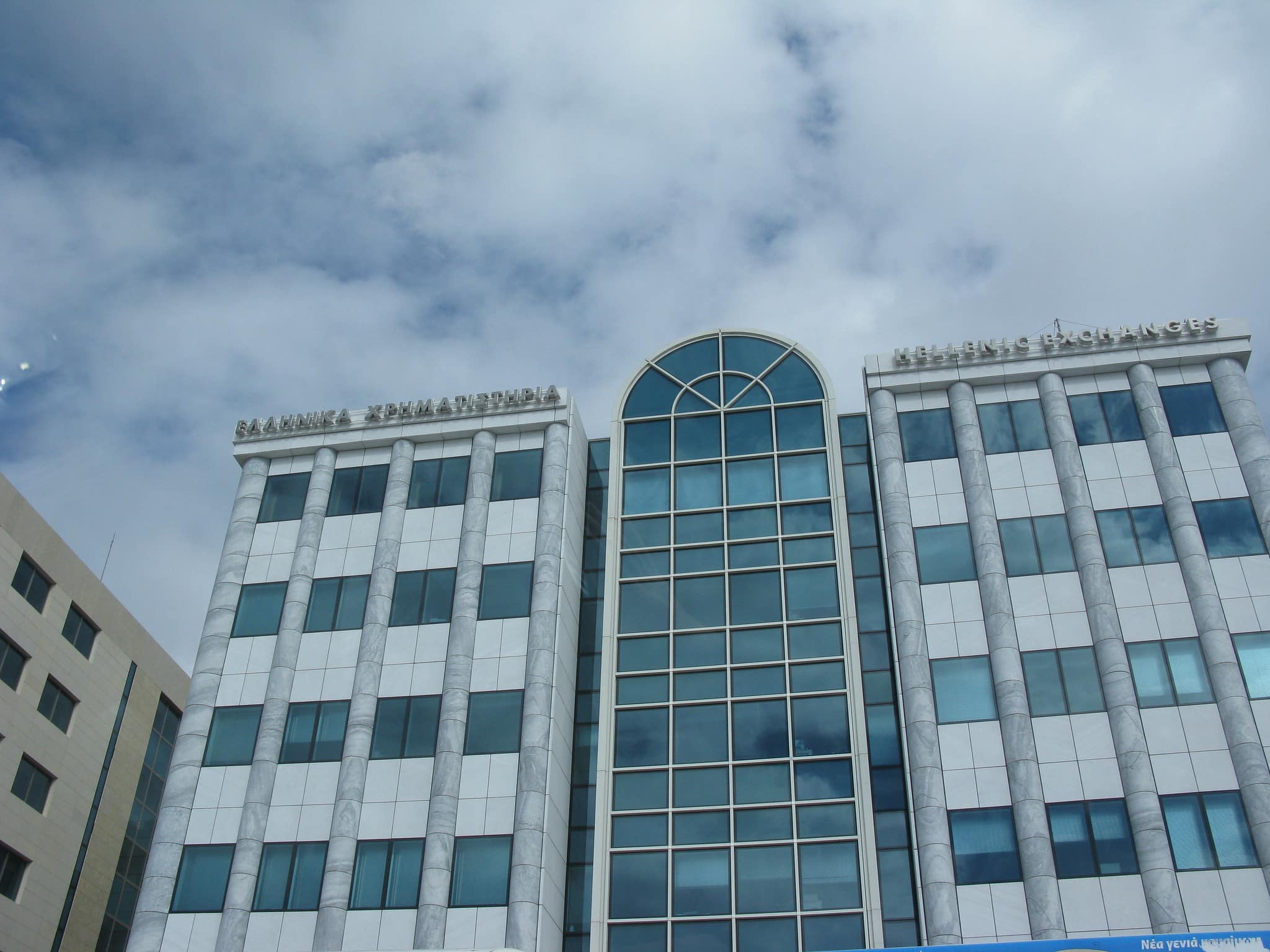
In 2022, the Athens Stock Exchange managed, in difficult circumstances, to “resist” war, inflation, rising interest rates, and an energy crisis, and to differentiate itself positively from other developed markets around the world, something that has not happened since 1990. The market closed positively for the second consecutive year (+10.43% in 2021).
The Greek stock market not only played strong “defense,” performing better than international markets in a difficult international environment, but ultimately closed in positive territory when the major indices fell significantly (S&P -19% Nasdaq -33%, Dow Jones-9%, DAX-30 -12% and Cac- 40 – 9%, based on prices shortly before the close of the last session of the year).
The Greek stock market found support last year mainly in the high growth rates of the Greek economy, the record results posted by listed companies, and the return of the banks. After many years, banks will be profitable, with single-digit NPEs.
The General Price Index closed 2022 at 929.79 points, compared to 893.34 points in 2021, marking an annual increase of 4.08%.
The total market capitalization decreased by €230 million to €65.862 billion.
The large-cap index rose by 4.78%, while the mid-cap index fell by 5.39%.
The banking index rose by 11.42%, while the total capitalization of the four systemic banks increased by €1.34 billion.
In 2022, listed companies raised a total of €1,094 million. Of this amount, €302.5 million came from eight cash share capital increases, €114.2 million from new listings (Dimand, Blue Profit REIC), €534.1 million from five new bond issues, and €143.2 million from stock options and reinvestment of OPAP dividends.
Companies listed on the stock exchange have distributed €2.4 billion in dividends and capital returns this year, which is the highest amount since 2009, the last year before the great economic crisis began. With a market capitalization of €65 billion, the average dividend yield of the Greek stock market stands at a very good 3.6%.
Winning and losing shares
The biggest gains in 2022 were recorded by the following stocks:
Euroxx (+240.30%), ANEK (+153.89%), ANEK(po) (+144.44%), Yalco (+130.00%), Attica Holdings (+119.91%), MIG (+81,79%), Motor Oil (+58,69%), Progressive (+55,37%), Terna Energy (+50,07%) and Inform Lycos (+43,92%).
On the contrary, stocks recorded the biggest losses:
Lavipharm (-76,29%), VIS (-62,00%), Varvaressos (-60,87%), Attica Bank (-57,34%), Frigoglass (-51,42%), Epilektos (-50.00%), SATO (-50.00%), Kekrops (-48.65%), Space Hellas (-43.16%), Douros (-42.86%).
High capitalization
Among the large-cap stocks, the following closed the year with gains: Motor Oil (+58.69%), Terna Energy (+50.07%), Ellaktor (+34.72%), Mytilineos (+34.17%), National Bank of Greece (+27.80%), Jumbo (+26.83%), ELPE (+22.03%), Eurobank (+18.35%), GEK TERNA (+14,62%), Piraeus (+11,63%), Aegean Airlines (+10,09%), OPAP (+6,09%).
On the contrary, the following shares closed with losses: PPC (-30.32%), ADMIE (-29.61%), Sarantis (-27.08%), Coca Cola HBC (-25.31%), Quest Holdings (-24.60%), Lamda Development (-15.28%), EYDAP (-12.93%), Viohalco (-12.85%), Elvalhalcor (-12.43%), Titan (-9.87%), OTE (-10.24%), PPA (-8.25%) and Alpha Bank (-7.15%).
Market trends in 2022
The Greek stock market bucked the international downward trend in January 2022, and won the “silver” medal among all global stock exchanges, recording the second-highest performance worldwide after the Brazilian Stock Exchange (+6.96%). The General Price Index closed the first month of 2022 with gains of 4.86%, with the banking index outperforming with gains of 17.92%. In contrast, international stocks experienced their worst January since the 2008 stock market crisis, with the MSCI global index recording losses of 8%.
In February, the market continued its upward trend, reaching 971.09 points at the close of trading on February 11, a seven-year high. Immediately afterwards, however, everything changed: Russia's invasion of Ukraine caused turmoil in the markets, with the Greek stock market closing the month down 4.82%.
The Stock Exchange “weathered” the difficult month of March, closing with a decline of 1.36%, while the first quarter of 2022 closed with losses of 1.55%.
Wall Street indices closed the first quarter with losses after two years, while the pan-European Stoxx 600 index lost more than 5% for the January-March quarter after seven consecutive quarters of gains.
In the first week of March, the market plunged by 11.38% due to Russia's invasion of Ukraine and the ensuing energy and inflation crisis. This was followed by an upward reaction that limited the General Index's losses in March to 1,36%.
April's results for the stock market are positive (+4.89%), given that the international picture can hardly be considered supportive for the market. High inflation rates, which are prompting central banks to raise interest rates earlier than expected, and the significant impact of the energy war on all European economies were the factors that held back the upward trend in the markets.
In May, the scene changes as April inflation reaches 10.21% and everyone realizes that it is not temporary, and the market retreats 3.441%.
June was particularly negative (-9.01%). The “perfect storm” that hit international markets in the first half of the year did not leave the Greek stock market unaffected. However, the decline in the General Price Index was smaller than that of the larger international stock exchanges. The General Index closed the first half of the year with a decline of 9.28%, while the S&P-500 barometer index fell 20.58%, the Dow Jones fell 15.31%, the Nasdaq fell 29.51%, the DAX-30 fell 19.52%, and the CAC-40 fell 17.20%.
Around $13 trillion evaporated from the stock markets, with the S&P 500 index experiencing its worst six months since 1970, the era of stagflation.
The stock market rebounded in July (+5.01%), and while international markets “plummeted” in August, the Greek stock market closed with a slight increase (0.62%), thanks to the excellent half-yearly performance of the banks.
In September, the energy crisis intensified with Nord Stream 1 suspending operations. Central banks continued to raise interest rates significantly. The Greek stock market synchronized with the decline in international markets, and the General Stock Index closed the month down 7.41%.
The market reacted positively over the next two months, closing October with gains of 10.26% and November with a rise of 4.35%, following the recovery of international markets, while ending December with a rise of 1,91%.