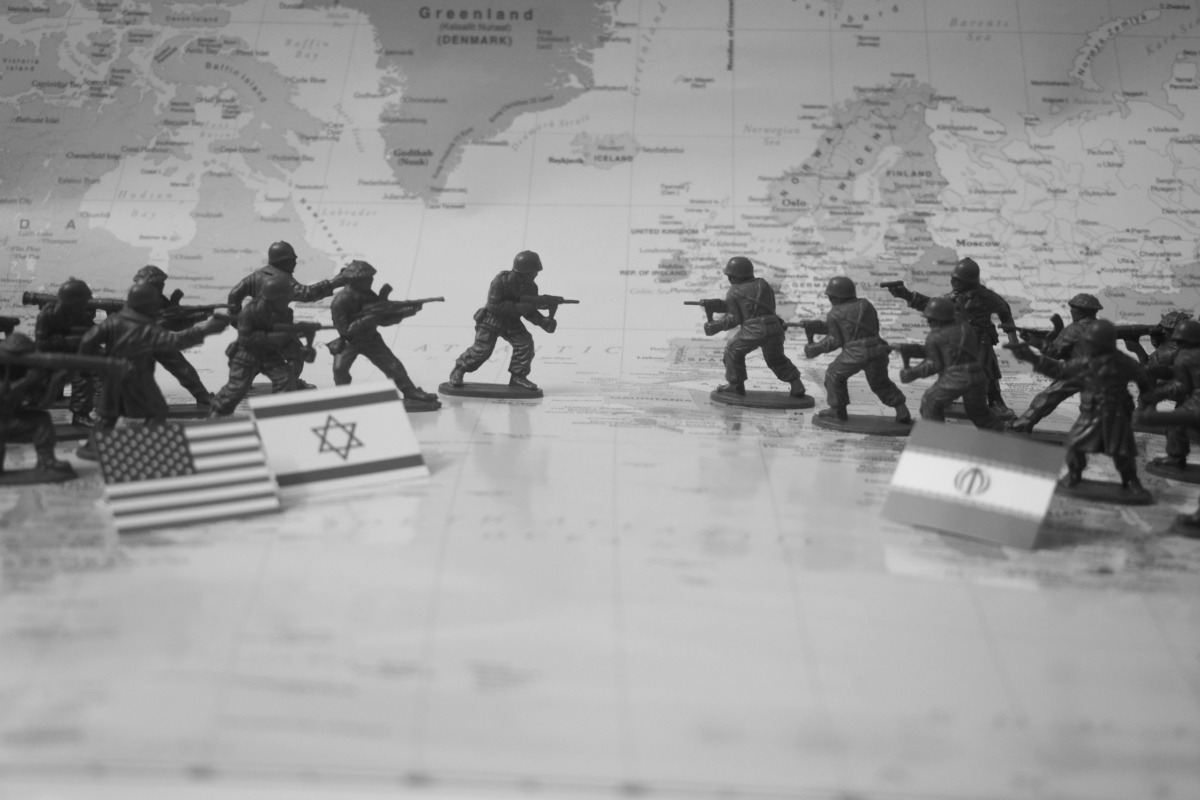
The war in the Middle East is headed for a total reversal, as a slow but gradual rapprochement between the United States and Iran for its end, through negotiations that would probably take place in Pakistan, the developments that took place on Friday (3/4) do not leave much room for diplomacy.
In fact, within hours Washington and Tehran were further apart than at any other time in this month of war, as Iran managed to shoot down two American fighters, an F15 in the south of the country and an A-10 Warthog over Hormuz, while also hitting an HH-60G Pavehawk helicopter (it managed to land in Iraq) involved in the search for and rescue of the one F15 pilot still missing.
In fact, the fate of the crew turned into a thriller because while some Iranian media reported that the crew had been captured, they then reported that a reward was being offered to anyone who offered information to locate one of the two pilots. Finally, hours later the Israelis reported that the American pilot had been located and recovered in time by US forces and is unharmed, while the fighter's weapons systems operator remains missing but contacted the Pentagon via encrypted message.
The «no» to the 48-hour ceasefire and the wreck of the ceasefire
Washington reportedly proposed a 48-hour ceasefire to Tehran, presumably in order to allow the operations to find the pilot to continue smoothly, but the proposal was rejected, and together with it came reports of even a breakdown of a general negotiation.
In particular, the current mediation efforts of the countries of the Greater Middle East, including Pakistan, to achieve a ceasefire between the US and Iran have come to a standstill, the Wall Street Journal reported. Iran has officially told mediators that it does not intend for its officials to meet with Americans in Islamabad in the coming days and considers Washington's demands «unacceptable,» according to the paper.
Thus, Israeli Prime Minister Benjamin Netanyahu may have declared today that his army has destroyed «70% of Iran's steel production capacity», but instead it seems to be fully confirmed by CNNi which reported that at least half of Iran's missile launchers remain intact, while thousands of drones are still in its arsenal. This raises questions about Iran's adequacy of air defence systems, despite the fact that the US and Israel have been bombing the country for over a month with the aim of weakening its military capabilities, the Wall Street Journal commented.
Trump: «Negotiations not affected»
«President Trump was informed of the downing of the US fighter jet by Iran», the White House announced, but it gave a completely different version from the one presented by the international media on Iran's refusal to engage in dialogue. Thus, speaking Friday night on NBC, Trump stressed that «the shooting down of the US F-15 will not affect the negotiations. It's a war, we are at war.» By now, it is patently obvious that even the most threatening statements that have preceded them on both sides seem too little to convince one side or the other to back down.
It is characteristic that this morning, Trump had once again warned Iran after the bombing of the new bridge in Tehran. The US president posted video of the bombing that left two dead and issued his new threat, calling on Iran to «move forward on a deal before it's too late».
The indirect response came from the speaker of the Iranian parliament, Mohammad Bagher Ghalibaf, who neither more nor less... mocked the US via his X account around the downing of the F-15, writing: «After defeating Iran 37 times in a row, this brilliant war without strategy they started has now been downgraded from «regime change» to ”Hey, can anyone find our pilots? Please?”.».
While the senior spokesman of Iran's Armed Forces, Abolfazl Shekarci, said that Tehran will continue the war with the United States and Israel until the two countries «repent» for their illegal act of aggression.
The EU fuel rationing and the scenario for oil at $200
Plus, fears of a «long-term» energy shock from the war in the Middle East have sparked a major mobilisation in the EU with officials considering all options including rationing fuel and releasing more oil from emergency stocks.
«This will be a long crisis ... energy prices will be higher for a very long time,» Dan Jorgensen told the FT, while warning that for some products «we expect the situation to be even worse in the coming weeks».
US oil prices have already shot up from around $65 to around $100 a barrel since the start of the war in the Middle East and as CNNi reported in its analysis «the scenario of oil at $200/barrel is not that crazy».
Crude oil rose 51% in March alone, recording the second largest monthly increase since the start of futures trading in 1983.
Editing - Spyros Kolias - CNN Greece