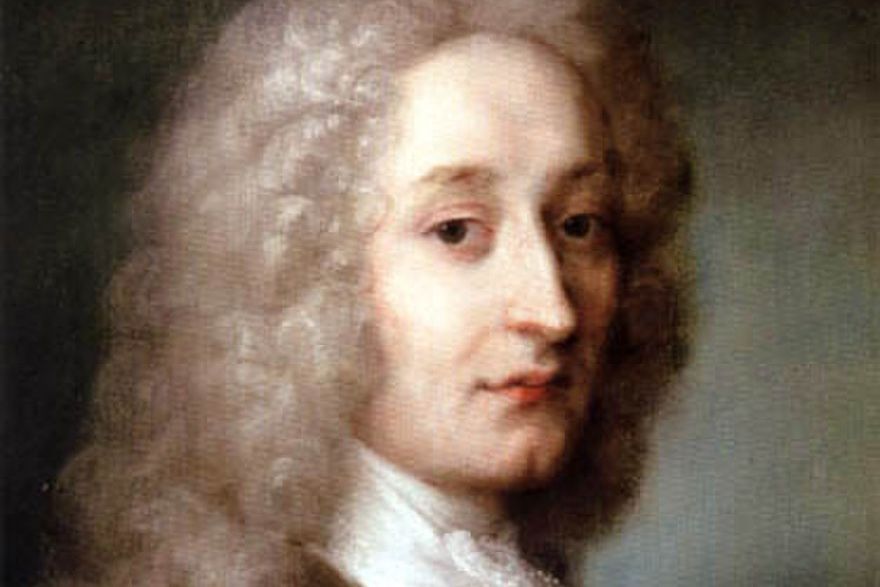
Jean-Antoine Watteau was born in Valenciennes on 10 October 1684. The son of a textile merchant, he showed an early interest in painting. He studied under the local painter Jacques-Albert Gérin. Not having much to learn next to Gérin, he left for Paris in 1702. A year later, the painter Claude Gillot hired him as an employee in his studio. There, Watteau worked on the characters in the Commedia dell'arte (Commedia dell'arte) of the Italian improvisational comedy that was to be one of his favorite subjects until the end of his life. The works he designed in this subject matter made him widely known. He later took a job with Claude Audran III, an interior decorator.
At that time, Watteau managed to design and paint works of perfect elegance. Claude was curator of the Luxembourg Palace or the Palace of the Medici. There, Vatteau was able to admire the paintings of Peter Paul Rubens, which he had painted for Queen Marie de Medici. The painter's influence on Batteau was considerable. In 1709, Watteau tried to succeed in the French Academy competition but was rejected. He tried again in 1712 and succeeded not only to be accepted but to be recognized as a full member of the Academy. It took Watteau five years to create the masterpiece that would make him known everywhere. It is the painting «Pilgrimage to the island of Cythera» (Pèlerinage à l'île de Cythère or Pilgrimage to Cythera), which was in fact painted twice with quite different elements.
Vatteau is the most characteristic representative of the «rococo» style of painting, a style that succeeded the «baroque». Watteau's works exude a melancholic calm, an absolute futility that brings him ever closer to contemporary sensuality. Inspired by nature, he depicts a life without difficulties and everyday life, joyful excursions in the mountains, soft colours, rich decoration in his works, beautiful women and couples in love. Apart from the famous «Embarkation for Kythera», other well-known works by Vatteau are Pierrot (long identified as “Gilles”), Fêtes venitiennes, Love in the Italian Theater, Love in the French Theater, “Voulez-vous triompher des belles?” and Mezzetin. In just fifteen years he created over two hundred paintings.
Watteau's health was fragile when in 1720 he travelled to London for this very reason, to consult his doctor. He had expressed to his friends his deep concern about his health, which was probably chronic and harked back to his childhood. He returned to Paris and lived the last months of his life. He died on 18 July 1721 at the age of only 36.