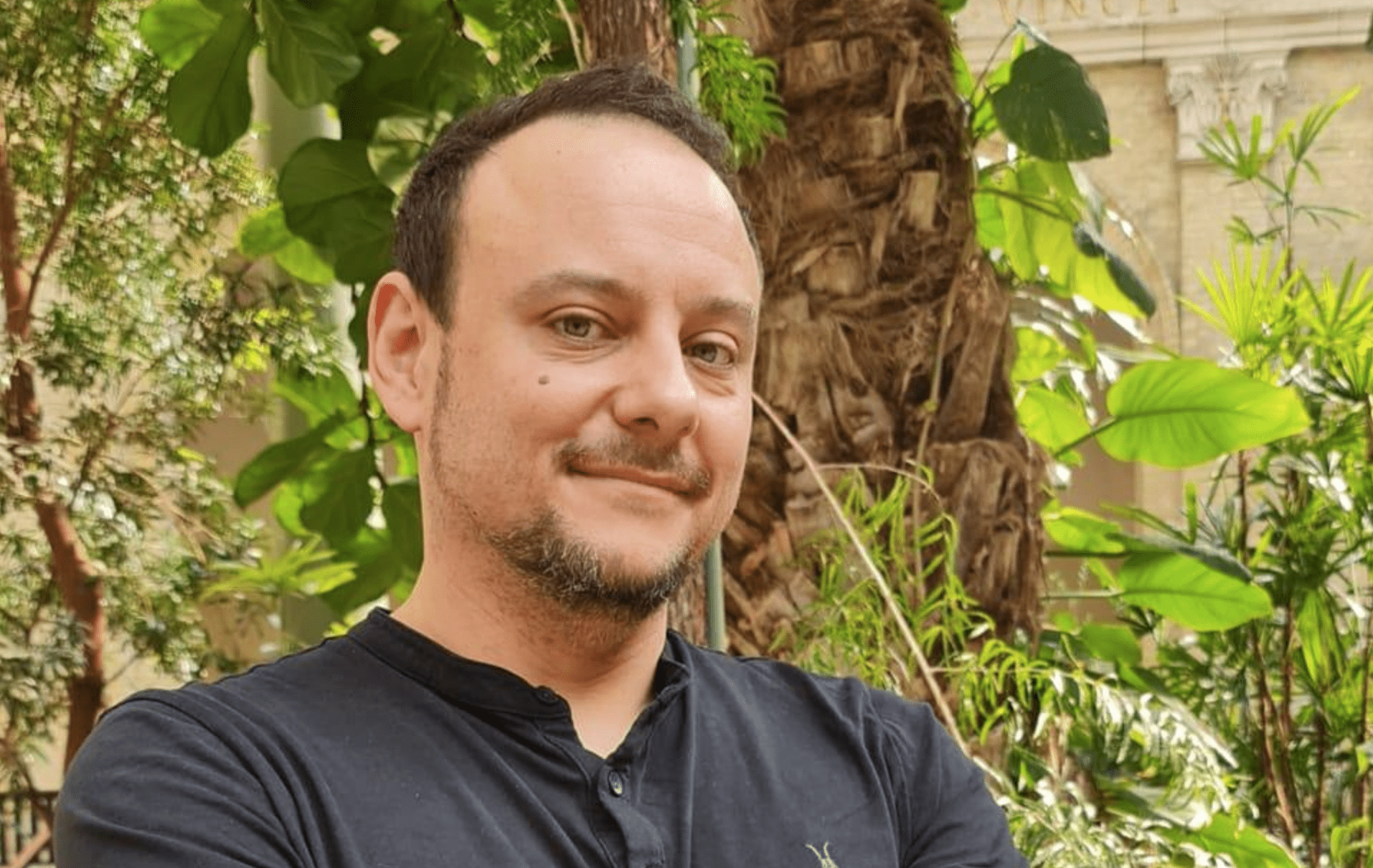
Fears that the next pandemic will be worse than that of the coronavirus, (which he describes as light compared to others that have hit the planet), expresses the associate professor of Hygiene and Epidemiology, clinical virologist Gikas Majorkinis, in an interview with Praetorio Fm and Tania H. Mantuvalou «104,9 SECRETS OF HEALTH», on the occasion of the recent release of his book «Chronicle of viruses», by Papadopoulos Publications.
«Through my book I'm trying to help people understand what it was that we went through, because I think people don't fully understand that it's something that's been going on for millions of years. It will continue to happen and we need to be prepared for the next pandemic, which could be either two seconds or 50 years from now,» says Gikas Majorkinis.
Regarding the endemicity of the virus, which was essentially predicted a year ago, through the same broadcast, and the World Health Organization just a few days ago lifted the highest level of health alert, Mr: «This endemicity has a heavy footprint, which we are also facing in hospitals, and it is borne mainly by vulnerable groups, who are still exposed to the virus. What has happened is that the virus has come in and added an extra burden to the health system and we will have to find a way to deal with it, for decades to come.».
Dramatic to unpredictable pressure on health systems from the next pandemics
As the professor writes in his book, «the possible advent of new viruses and new pandemics will put increasing pressure on health systems. The health and fiscal burden of viral infections will increase in the years ahead. We will experience waves of new viral pandemics, as has been the case on the planet for millions of years. There is no reason to believe that this will stop. On the contrary, there is a possibility that their frequency will increase. Those that succeed in establishing themselves permanently in the human population will be added to the existing viral infections and will continue to plague the vulnerable and susceptible people, who will also continue to increase with the ageing of the population. Technology will help us to better deal with their impact, but at times the stress they will cause will be significant to dramatic and at times unpredictable.».
Urgent need to invest in staff specialised in viral infections, respiratory diseases, and intensive care
And for this very reason, explains Mr.Mayorkinis to Agence Fm, «we need to invest in technology and human resources, specialized in viral infections, respiratory diseases and intensive care, so that we can effectively deal with this long-term burden and possible future pandemics. This investment, however, is time-consuming. It takes more than 11-12 years for each person to specialise, and therefore any gaps that arise are impossible to fill in a short time frame, or in an emergency. We saw it in this pandemic, when in China they were building a hospital in ten days, and moving staff from other places to staff it. You don't build staff in ten days. If there is not a long-term plan, not only to train people, but to motivate them to go in that direction, then we are in for a surprise. If we don't make that investment, we're going to face very big difficulties in the next hundred years.».
There are viruses that caused epidemics from which 60 to 70% of the population died
Q: Based on the historical data of the pandemics that you cite in your book, how serious do you consider the SARS-CoV-2 pandemic to be, the question reasonably arises.
A: «Of the pandemics we have seen historically, this one was a mild one. Probably if we weren't in this time when there is a high percentage of vulnerable people, it would have passed and it would have been subdued. The pandemics that have occurred on the planet are much more deadly. That is, there are viruses that caused epidemics that killed 60% to 70% of the population, such as in South America in the 16th and 17th centuries. And we don't know which viruses they are. This is a terribly grey and scary part of virology, which makes me personally feel a bit weird, because while for smallpox, for example, we knew the profile (ed: which virus causes it and how it is transmitted) and that there is a vaccine, for these viruses, we didn't even know what their profile was and there is no vaccine. And if the bad scenario happens and they come back, we don't know how easily they will be treated.».
Epidemics are a perpetual part of the ecosystem; there is no way to avoid them
Q: History to date has taught us that virus epidemics are fixed values, they will happen again and again. The question is not whether we will see another pandemic. The question is when, with what frequency and with what consequences, you write in your book. Has the danger of mega-pandemics disappeared? Do we know what we can do to avoid them?;
A: «No the risk of mega-pandemics, that is pandemics that can kill more than 10% of infected cases, has not been eliminated. And it hasn't gone extinct because we can't control which next pathogen will pass from animals to humans. I'm afraid that because the planet is so dense, and so many communications, once a pandemic starts in a small village in Africa or China, it could be a problem the next day in Canada. And that will be difficult to control, so as I said we have to invest strategically and long-term to deal with the next pandemic. I think it will be worse, because the profile of the current one was relatively light compared to the other pandemics that the planet has been through, and I'm afraid it's going to catch us by surprise. For example, it could very easily spread a haemorrhagic fever, which would cause huge problems, which are also difficult to treat. There is no way to avoid epidemics. It is a perpetual game of the ecosystem. Viruses are part of the genomes of animals and humans and this has always been the case, it will not stop and we have no way to stop them. The only thing we can do is to control the impact and better manage the acute phase.».