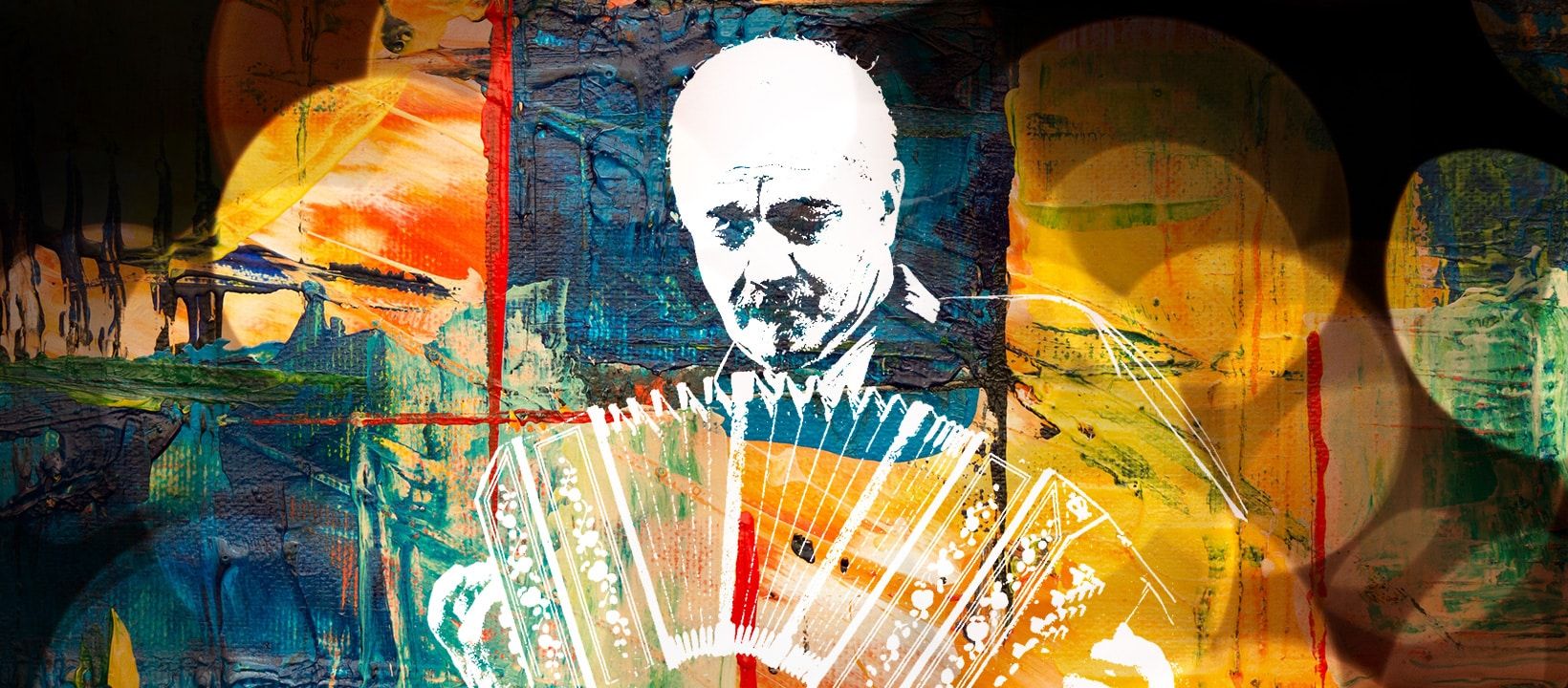
Astor Piazzolla (1921-1992) was born in Argentina, grew up in New York, studied in Paris and returned to Latin America to renew the musical tradition with Nuevo Tango.
In Latin America, the tango, a Spanish rhythm in interaction with the Argentine milonga and with clear influences from Cuban music (habanera), established its presence in the period of European post-romanticism (1890-1914) both in Argentina and in Europe. At the beginning of the 20no In the 19th century, branded tangos begin to be composed, while in the interwar period the timbre becomes more melancholic. Astor Piazzolla, of Italian immigrant parents in Argentina, developed the new tango until 1955, mainly in Paris where he studied on a French scholarship. Piazzolla's new sound is universally recognized as the distinguished musical technique of Nuevo Tango, a musical style with a parallel take on all previous leitmotifs.
In the biography «Astor Piazzolla: A Manera de Memorias» by Natalio Gorin, we learn how his life changed dramatically when he went to France under the guidance of Argentinean professor Alberto Ginastera. His four-year stay in Paris now makes him a brand-name in the art of music as a master of the bantonneon and as a composer. As a result Astor Piazzolla is always internationally known for his compositions Libertango, Escualo and Oblivion. The great composer came to Greece when he gave one last concert in July 1990 at the Herodeion when Manos Hadjidakis as conductor met the great master on stage. Piazzolla made 500 recordings, in fact the last live recording was made then in Athens on 3 July 1990, while his total oeuvre is estimated at 3,000 original compositions.
The cosmopolitan creator Astor Piazzolla is still with us 100 years after his birth.
Author of the article:

Georgia Tsatsani is a philologist and comparative literature scholar.