The planning for fire protection presented from the Lighthouse building of Civil Protection, the Minister of Civil Protection, Michalis Chrysochoidis and Minister of State for Civil Protection and Crisis Management, Nikos Chardalias. The forces are reinforced this year at all levels - both in terms of aerial fire-fighting resources, which now number 69, and ground forces, as well as forest patrols, which reach 820 across the country, compared to 764 last year.
Special reference was made to the operation «Dryades», which involves cleaning operations, removal of fuel, as well as opening and maintenance of access roads for firefighting vehicles.
In detail what Nikos Chardalias said:
«We are in the fire season and we would like to inform you about our planning. A planning at the heart of which are the fast detection and the immediate response. As the more immediate the intervention, the faster the extinguishing is completed before the fire has time to spread.
Air Fleet & its Development
Air assets play a key role in this effort. That is why the fire-fighting and surveillance fleet has been strengthened compared to last year, with a total of 69 helicopters and aircraft.
The air assets are distributed in 25 bases, covering the entire territory, as geographical dispersion is a prerequisite for immediate response.
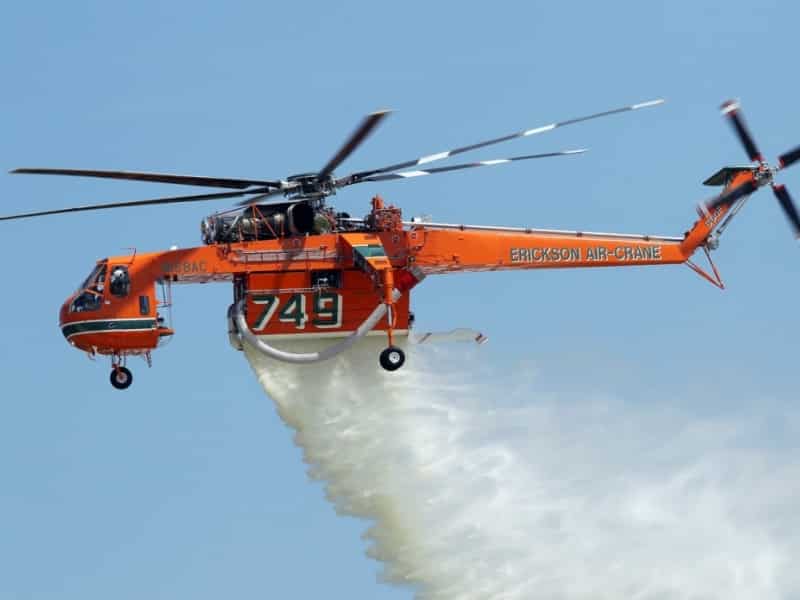
It is worth noting that this year, for the first time, a heavy-duty helicopter (Erickson) is based in Thessaloniki, which enhances the operational capability of aerial firefighting in Northern Greece.
It is also the first time that 6 light aircraft (AirTractors) will be included in the air fleet, which will be deployed in 3 pairs (1 pair each at Tatoi, Anchialos and Andravida), covering the Aegean and Ionian axes as well as part of the mainland. These aircraft are the most modern in the field of airborne firefighting and their inclusion in the air fleet comes to meet needs highlighted by the operational planning of the Fire Brigade. AirTractors are more flexible and efficient, as they are more responsive to the specificities of the Greek terrain. It is worth noting that the flight time reaches 5 hours loaded, while they have the ability to take water from lakes or the sea, thus reducing the drop cycle (i.e. the time required to go from the incident point to the water intake point and back to the incident).
Also, a new addition compared to last year's fire season is the inclusion in the air fleet of an amphibious medium aircraft (Beriev), which is capable of carrying 12 tonnes of water and using a foam retardant. While it can also be used to transport personnel. The aircraft is of jet type, i.e. it can develop higher speeds and can also be grounded, thus contributing decisively to reducing the response time in case of an incident.
And this year, for the second year, in continuation of n. 4662/2020, which reshapes the mechanism of Civil Protection, 2 helicopters of medium type (B214), which have the capability of aerial firefighting, have been added to the air fleet to cover the needs of the airborne Ionian and Aegean hiking sections.
This year, as last year, the air firefighting capability in the south of the country includes a heavy-duty helicopter (Erikson) based in Chania, which covers the whole of Crete and other areas in the south of the country, such as Kythera.
5324506
Procedures & Instruments
In order to achieve the maximum operational capabilities of forest firefighting helicopters, the network of water tanks is being strengthened, as their use for water intake can provide an operational advantage in the refuelling of helicopters, shortening the drop cycle and maximising the volume of water for fire attack.
In this context, double tanks of 40,000 litres each are placed in 13 locations, indicated by the operational planning, in areas such as Attica, Arcadia, Ilia, Evritania, Larissa, Ioannina and Pella. The aim is to achieve maximum efficiency for each aerial means, because the greater the distance from the water intake point, the fewer drops each means has time to make.
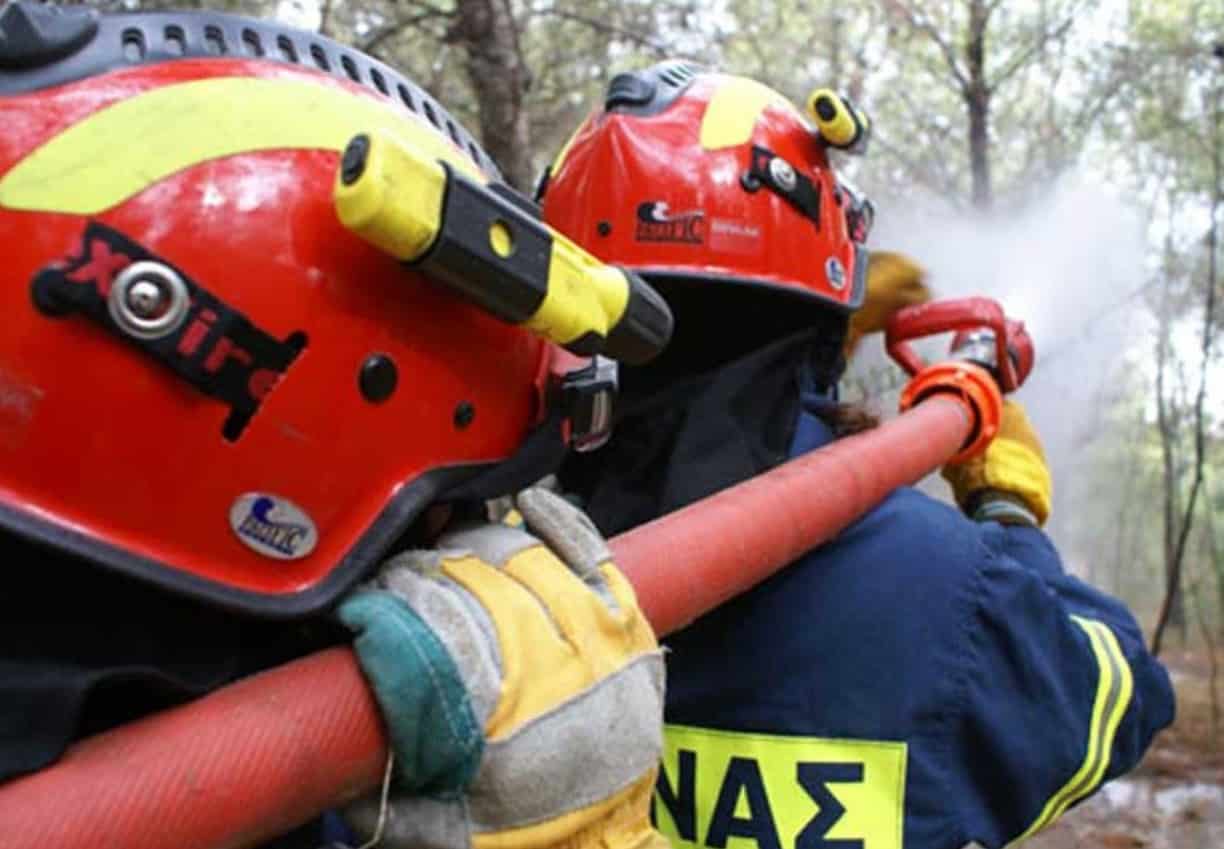
Along with the aerial means, the ground forces are at the forefront of the fire-fighting mechanism, which this year number 820 forest patrols in the whole territory, compared to 764 last year. This means that they have increased by 56 at full deployment, in order to ensure a prompt response and therefore rapid intervention in the event of an incident.
The presence of ground forces is enhanced and the response becomes more immediate -as the intervention time of the first Fire Brigade vehicles during the outbreak of a fire is reduced- with the 80 Fire Brigades of seasonal operation which are created in areas of increased risk. Last year, 70 of them were in operation, while this year it is planned that all of them will be fully operational.
It is worth noting that the seasonal scales are coming to shield areas in need. As an indication, Halkidiki has 6 seasonal teams, Evia 8, Peloponnese 20.
Emphasis was also placed on the island Greece, as there are 15 in the Aegean (4 in Sporades, 3 in Cyclades, 2 in the East Aegean islands, 4 in the Dodecanese, and 1 each in Spetses and Thassos), and 7 in the Ionian (3 in Zakynthos, 2 in Kefalonia, 1 each in Corfu and Kythera).
At the same time, the Fire Brigade has been strengthened in terms of human resources.
Since last year, a total of 2,500 seasonal firefighters have been recruited, the majority of whom have been on duty since the beginning of June, while a small percentage, i.e. 127 of those who filled vacancies created, will complete their training and take up duty in the coming days.