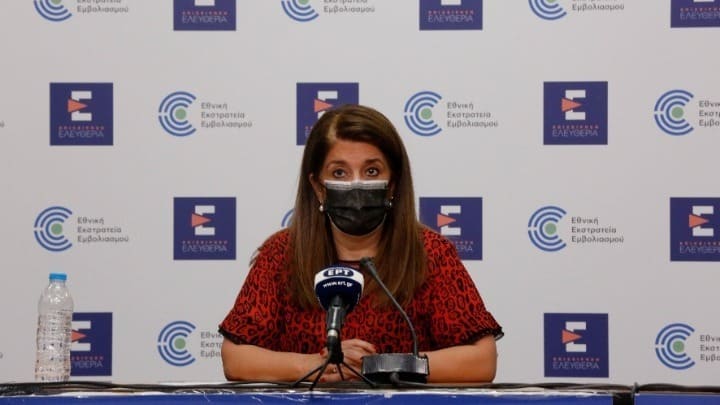
Professor Vana Papaevangelou considers it unlikely that the new Omicron variant will prove so severe that it cannot be addressed with existing vaccines, in an interview with the Athenian and Macedonian News Agency. If that were to happen, «we’ll be back to where we were in March 2020, but this time with the vaccine technology at our disposal, which, according to the pharmaceutical industry, can be rolled out within 90–100 days. In that case, however, depending on the spread of the virus in the community and the capacity of healthcare systems, additional measures will need to be decided upon,» he notes.
Speaking with Michalis Kefalogiannis, he estimates that the existing vaccines—as far as the Omicron variant is concerned— «will continue to offer significant protection against severe illness and death,» but this can only be said with certainty—as he emphasizes—in a few weeks from now.
- Optimism that Omicron causes milder illness than Delta
Preliminary data from South Africa indicate that the Omicron variant is associated with milder disease compared to the Delta variant, notes the professor of pediatrics, who continues: «However, we need more clinical data before we can draw definitive conclusions. Our optimism also stems from our understanding of evolutionary virology, according to which, because the virus wants to continue spreading, it prefers to let «patients» survive so they can infect more people.».
Based on our previous experience with the Delta variant and according to ECDC projections, the Omicron variant is expected to become dominant in Europe within the next two to three months, explains Vana Papaevangelou, a professor of pediatrics, adding that «the only way to reduce the likelihood of new significant variants emerging is through universal vaccination.».
- When will we know if Omicron causes reinfection more frequently in people who have already had the disease?
However, as he notes, the finding that the likelihood of reinfection with the «Omicron» variant among patients who had previously been infected with an older strain of the virus (the original Wuhan strain, Beta, or Delta) is three times higher «is cause for great concern, as it implies a surge in new cases due to a weakened immune response. Of course, this is a preliminary assessment that has yet to be verified.».
However, if these findings are confirmed, «it is essential that everyone who has been infected and neglected to get vaccinated—because they considered themselves protected by natural immunity—hurry to schedule their vaccination appointment,» Ms. Papaevangelou points out.
- The Omicron variant appears to be highly contagious
Early epidemiological data from South Africa indicate that the «Omicron» variant is highly contagious, as the country has been facing an exponential increase in new cases in recent days, he emphasizes. Commenting on the climate of overoptimism that the pandemic is coming to an end following vaccination, he states: «We were unfortunate that the relaxation of personal protective measures worldwide coincided with the emergence of the Delta variant, which resulted in a significant increase in cases in the middle of summer.».
- Wherever there are unvaccinated people, we will continue to see outbreaks
She implies that any prediction about the future is risky, but says that «in regions and societies where a significant percentage of the population remains unvaccinated, we will continue to see significant spikes in cases.» Finally, she strongly disagrees with the view that one should not vaccinate at the peak of the pandemic, as the virus becomes more virulent, and points out that «Expanding vaccination coverage and administering booster doses significantly reduce the virus’s «opportunities» to spread.».
– The full text of the interview with Professor of Pediatrics Vana Papaevangelou, conducted by Michalis Kefalogiannis for the Athenian and Macedonian News Agency, is as follows:
Q: From the start of the pandemic, most experts had predicted that mutations of the new virus would emerge. Do you share the view of some that «you don’t vaccinate at the peak of a pandemic because it makes the virus stronger»?;
AP: I disagree with that view. On the contrary, during the peak of the pandemic, vaccination efforts must be intensified, as increasing vaccination coverage among the population will reduce further spread in the community. It is well known that vaccines protect against severe disease but do not provide absolute sterilizing immunity—that is, they do not always prevent infection. However, there is clear evidence that the higher the immune response, the lower the risk of infection. Consequently, expanding vaccination coverage and administering booster doses significantly reduce the virus’s «opportunities» to spread.
Q: Were some of your colleagues, both here and abroad, too quick to talk about the pandemic ending by spring? Perhaps this view led to complacency?;
AP: The truth is that many predictions about the end of the pandemic have been proven wrong so far. We now know that the virus will continue to be among us for many years, and the most likely scenario is that it will cause endemic outbreaks, just as the flu does. However, in regions and communities where a significant portion of the population remains unvaccinated, we will continue to see major outbreaks. The sense of security and optimism that vaccination provided, both at the individual and population levels, certainly contributed to a relaxation of adherence to public health measures. Unfortunately, the relaxation of public health measures worldwide, coincided with the emergence of the Delta variant, which resulted in a significant increase in cases in the middle of summer.
Q: What do we know so far about the Omicron variant? Is it as contagious as the Delta variant, or even more so?;
AP: Initial epidemiological data from South Africa indicate that the «Omicron» variant is highly contagious, as the country has been experiencing an exponential increase in new cases in recent days. This observation is consistent with our understanding of evolutionary virology, which suggests that the goal of viral mutations is to create strains with greater transmissibility. We will need to wait a few days before we can answer this question with greater certainty.
Q: Scientists claim that the rapid spread of Omicron is also due to its ability to reinfect people who have previously had COVID-19. This study from South Africa shows that the new variant is associated with nearly three times as many re-infections compared to previous waves of the pandemic. What impact will this have on the course of the pandemic?;
AP: Indeed, the latest data suggest that the likelihood of reinfection with the «Omicron» variant among patients who had previously been infected with an earlier strain of the virus (the original Wuhan strain, Beta, or Delta) is three times higher. This observation is cause for great concern, as it implies a surge in new cases due to a reduction in immunity. Of course, this is a preliminary assessment that has yet to be verified. However, if these findings are confirmed, it is essential that everyone who has had the disease and neglected to get vaccinated—believing themselves to be protected by natural immunity—hurry to schedule their vaccination appointment. Many studies have shown that the immunity provided by vaccination is superior to the protection achieved after recovering from the disease.
Q: Do the initial data on the severity of illness caused by Omicron offer grounds for optimism that, for most people, it will result in a relatively mild illness—or at least one similar to that caused by Delta?;
AP: Initial data from South Africa indicate that the Omicron variant is associated with milder disease compared to the Delta variant. However, we need more clinical data before we can draw definitive conclusions. Our optimism also stems from our understanding of evolutionary virology, which suggests that, because the virus wants to continue spreading, it prefers to let «patients» survive so that they can infect more people.
Q: Once Omicron is detected, how long will it take for it to become the dominant variant of the virus in our country and in Europe more broadly?;
AP: If the initial assessment that this is a more transmissible variant is confirmed, it is certain that it will become dominant. It is not easy to predict what will happen, as the time it will take for the new variant to become dominant clearly depends on the behavior of all of us. Based on our previous experience with the Delta variant and according to ECDC projections, the Omicron variant is expected to become dominant in Europe within the next two to three months.
Q: Can we make an initial assessment that the existing vaccines are to some extent effective against Omicron—that is, do they help prevent severe illness or even death? Will you ever be able to say that with certainty, and how do you respond to those who refuse to get vaccinated with the argument «Since there are constantly new variants and the vaccines might not work, why should I get vaccinated if I’m not protected anyway?»;
AP: According to preliminary epidemiological data from South Africa, as well as data from the literature on influenza, it is estimated that COVID-19 vaccines will continue to offer significant protection against severe illness and death. Although their effectiveness in preventing infection may decline, it will take a few more weeks before we can draw definitive conclusions. In response to those who argue against vaccination due to the emergence of new variants, I would explain that as long as vaccination coverage is not high enough—as long as we fail to build the so-called «herd immunity,» we are allowing the virus to spread among us and evolve. The only way to reduce the likelihood of new significant variants emerging is through universal vaccination.
Q: If this new variant turns out to be more serious than it initially appears and the vaccines prove ineffective at stopping it, what will the solutions be? New vaccines and lockdowns?;
AP: That is the most pessimistic scenario, which I consider unlikely. In that case, we’d be back to March 2020, but with the vaccine technology that, according to the pharmaceutical industry, can be rolled out within 90–100 days. In this scenario, however, depending on the spread of the virus in the community and the capacity of healthcare systems, additional measures will need to be decided upon.