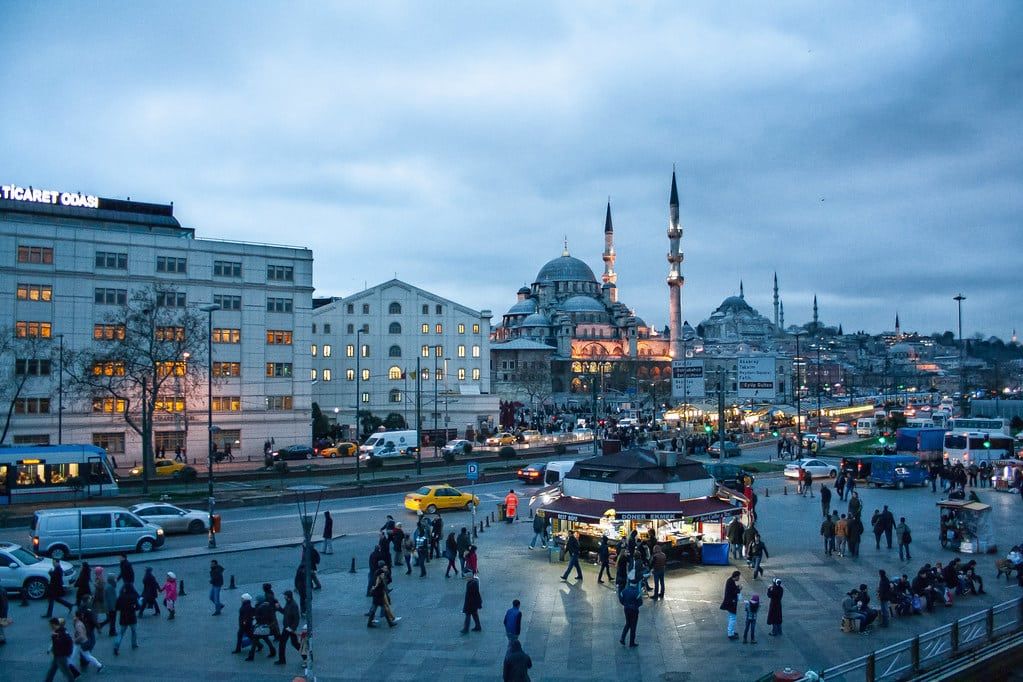
Η Gulay Avsar He comes regularly to this market in the old town of Ankara, which is known for its prices, which are cheaper than elsewhere.
Η Turkish economy, Already fragile before the pandemic, it is sending warning signals amid persistent inflation and the decline of the Turkish lira.
The prices of certain food, just like his oil or of dairy products, are now increasing every week.
«The olive oil it's worth it now gold. »You're offering it to your girlfriend to impress her," says Ahmet sarcastically; he, too, has come to the market to stock up on supplies.
Behind this sarcasm lies the tragedy of many Turks with low incomes that have suddenly passed under the limit of poverty and for whom finding something to eat without running out of money has become a daily struggle.
According to a report by World Bank published in April 2020, 13.9% of Turkey’s population lives below the national poverty line, which stands at $4.30 (€3.59) per person per day.
They're locking up the infant formula
«I’ve been working in poor neighborhoods for 20 years to help people in need. Access to food has never been as much of a problem as it is today,» says the Hatser Fogo, founder of the nongovernmental organization Deep Poverty Network.
Back in the day, «if you didn’t have anything to eat, you’d ask the neighbors. »But today, even our neighbors have nothing," he says.
These neighborhoods are mainly home to construction workers, people who collect trash for recycling, and women and children who are trying to make a living as street vendors merchants.
«I’ve seen mothers feeding their babies ready-made dehydrated soups from packets because they can no longer afford infant formula. It’s so expensive that supermarkets now keep it under lock and key, as if it were a luxury item,» says Hatser Fogo.
Poverty no longer affects only those who have nothing steady job, but also groups that believed they were protected from it.
«People come to us who have suddenly found themselves unemployed or who have never before sought help from food», explains Ms. Fogo.
«The government doesn't care»
Ms. Avsar, a retiree, never imagined that one day she would no longer be able to pay her bills for the natural gas. With tears in her eyes, she says she no longer has heat in her home, and in Ankara, temperatures drop below 0 at night.
«The government »They don't care. If you ask them, none of these problems exist," she says indignantly.
In October, a video of a merchant who told the president Recep Tayyip Erdoğan His remark that he was «no longer able to put bread on the table» had caused a stir. «That seems like an exaggeration to me,» the head of state had replied.
While the financial difficulties As his electoral popularity erodes, Erdogan prefers to paint a picture in his speeches of a Turkey that the West envies and that is poised to become «one of the world’s largest economies.».
For Erinc Yeldan, Professor of Economics at the University Kadir Has in Istanbul: At the root of galloping inflation lie poor monetary policies that fostered debt-fueled growth and a lack of market confidence.
«Inflation was officially 14.6% in 2020. However, this figure is merely an average. It is much higher—around 22%—for food products, which account for the largest share of low-income households» spending,” he explains.
According to the economist, the total rise in prices Since 2008, the code for food products has been 55%.
«Imaginary Enemies»
Faced with criticism, Erdogan accused merchants or «lobbies» of pursuing illegitimate interests Benefits.
«They create imaginary enemies to prevent their dissatisfaction from turning into a reaction against her." government», says Yeldan.
The Turkish head of state is expected to announce reforms today in an effort to revive the economy.
Announcements are expected regarding subsidies to investors, as well as a reduction in public spending, but experts remain cautious.
«The Turkey »It’s trying to find its way through the fog because the institutions have collapsed. All we’re doing is saving the furniture," says Yeldan.
«There is a real governance problem.».