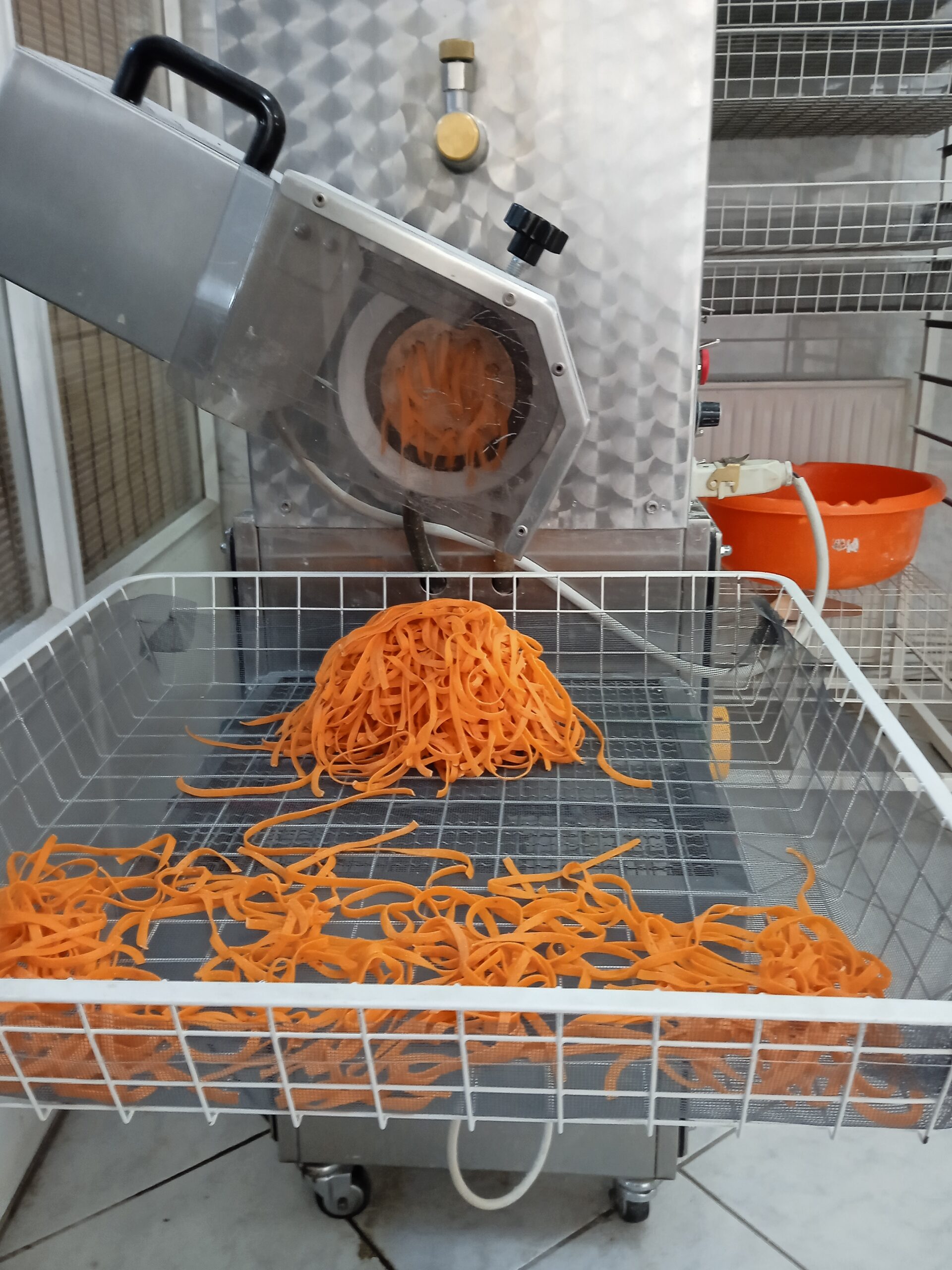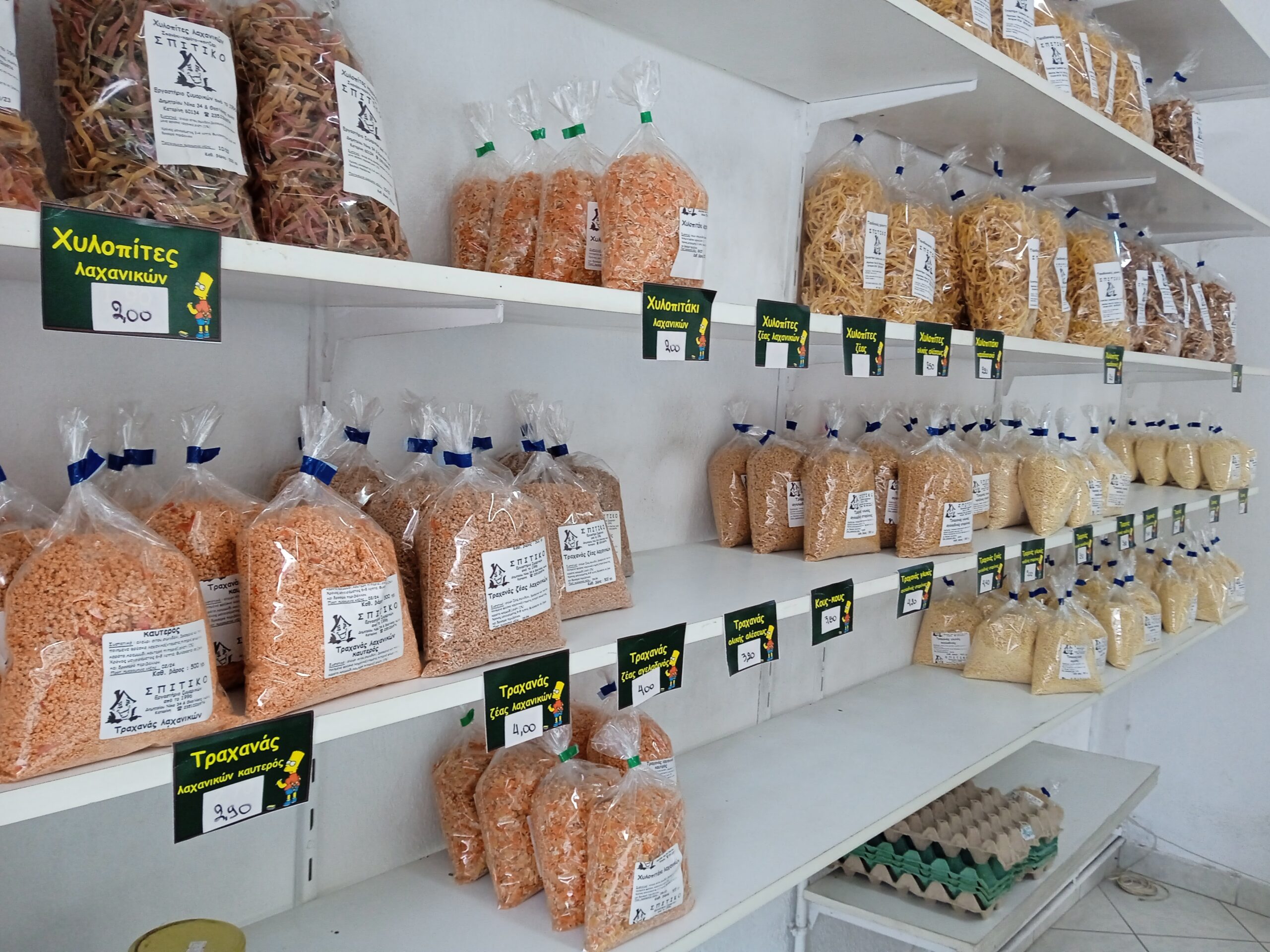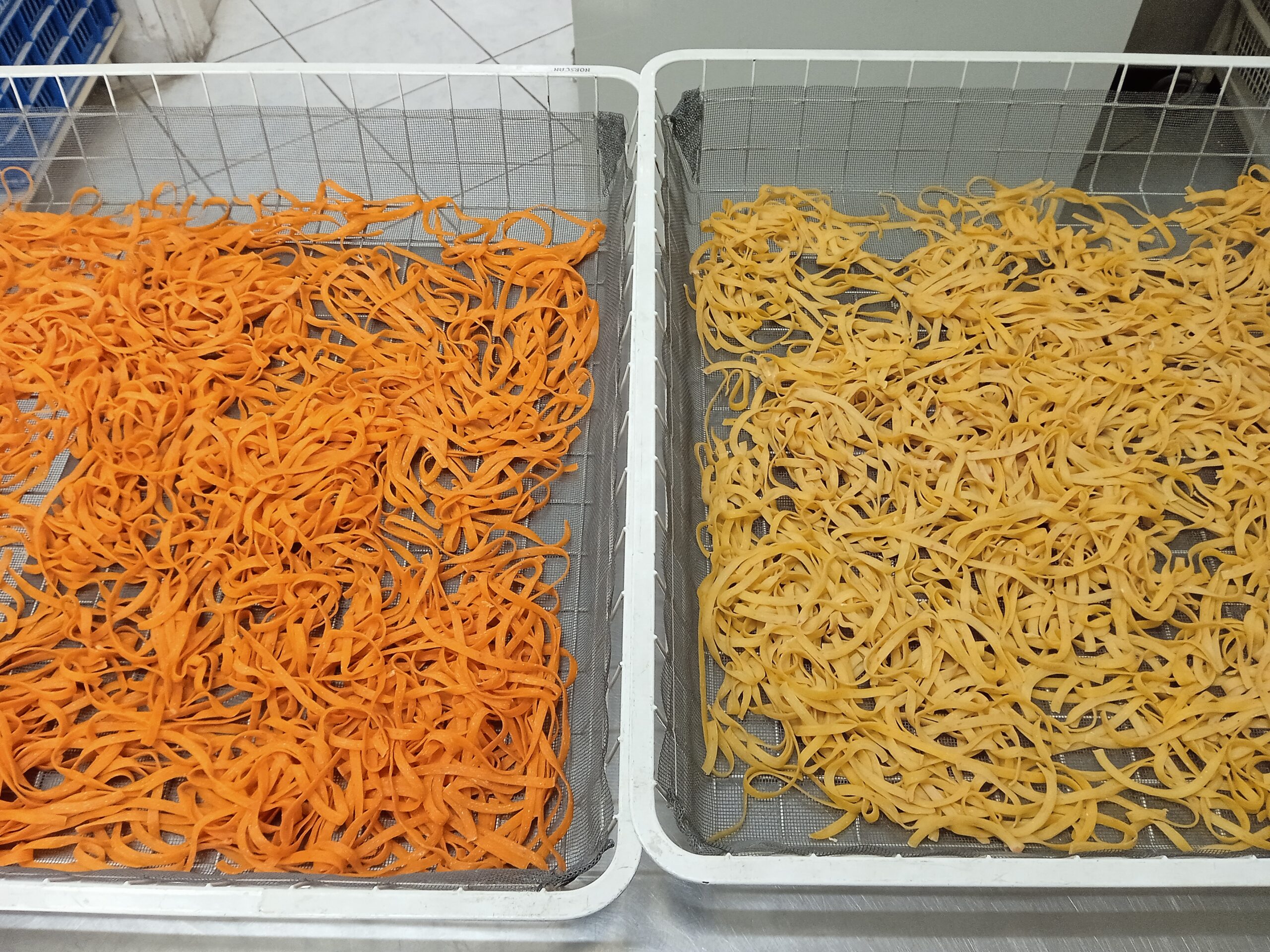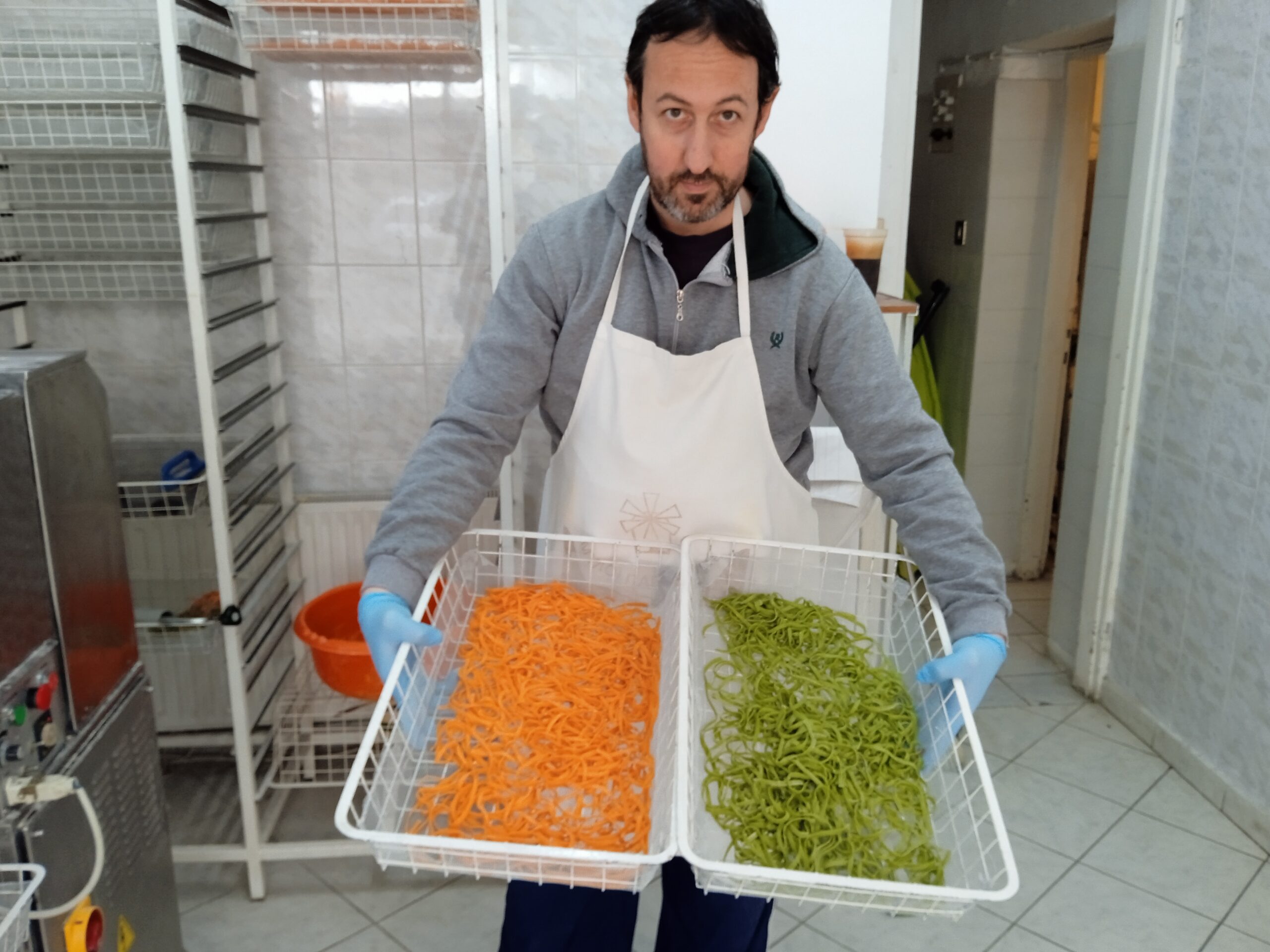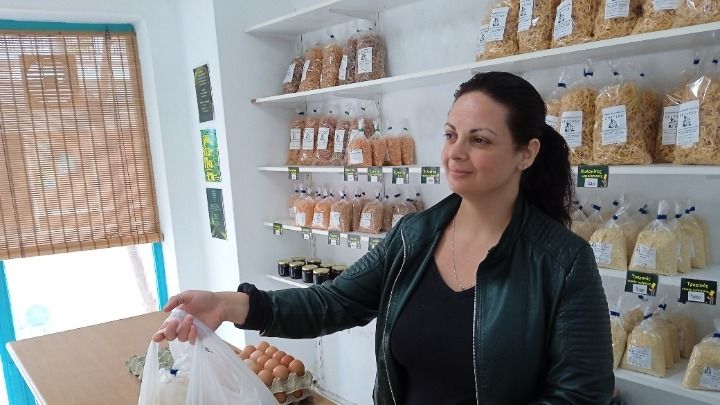
She looked at her drawing for a few minutes. She resolutely closed the computer screen, and left the topographical plans, the engineers, and the floor plans of tombs of archaeological interest behind her. She turned the page on life and took over the reins of the small pasta workshop her parents had started years ago. «Homemade» became her dream and she quickly made it a reality.
The reason is the 40-year-old Natasha Papadopoulou from Katerini, who eight years ago took over the family's traditional pasta workshop, developed it and since then she continues unabated the preparation of traditional trachanas, handmade noodles and other traditional pasta of the region, always based on the homemade recipes of her mother and grandmother.
«When I completed my studies as a building designer using computer systems, I worked for a time for a surveyor and then under contract, in the archaeological service as a designer. The pay was low in my field and I needed to have a second job to meet my obligations. Also the reconstruction had stopped, so work was even more limited. I was working multiple jobs to be self-sufficient.
The big decision came when my mother, who had run the small pasta workshop since 1996, retired,» Papadopoulou will tell APPE-MPA. Her husband Aristides Tsirakidis, an electrical engineer, was at her side from the very beginning and devoted himself with zeal and passion to the daily preparation of traditional pasta.
«The workshop is small, but the love of the people for its products is very great and gives us the courage to continue,« says Ms Papadopoulou, who admits that »this small family business has withstood many economic crises" in recent years.
«The secret to success was the continuation of traditional recipes and the use of materials and pure products from stable suppliers,» he explains, while as far as the daily production quantity of products is concerned, he says, it is specific and limited because no preservatives are used. «It's as if we make them for personal consumption. That's the concept and that's what we follow faithfully,» he points out.
The basic ingredients used for the preparation of the products are flour, semolina, durum wheat and milk from local farmers (cow, sheep and goat), which is used to make handmade yoghurt for some recipes, as well as fresh vegetables for those who do not eat dairy products.
As Ms Papadopoulou confesses, she has never regretted the decision she made. «When you are in your own business and you don't have a boss, there are many positives, but there are also many difficulties and basically a lot of stress. Paid leave, for example, is irreplaceable. But it is important to be able to adapt to situations and if they are not what you want, to have the will and the strength to change them,» he stresses, speaking to APE-MPA.
As for young people, for graduates of schools and universities who are anxious about their professional future, what he suggests is to do something creative as, as he says, «a creative and productive job is less boring».
«Whatever young people decide to do to survive, it should be something they feel like doing. Because our work is our daily life and no matter what we say, we cannot close the door of work and leave the problems there. And one key thing, change is not necessarily dangerous and unpleasant. Sometimes renewal is needed even in the workplace, when of course it is by choice,» concludes Papadopoulou.
Annie Tapascu
*The photos were provided to RES-MPA by Natasha Papadopoulou