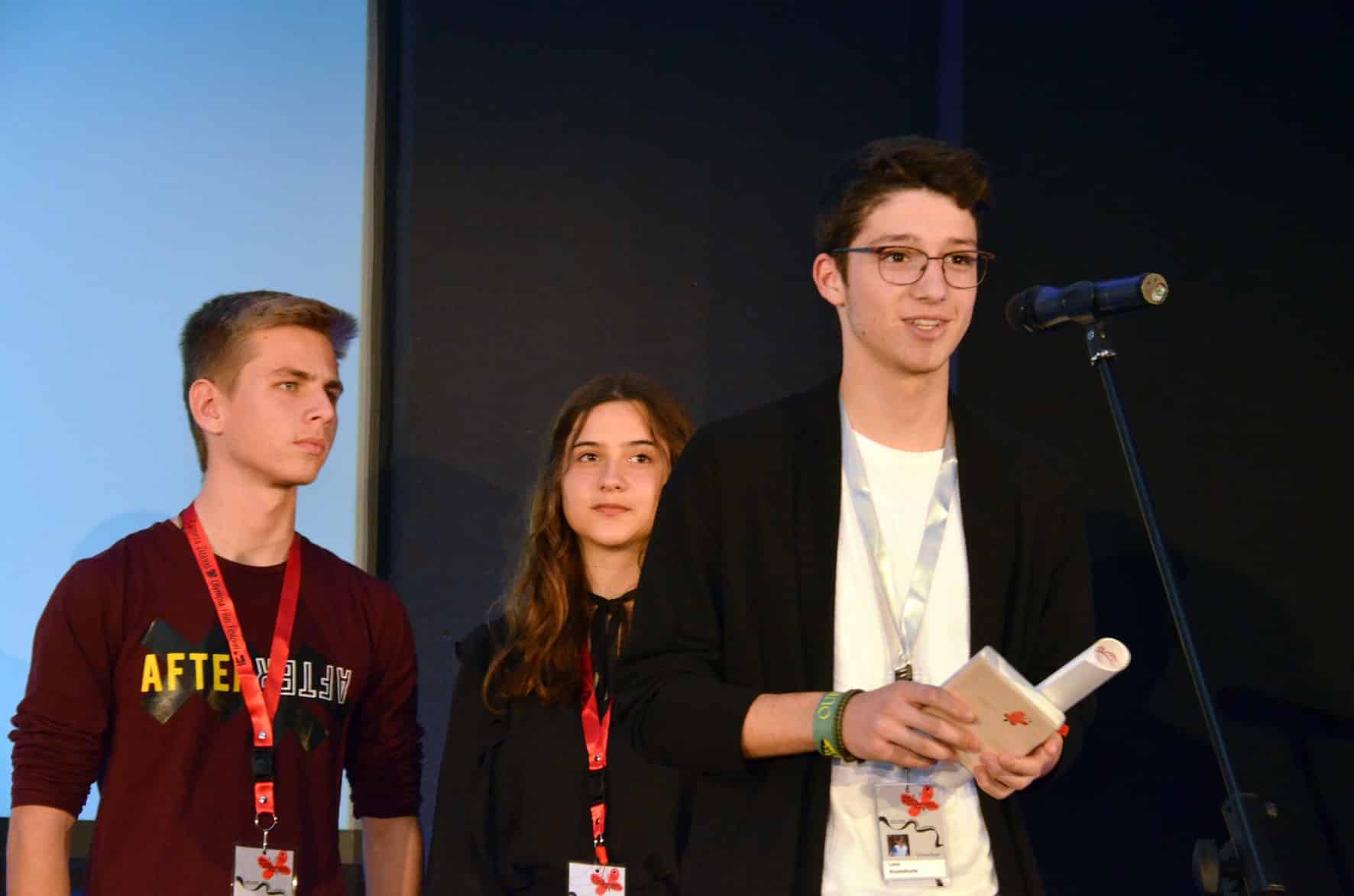
Thanasis is a young man. In fact, a child coming out of puberty. And like all children going through this stage, he is struggling to escape. Not necessarily from anything in particular, perhaps simply to fulfill a fleeting destiny, imprinted in the memory as a repulsion. It can be the «closed society» of the Kythira as he says. Then again, it may be the ever-expanding frontiers of global politically correct creativity that isolate the last romantics of a genre that tends to die out. The amateurs.
Yes, Thanasis is among the last of the Mohicans in terms of the way he receives external stimuli. Like snapshots of a collage, to whose umbilical cord he feels attached in a way. And certainly not in space. Or time. After all, space-time is the dual condition of dimension that chose us, not the other way around. But the way we extrapolate it into our worldview is enshrined by the acts by which we camouflage its finite imprint. We immortalize it as a passage. We enshrine it as an acquisition.
The above could well be a definition of photographic art. From the idea of capture, to the reservoir of archiving. That wick with which sensuality is caught to be seared with life experiences. This was certainly not what Thanasis had prepared for when, he was holding his first camera, a gift from his father. And most likely, he would never feel the need to record it as a distillation of experience. That's because Thanasis always lives in an aversion to the word that many people utter. There, where amateurs live, breathe and create. The eternal lovers of (any) art.
Thanasis Koutrafouris does not know whether he will take up filmmaking professionally, but he knows very well that at the first opportunity, he would repeat the project of making a documentary, such as the one he made as a result of his participation in the Olympia film festival. Why? Why, of course, to find itself anew in the same spaces of interaction with people from different places, countries and entries and to indulge in the same primordial thrill of coexistence. This will always be his greatest legacy from living with people like George Didymiotis and Dimitris Leventis. This will be the connecting link in a collage that began with the father's first camera and is just waiting for the remaining additions to the painting of the sensuality of a child who can still see the future in a blur, but the past beckons him with the clearest and clearest eye.
Here is the interview of Thanasis Koutrafouris in Kythera.News, on the occasion of the tribute to the film groups of Kythera High School in which he was an active member.
Q. Thanassis, tell us a little bit about yourself
-I am Athanasios-Leo Koutrafouris. I was born and raised in Kythera but for the last year and a half I've been living in Athens. Since I was a little kid I was into photography but I saw it more as a «fun». This year, I'm in the third grade and the future is blurry, the only thing I'm sure of is that I want to continue with my studies abroad and probably with law. Film is an art that will always fascinate me and I will always be involved in it, but I do not wish for it to be on a professional level. In my short, so far, life, I have travelled a lot and it is something that will be an important part of my life. The travelling will never stop. Finally, sport is an integral part of my everyday life and I have been involved in it since a very young age, but without aiming for the championship.
Q. What was your contact with cinema before the lessons with George Didymiotis and what did this experience add to you?;
-My contact with cinema before the lessons with Mr Didymiotis was minimal. I always saw my father with a camera in his hand taking pictures and many times my brothers and I would tease him. I remember that on my birthday, he would take me cameras, which I showed no particular interest in. Until I went to the Olympia film festival for the first time.
Q. What does the Olympia Festival represent for you?;
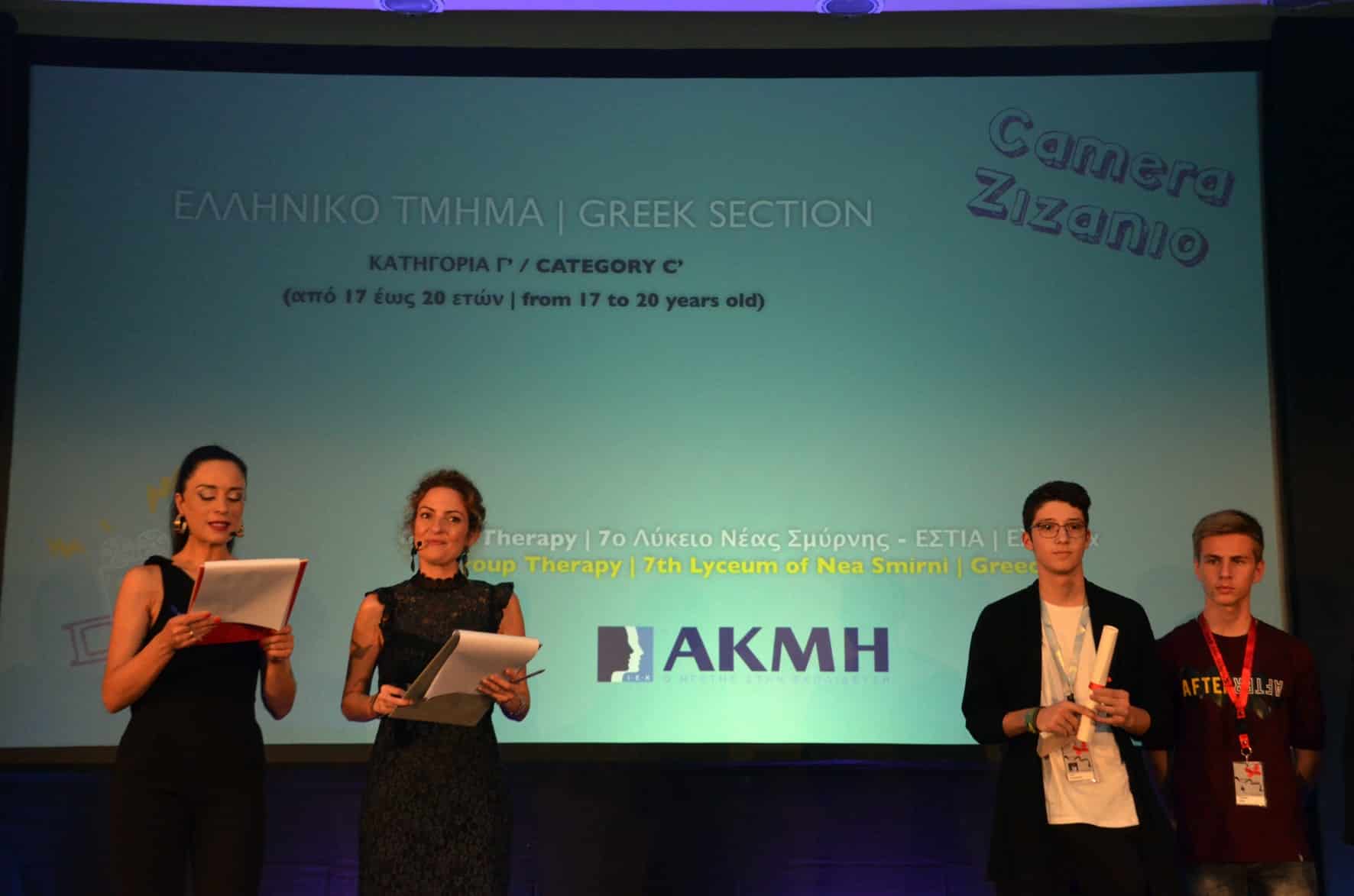
-The Olympia festival is the place where it all started for me, it was the first real contact I had with cinema, and that's why it's always in my heart. But beyond the art of cinema, it also represents something more, as every year it brings together people from every corner of the world for a common purpose, for one week we become one and enjoy the moments that the festival offers, so I think that represents both the union of people.
Q. What did you get out of meeting young people from all over the world through the Festival?;
-During the festival, I came in contact with a lot of kids from abroad, and through this, I understood that if you work with someone for a common purpose and you do it because you like it, then you build a deeper relationship. Film is also a means to unite peoples, every person understands art differently and it passes that on to you.
Q. What did you get out of your collaboration with George Didimiotis?;
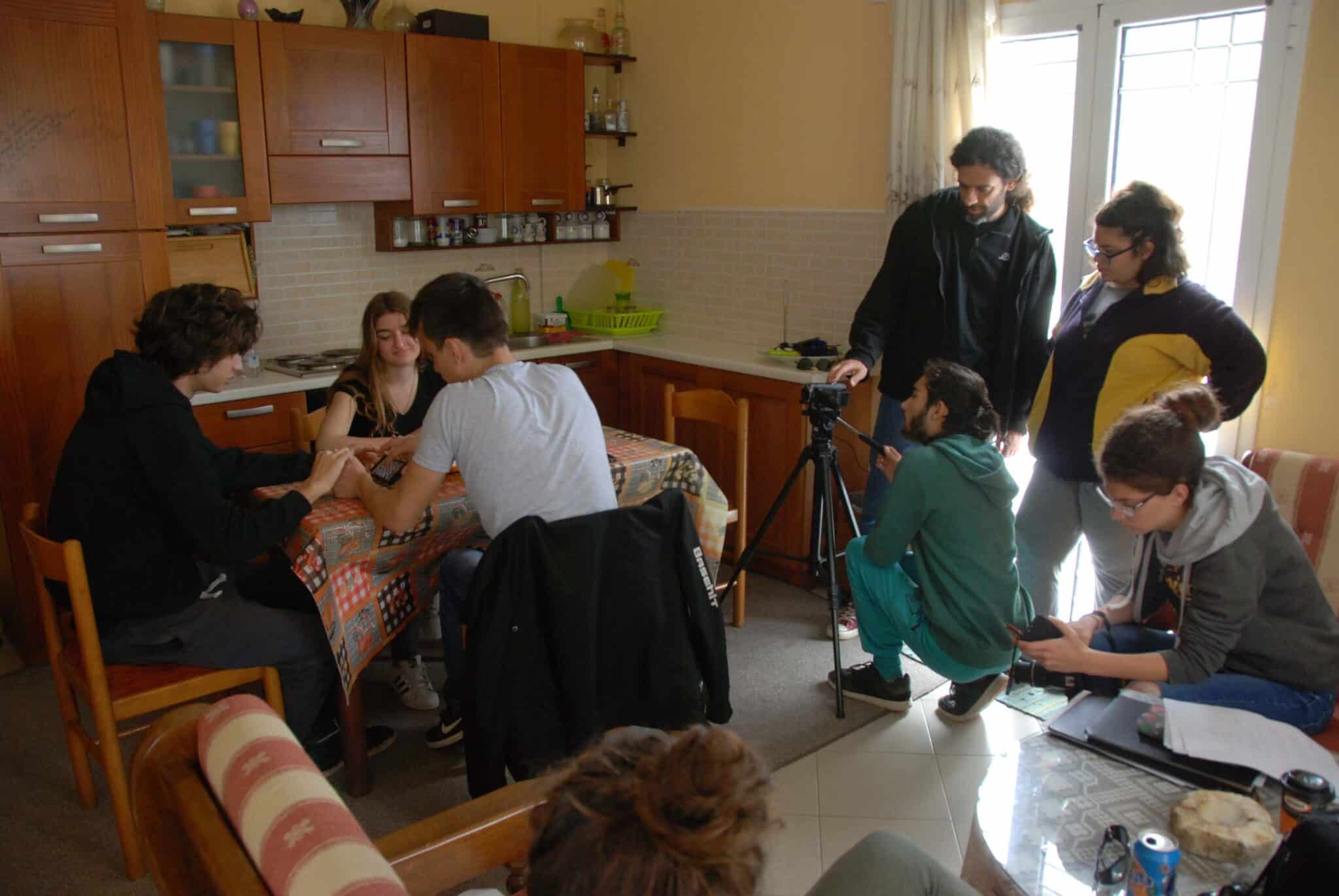
-From my cooperation with Didymiotis, I gained a lot of technical knowledge on the subject, but, above all, Didymiotis made me love cinema and he is the person who showed me the other side of the coin of this art. We had many moments of laughter and a few moments of fatigue, but we always had a good time.
Q. Which part of the art of cinema as you were taught it, has been most strongly imprinted in you?;
-My favorite part of cinema is that everyone can capture what they want, in their own unique way. Cinema is a place where people express their thoughts and ideas freely. Still, you can have 10 people capture the same thing at exactly the same time and you will get 10 different results. Cinema is not just one thing, it is many things that cannot be written down.
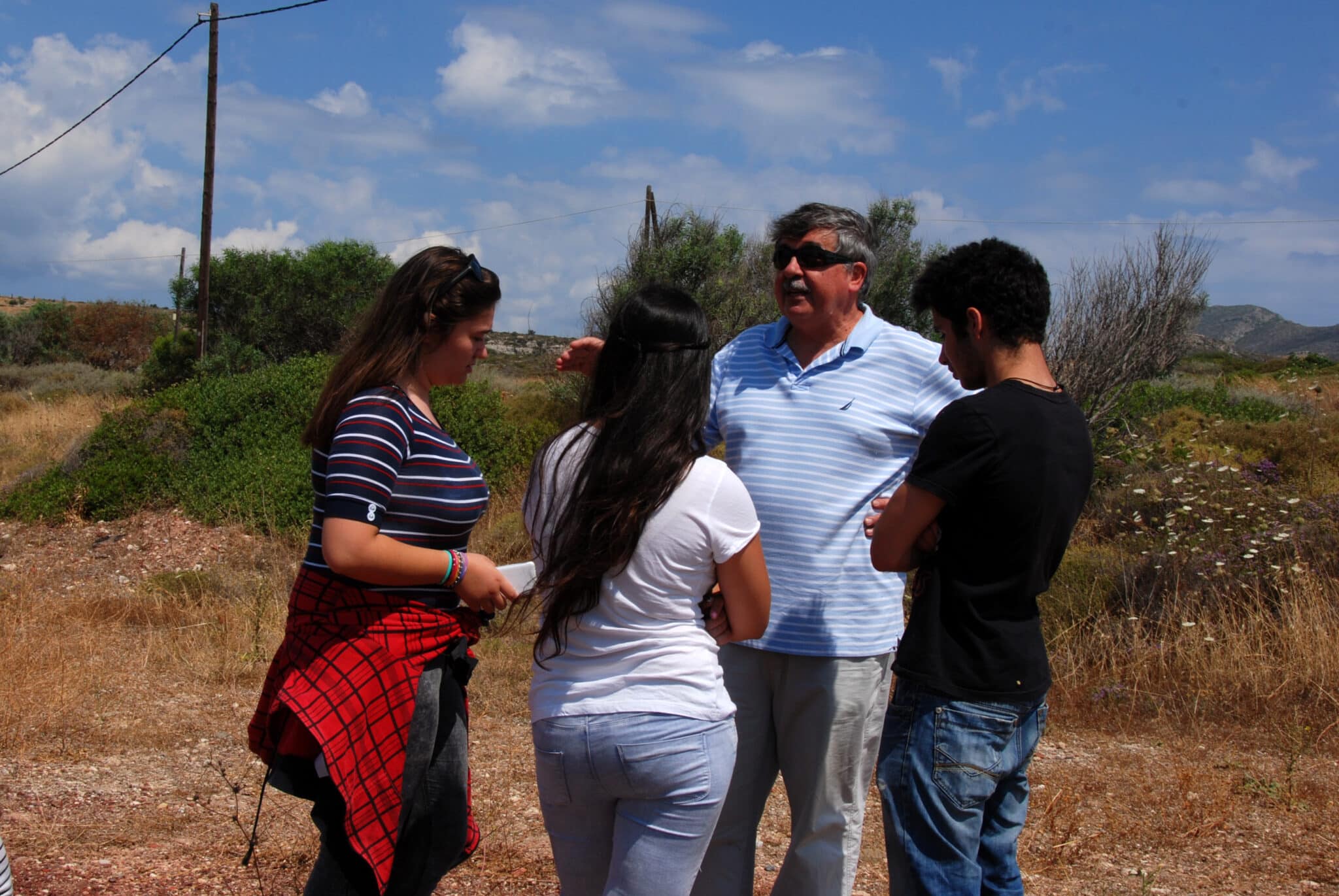
Q. What is the role of the school as a community in introducing a young person to an art form such as cinema? What is the contribution of your teacher, Mr. Leventis, to the whole project?;
-Schools should normally, from an early age, push children into the art of cinema and beyond. Unfortunately, in Kythera, the school did not give this opportunity to the young people, until Professor Leventis took the initiative to create the film group. Unfortunately, the group no longer exists and so the young people are not given the opportunity to experience art. But without the initiative of Mr Leventis, these small steps towards the integration of cinema in the school would not have been taken, even for these few years.
Q. As far as I know, you went to Sweden as a representative of Greece and attended cameraman courses. What did this experience offer you?;
-Last year I travelled to Sweden as a representative of Greece and attended cameraman courses. This experience will be unforgettable for me. During the festival, I developed my skills and learned a lot of useful technical knowledge. Still, I made connections and the team and I created a short documentary to channel the knowledge we gained. It was something I would do again, without a second thought.
Q. What are the skills that the art of cinema gives to a young child from Kythera?;
-The Kythera it's a closed society, young people don't have many choices, cinema is a way to escape from everyday life, to travel and express themselves freely, without criticism. Still, it is a form of employment, since there are not many options for young people's occupation.
Q. What are your plans for the future?;
-My plans for the future are unclear, including film because it's a part of me that I love, but maybe I'm not ready to take it to the next level and stay in the amateur part.