Children with autism have low levels of physical fitness, which is due to their reduced interest in motor activities and games.
What is Autism
The term «autism» comes etymologically from the Greek word «ego» and denotes the isolation of a person in himself.
It is a serious developmental disorder, which is characterized by:
- severe slowing in language development
- reduced social interaction and communication
- limited activity
- repetitive and stereotypical behaviour
- inconsistent forms of sensory responses
- heterogeneous forms of mental functions
All these signs begin before the child is three years old. Both the World Health Organization and the American Psychological Association classify autism as a «central nervous system disorder». Autism falls into the category of Pervasive Developmental Disorders, ...is not a psychiatric disease. These disorders are characterized by severe deficits in many areas of development, which is why they are called ’pervasive«.
The two other autism spectrum disorders (ASDs) are Asperger's syndrome, in which there is no delay in cognitive development and language, and Pervasive Developmental Disorder - Not Specified (PDD-NOS), where the criteria for the other two disorders are not adequately met.
Each child is unique and unique in their diagnosis which makes people with autism significantly different from each other!
Autism and exercise
The participation of people with autism in exercise programmes is an integral part of their overall treatment.
The integration of physical activity, combined with a healthy diet, contributes to weight control or weight loss as well as children with autism spectrum disorders (ASD) are up to 40% more likely to be obese than children without ASD, which is related to physical activity limitations as well as to the drugs used to treat behavioural disorders.
Exercise contributes to :
- improving muscle strength
- of strength
- aerobic capacity
- improving sociability
- of behaviour
- of autonomy
It is important to create an individualised educational programme (IEP) for each child according to the physical activity that suits the preferences and abilities of children with autism.
But what kind of exercise is appropriate for children with autism?;
It is widely known that the best sport is the one the child has the most fun with. But in the case of a child with autism, where social and communication deficits and difficulties in coordinating movements predominate, participation in team sports such as football or basketball may not be the best choice.
These activities require direct communication with others, both verbal and non-verbal such as hand or eye gestures combined with quick reactions during play. Establishing positive recreational habits in children with autism is essential. More positive results seem to be obtained when children with autism participate in individual sports such as swimming , therapeutic riding , athletics and martial arts.
Swimming and Autism
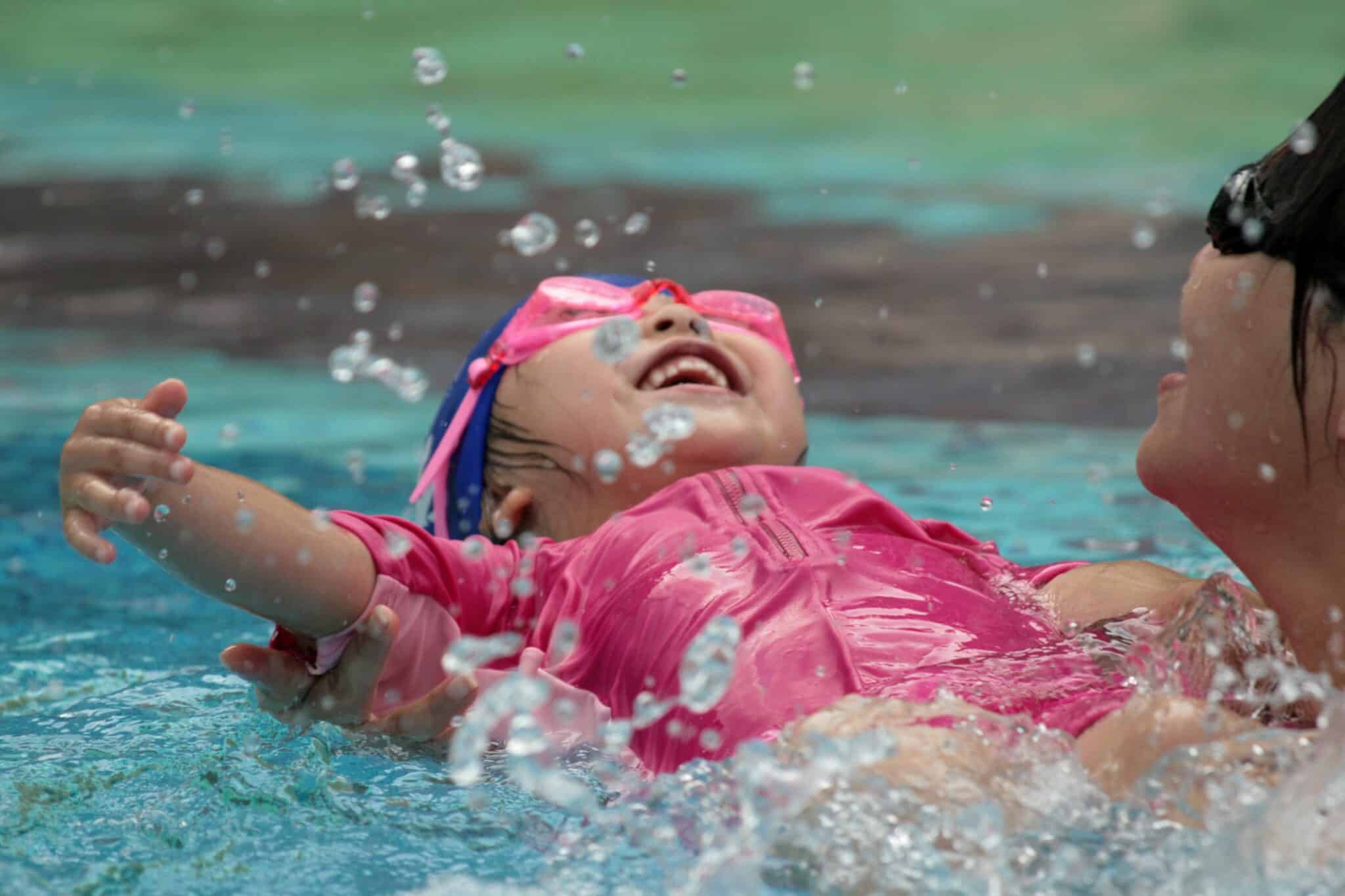
Most children with autism, love water, which makes their involvement in swimming an enjoyable activity for them.
The question arises, is it necessary to teach swimming to children with autism?;
Research shows the paramount need for learning swimming skills, describing it as an urgent survival skill.
Why?;
Children with autism are at risk high risk of drowning. Survey results show drowning as the leading cause of death in children under 14 years of age, accounting for 91% of child deaths in this population. Ignorance of risk and interest in water can turn into an unpleasant event.
Starting with safety rules, which is a vital preventive measure and a fundamental skill that both children and parents need to know in order to be safe, and continuing with learning swimming skills, always combined with play to enjoy the aquatic environment.
The participation of children with autism in a swimming program is an important factor in reducing sensory stimulation due to water temperature and exercise intensity.
The skills developed are transferred to other aspects of a child's life such as increase in strength and endurance and reduction of stereotypical movements. Also, buoyancy in water supports the movement of the body, Reducing the effect of gravity, tension in the body parts and fear. It also contributes to:
- improving the range of motion
- self-perception
Swimming requires coordinated movement, which children with autism can easily learn as long as there are no complex requirements, thus improving their coordination. In addition, the repetition in swimming skills and low social demands gradually help to promoting the motor, social and emotional domains as well as improving concentration of attention and eye contact.
What needs to be understood, and needs a lot of attention and patience, is that it can sometimes take a child a long time to adapt to the water conditions and get close to touching the water. Once this is overcome, the child eventually enjoys this activity. A crucial role is played by the physical education teacher who should be governed by:
- sensitivity ,
- humanity ,
- pleasant mood,
- understanding the child's behaviour
- ignoring inappropriate behaviour and at the same time being inventive in changing the lesson plan to avoid it
Above, extensive reference was made to swimming as a means of exercise and recreation, where through the teaching of swimming skills and safety rules, it aims to improve physical fitness, psychosomatic well-being, recreational socialization and as an ultimate goal and where possible swimming performance.
Hydrotherapy and autism
Today, the beneficial effects of water on the body, used to design programmes Hydrotherapy, which is one of the safest methods for the rehabilitation of a wide range of conditions (orthopaedic and rheumatic diseases, cardiorespiratory diseases, post-operative rehabilitation, rehabilitation of sports injuries and neurological diseases) .
Hydrotherapy provides greater safety than other types of non-water activities. The therapist takes advantage of the physical properties of water (buoyancy, density, buoyancy, resistance, hydrostatic pressure, thermal conductivity) to solve problems in movement, in order to improve functional performance and independence in daily life.
Cerebral palsy
Neurodevelopmental conditions include people with cerebral palsy.
In cerebral palsy , there are disturbances in the development of movement and posture combined with the occurrence of neurodevelopmental problems, which are caused by damage to those areas of the brain that control muscle function with the inability of the person to use their muscles voluntarily. This damage may occur during pregnancy or childbirth or may occur during the period of brain development and maturation, particularly in the first 5 years of life.
Brain damage does not progress or worsen but remains the same throughout the life of people with cerebral palsy. On the one hand, however, what changes is the clinical picture of the child, who as he or she grows up may develop musculoskeletal problems during development, but on the other hand, with appropriate therapeutic interventions, an improvement in mobility and functionality can be achieved.
But what are the benefits for people with cerebral palsy to participate in a hydrotherapy programme?;
- With buoyancy in water, the effect of gravity is reduced and increased support of the correct position is provided. These characteristics can allow children with PD to exercise in the water with more freedom than on land. The resilient forces of buoyancy and traction allow for a variety of aerobic and strength activities that can be easily modified to accommodate a wide range of motor abilities of children with PD.
- Improves balance and neuromuscular function, facilitating the functional recovery and independence of the patient.
- Reduced levels of joint loading, providing a pleasant environment for children with unstable joints.
- The appropriate temperature of water for therapeutic purposes is considered to be 33-35° C. By immersing the patient in hot water, in combination with the other characteristic properties of water, muscle relaxation is promoted, hypertonia (muscle spasm) is reduced, while pain sensitivity is reduced, thus facilitating the achievement of rehabilitation goals.
- Increases muscle strength in cases of extreme weakness ,
- Improves peripheral and lymphatic circulation
- Increased surface blood circulation
- The psychological profile of the person is improved.
The therapeutic methods of hydrotherapy that are applied are the Bad Ragaz Ring method, Halliwick, Clinical Ai Chi, Clinical Watsu, Aqua Fitness, etc. and it is necessary to be performed by qualified therapists. Furthermore, appropriate equipment such as bicycle, trampoline, treadmill designed exclusively for water as well as flotation belts, jumps and weights ensure the best possible results.
Conclusion
It is clear that the liquid element has many benefits to offer, not only on a physical level but also on a psychological level, as well as improving the quality of life. Hydrotherapy is a very good means of rehabilitation for people with acute, temporary or chronic disabilities, diseases or syndromes.
Edited by Eleni Paziou, Swimming Coach, Heraklion, Crete