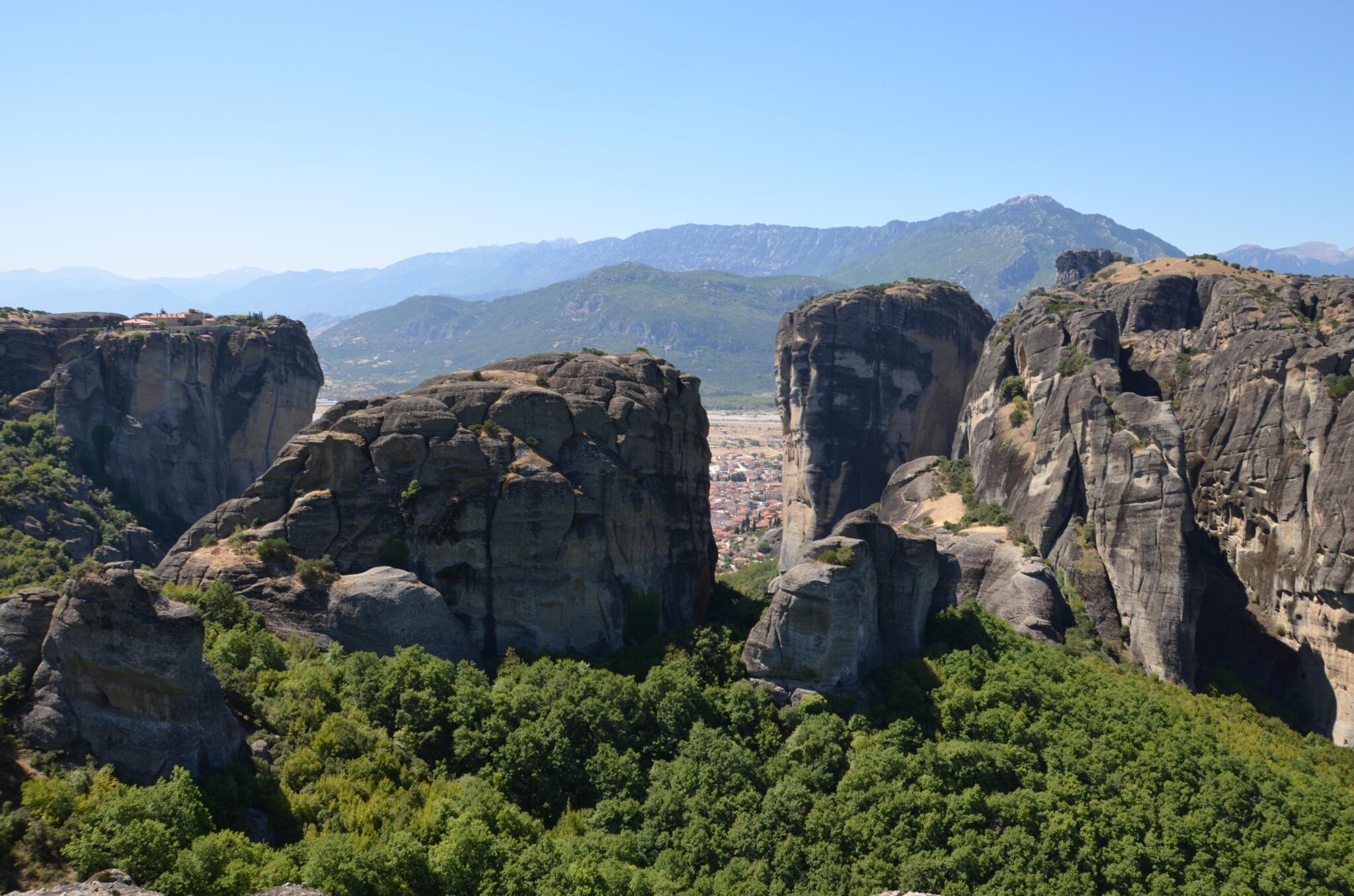
Due to its geographical location and its orographic configuration, Greece is considered one of the hot-spots of biodiversity worldwide. There are at least six and a half thousand plant species throughout the territory. In fact, one thousand six hundred of them are endemic, i.e. they do not exist anywhere else. The European Commission, in drawing up its strategy for the conservation of biodiversity, has sent out guidelines to be implemented by 2030.
«Central and northern Europe have four thousand different species. Greece, which is minimal in area compared to the size of the entire continent, has six and a half thousand different species and competes with the Iberian Peninsula, which is five times the size of Greece,» says to APE-MPA the forest ecology researcher and forest ecologist ELGO DIMITRA, George Karetsos and continues: «The paleogeography of the area favoured it in order to gather species from the surrounding areas. It has many influences and can support the habitat of these organisms because it has this configuration. Our northern border has climatic conditions similar to those of mid-Europe, our southern coast has a subtropical climate and hosts species similar to those of North Africa or the Middle East. The islands of the eastern Aegean are very much influenced by Turkey and the Asian flora, and similarly on the western side by the Ionian islands, which have many typical affinities with Italy.
«Greece is characterized by great geodiversity, which contributes significantly to biodiversity,» says Ioannis Papanikolaou, Associate Professor of Tectonics, Geology - Geoenvironment and Natural Disasters at the Agricultural University of Athens. «More specifically, it is located at the boundaries of the tectonic lithospheric plates, so that through high seismicity it forms an intense and diverse relief, which influences, among other things, the microclimate. At the same time, the intense tectonic deformation has created a complex mosaic of different minerals and rocks, which respectively offer a variety of soil and water resource characteristics. In short, areas of high environmental heterogeneity make a decisive contribution to biodiversity,» the professor adds.
There are many ecosystems that are being degraded due to natural changes and human activity. The EU has therefore set a target of planting three billion trees across the Union and reducing pesticide use by 50% by 2030. «Here today we have technology as our ally to preserve and protect biodiversity. Through precision agriculture we can significantly reduce the use of pesticides and fertilisers and the corresponding strain on natural resources (water and soil). What is precision agriculture trying to do? To reduce the environmental footprint in order to ultimately help biodiversity and reverse this trend of imbalance in the environment. So there we have for example drones. You fly a drone with the appropriate sensors and through remote sensing techniques it digitally images the field, accurately identifies the part of the crop that needs spraying and follows the larger spraying drone and sprays only there. This ensures efficiency with a significantly lower environmental impact,» says I. Papanikolaou.
By 2030, Natura 2000 sites should cover at least 30% of the land and sea area of the 27 EU Member States. However, each area has its own specificities. «In Greece there are 350-400 Natura sites. With the introduction of additional legislation to protect these sites, some of these traditional activities have been permanently banned, such as grazing in the protection cores of these sites. It is possible that with the ban on grazing in the areas we may also have a loss of biodiversity. In the mountainous areas of Oiti there were extensive pastures that were previously grazed. Now the fir forest is expanding into these openings, thus restricting them and there is a risk that some of these species will disappear. For example, the Veronica of Oiti, which is the only endemic of Oiti, may disappear completely,» says C. Karetsos.
According to the World Economic Forum, almost half of the world's GDP (around €40 trillion) depends on the natural environment and its resources. Major economic sectors such as construction, agriculture and the food and beverage industry are highly dependent on nature and together contribute around €7.3 trillion to the global economy. Healthy ecosystems are therefore considered and important for recovery from the Covid-19 crisis.The United Nations has since 1993 established World Biodiversity Day on 22 May.
M. Pappa