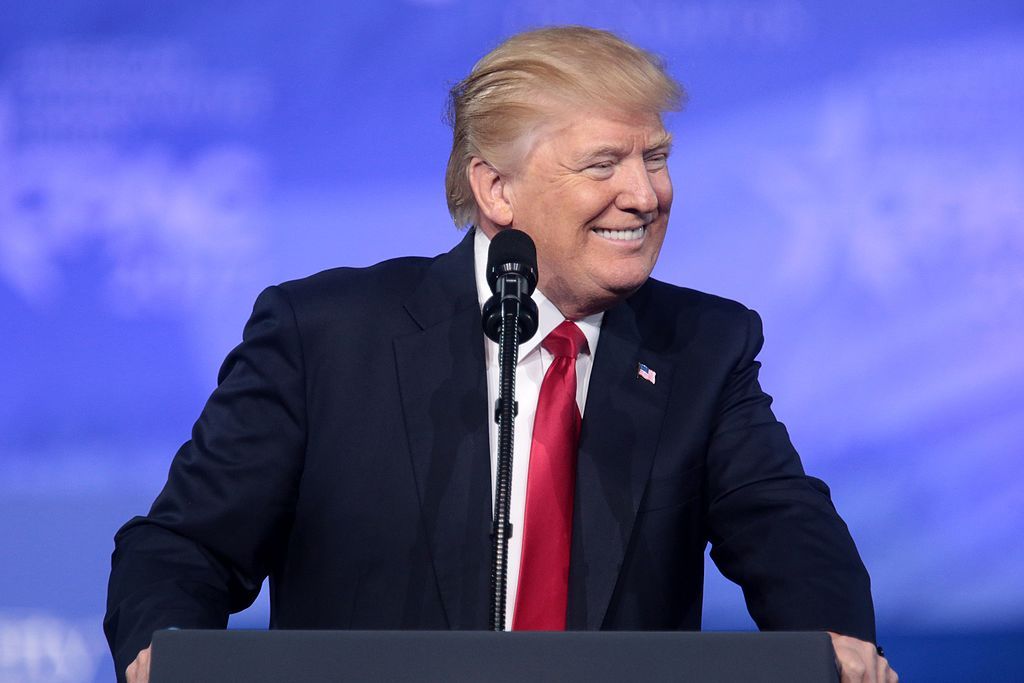
Donald Trump has threatened that his military will destroy gas fields in Iran if Tehran does not stop its attacks on Qatar, the world's second largest exporter of liquefied natural gas (LNG), which have led to a new surge in oil prices on Asian markets.
If Iran «recklessly decides to attack someone very innocent, in this case Qatar», then «the US, with or without the help or consent of Israel, will massively blow up the entire gas field in South Pars with a force Iran has never seen or known», the US president asserted via Truth Social. .
He confirmed that the Israeli air force had struck the Iranian part of the offshore field in the Persian Gulf, another part of which is exploited by Qatar, claiming that the US «knew nothing» about this bombing.
In retaliation, Iran targeted the Liquefied Natural Gas (LNG) refining and production facility in Qatar's Ras Lafan, the world's largest, yesterday, Wednesday, and in the early hours of today.
QatarEnergy, the emirate's public energy company, said there was «extensive further damage» to the facility.
The fires that broke out because of the attack were «completely contained» early this morning, Qatar's interior ministry assured, adding that no injuries were reported.
Oil above 112 dollars a barrel
The emirate is the world's second largest exporter of LNG behind the world's largest LNG exporter and the Rash Lafan facility is the largest LNG production facility in the country and in the world. Already yesterday it had suffered «notable» damage during an attack blamed on Iran.
Meanwhile in the UAE, authorities in Abu Dhabi suspended until further notice the operation of a gas facility after the fall of intercepted missile debris.
The Emirates« foreign ministry stressed via X that it »condemns« the Iranian attacks on the country's energy facilities, which it described as a »serious escalation and a violation of international law« and said they »crossed all red lines« by targeting »civilians« and »vital political facilities".
The new episode of the war, which broke out on 28 February with the US-Israeli attack on Iran, has pushed up oil prices, with the price of a barrel of North Sea Brent now standing at over 112 dollars.
Concern over the spread of armed conflict in the Middle East is intensifying as Saudi Arabia warned again today that it «reserves the right» to retaliate militarily against Iran, which is targeting Gulf states with missiles and drones.
«Safe» corridor in the Strait of Hormuz?;
Iran's blockade of the strategic Strait of Hormuz, through which 20% of oil and gas destined for international markets normally passes, remains the focus of attention.
South of this passage, in the Gulf of Oman, another ship was hit in the early hours of the morning by an «unknown projectile» which caused a «fire», the UKMTO, the maritime safety agency under the British Ministry of Defence, said. Another ship was hit off Ras Lafan, the same source said shortly before 06:00 (GMT).
At an extraordinary meeting in London, the International Maritime Organisation (IMO) is expected to call later today for a safe sea lane to be opened to remove ships blocked in the Persian Gulf.
The United Nations body responsible for maritime safety estimates that there are some 20,000 seafarers on board 3,200 ships near the Strait of Hormuz.
After the US Federal Reserve (Fed) yesterday, the war-induced energy price spike is expected to dominate the European Central Bank (ECB) meeting, amid concerns about the impact on inflation and growth.
French President Emmanuel Macron has called for a moratorium on strikes against «civilian infrastructure, especially energy infrastructure, following telephone conversations with US President Donald Trump and Qatar's Emir Sheikh Tamim bin Hamad al-Thani.
«Civilians and their basic needs, as well as the security of energy supplies, must be protected from military escalation,» Macron said in posts in French and English via X.
The war, now in its third week, has claimed the lives of more than 2,200 people, according to official figures, with the majority of the victims in Iran and Lebanon, the second main front in the war between the Iranian-affiliated Shiite Hezbollah movement and the Israeli army.