

by Andreas Andrianopoulos
There is a Greek island loaded with history and human tragedies. For years it was forgotten despite its beauty, its benevolent people and the uniqueness of its landscape. Slowly, however, its stories are coming to the fore and its wild beauty is overwhelming. I will never forget the first time I found myself in Kythera. It was the autumn of 1974. Elections had been called, the first after the dictatorship, and I had to visit the island, which belongs to the Region A of Piraeus and Islands. I didn't know many people, but I was immediately captivated by the rainy autumnal wildness of the sparsely populated countryside, the kind but stern people and the picturesque villages full of history. It was love at first sight!
Kythera came to my mind again today because of the shockingly interesting book by the new author Panos Dimakis, «Seventeen Threads» (Kapa Editorial, 2022). The case embraces the island from every angle, bringing back into the news a savage crime that took place there at the beginning of the last century. That came out of the alleys of its medieval villages, the customs and traditions that had prevailed for centuries, and the hatred and anger fostered by isolation and economic misery. A poor but honest breadwinner falls victim to a plot by a cunning but immoral trader and is driven to ruin.
The mores of the time leave no doubt about his guilt, leading him to despair and drugs. He is forced to leave the island, goes to Piraeus where his bad luck continues and returns charged with revenge to Kythera where the drama culminates. The most violent moments of the drama unfold in the picturesque medieval village of Kalokairina, in the west of the island. Which reminded me of dramatic moments from my own book about Kythera, from the Renaissance years («Katerina Sforza: The Lady of Romania», Libro).
The island then suffered the savage and destructive invasion of the capital (today's Paleochora) by the Kurdsar Hayreddin Barbarossa, which resulted in the annihilation of over 600 inhabitants. As near the end of the 18th century, under the trees in the picturesque church of St. Theodore, where indignant villagers slaughtered the lords who kept doing them wrong. The references to Pitsinianika, Aroniadika, Potamos, Fratsia and the Castle of Chora bring to mind the tragedies of the years of the Venetian occupation, as well as the devastating earthquake that caused part of the central island to sink.
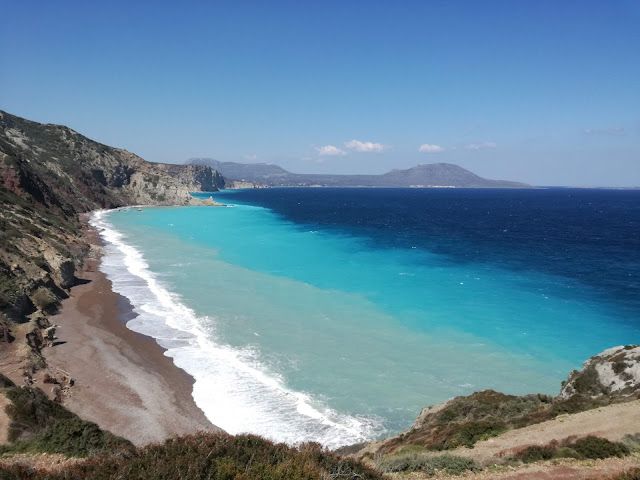
The tragedies of the era bring to life a world that no longer exists, but it also marks the mores and attitudes of a world that, through the whirlwind of developments, have now given the island a more cosmopolitan and more open to foreigners perception... Kythera, an island with a perfect layout from the years of the English presence there, full of castles, dense roads and tragic stories, overlooks the passage to Crete, often blocked by angry seas and skies that vent their anger on the rocky landscape. A place where memories from every inch of ground fill the visitor with awe at what has unfolded there...











It is worth a visit to the beautiful Kythera from a religious point of view especially when the Virgin Mary Myrtidotissa is celebrating 23,24/9