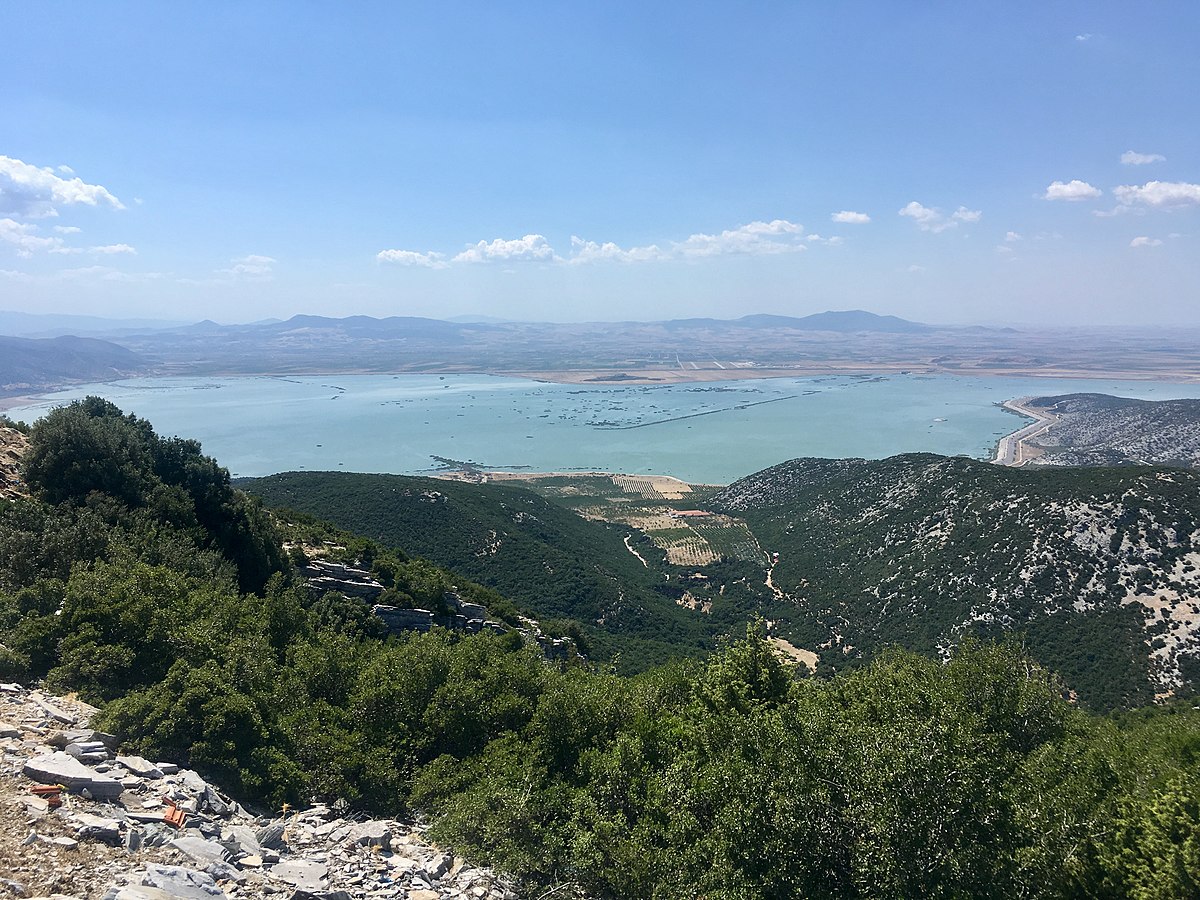
«For the area of Lake Karla, which is the heart of agricultural production in the Region of Thessaly, it is necessary to highlight a local model of ecotourism-agrotourism, which will emerge through a specialized study and recording. We are cultivating the myth of our village that we so much need, the return to our roots and cultural heritage, the contact with our reference point.» This is what Georgia Trakala, PhD candidate of the Department of Environment of the Ionian University, says in a paper on Lake Karla from antiquity to the present day and its contribution to the future sustainable development of Thessaly, which she presented at the 20th Panhellenic Forestry Conference held in Trikala. Forty years later, she added, the restoration of Lake Karla is taking shape and the Region of Thessaly, led by the regional governor, Mr. K. Agorastos, aspires to make Lake Karla a pole of sustainable development for the wider region.
She believes that the Karla Lake restoration project plays a key role in the issue of sustainable development. It is my personal conviction, but also my strong will, as a resident of the wider area of Lake Karla, according to what she says to the Athens-Macedonian News Agency, that the promotion of natural wealth and the protection of the environment, cultural heritage (archaeology, folklore, tradition, etc.) through the preservation and promotion of the most important cultural elements (monuments, architectural ensembles, sites) that exist in the wider region, should be our main objective. And explains the PhD candidate of the Department of Environment of the Ionian University:
«The geographical location of Lake Karla, at the borders of the prefecture of Larissa and Magnesia, combined with the neighbouring mountainous ecosystems of Kissavos-Mavrovouni-Pilion, make Lake Karla a metropolitan hub of sustainable ecotourism - agrotourism development, both for the local community and for the Region of Thessaly.
The multiple recreational opportunities and places of natural beauty, as well as our proposal for certified hiking trails - routes with the neighbouring ecosystems of Kissavos-Mavrovouni and Pelion, will add value to the area.
In addition, the exploitation of flora, bird and fish fauna will become an attraction and multiple themes for environmental education, but also for alternative tourism, which has been widely recognised as a key tool for regional sustainable development.».
Georgia Trakala provides interesting historical data on Lake Karla. Lake Karla (modern Greek name) or Boivis (in antiquity), an area of significant activity in prehistoric and historical times, was one of the most ecologically important wetlands in Greece. Lake Karla was one of the most important wetlands for waterfowl in Greece and the Balkans, and indeed in all seasons of the year. At least 143 species of birds had been recorded, many as breeding and others as migratory and wintering (Stavrotheodorou 2010).
The lake, with its rich fish production, has been a place of cultural evolution and the development of a unique way of life for people engaged in fishing. More than 1000 families from the villages along the lake were exclusively engaged in fishing, with the well-known carp (griwadia), which used to flood the fishing grounds of Greece.
However, the total drainage of Lake Karla in 1962 was to mark the end of this great cultural history of the region.
Unfortunately, the expectations of the parakarlian residents for the acquisition of agricultural land have not been fulfilled until today, while on the contrary, a number of problems have arisen that plague the area. The ecological and cultural identity of the lake ecosystem has been lost, the climatic conditions have changed, the biodiversity of flora and fauna is threatened, the underground water table has been significantly degraded (drilling 400 m deep for irrigation), problems of waterlogging have occurred and, also important for the region, has been the appearance of deep and longitudinal faults which have forced the parakars to abandon their homes.
To conclude by stressing:
In conclusion, it can be said that ecotourism-wilderness tourism, when it operates in combination with the other forms of alternative tourism and in accordance with the potential of the carrying capacity of the area and the protection of the natural environment, is able to provide a tourism product that is integrated with the environment, nature, the people of the place and the principles of sustainable development.
We hope that all the residents of the Karla area will act responsibly and the cooperation with the Region of Thessaly, the local municipalities, the Karla Management Body and environmental organisations will contribute to the vision of sustainable development of the wider area».