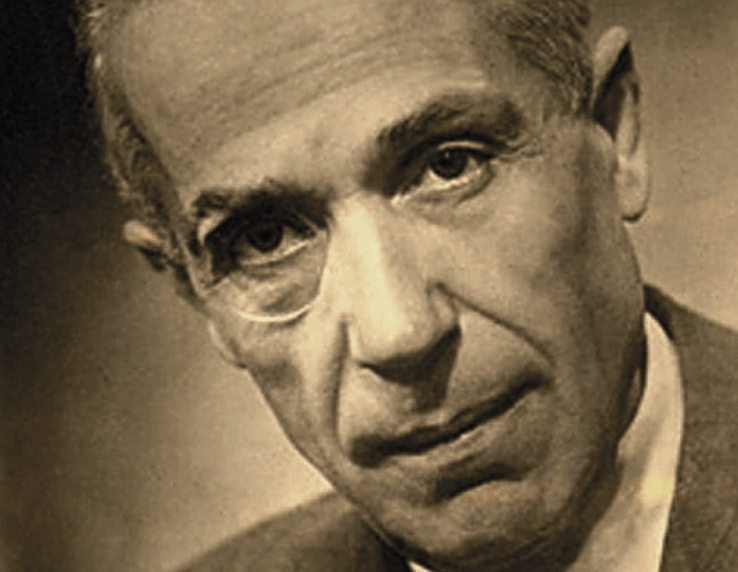
Kostas Ouranis belongs to the literary movement known as Neo-Romanticism. His real name was Kostas Niarchos. He was born in 1890 in Constantinople; his father, Nikolaos Niarchos, was originally from Kynouria, and his mother, Angeliki Giannousi, was from Leonidio, where the poet grew up and attended elementary school. He then completed high school in Nafplio and went to Constantinople to study at the Robert College and the private Hatzichristou Lyceum, from which he graduated.
In 1908, he went to Athens and, shortly thereafter, traveled abroad. Travel was his great passion. In Paris, he contracted tuberculosis, and the doctors advised him to spend two years in Davos, Switzerland. There he met the Portuguese woman Mamuela Santiago, whom he married. A few years later, he divorced her and married the Greek writer and critic Eleni Negreponti (known as Alkis Thrylos). In 1920, he was appointed consul general in Lisbon, where he lived for four years before finally returning to Athens in 1924. He then began working as a journalist. He served as editor-in-chief of the newspaper *Eleftheros Logos* and was a regular contributor to the newspapers *Eleftheros Typos*, *Eleftheron Vima*, «Acropolis,» «Kathimerini,» and «Athinaika Nea,» while also writing articles for the Greek-American newspaper «Eleftheros Kerykas» in the United States.
The poet’s great love of travel was fulfilled through his work, since, as a correspondent and journalist, he was able to travel all over the world. It was only natural that he would go on to write several travel books.
Uranis wrote poems, essays, short stories, and short prose pieces, and he translated several foreign works into Greek.
His fragile health forced him, especially during the Occupation, to be hospitalized for several periods at the Papanikolaou Sanatorium in Melissia, Attica. He died there on July 12, 1953, of a heart attack.
One of Ouranis’s best-known poems is «Journey to Kythira.» The poem refers to the idealized place of Kythira, which ultimately remained a deceptive dream. We can say that the poet follows the general principle regarding the idea of Kythira, which—as other artists have also expressed—does not exist and can never be experienced by anyone. Moreover, the poet was influenced by Baudelaire’s work, and such a parallel with the spirit of the French writer’s poem of the same name is logical.
Download the file in PDF format.