Article by E. Kyriatzi, M. Georgakopoulou (Fitch Laboratory, British School at Athens), C. Broodbank & A. W. Johnston (Institute of Archaeology, University College London, London, UK).
The substantial and full integration of physico-chemical techniques in the archaeological study of excavated finds has in recent years significantly expanded our knowledge of technology, exchanges and wider socio-political changes in past societies. However, the same has not been the case with the study of finds from intensive surface investigations, despite the growing recognition of the contribution of such investigations to reconstructing the history of a region, and despite the significant methodological developments that have taken place in landscape archaeology, notably with the use of Geographic Information Systems (Alcock and Cherry 2003; Francovic and Patterson2000). Despite the fact that ceramics, lithics and mineral slags constitute the majority of finds collected in an intensive surface survey, there has been little recognition of the potential that their laboratory analysis offers beyond macroscopic archaeological study.
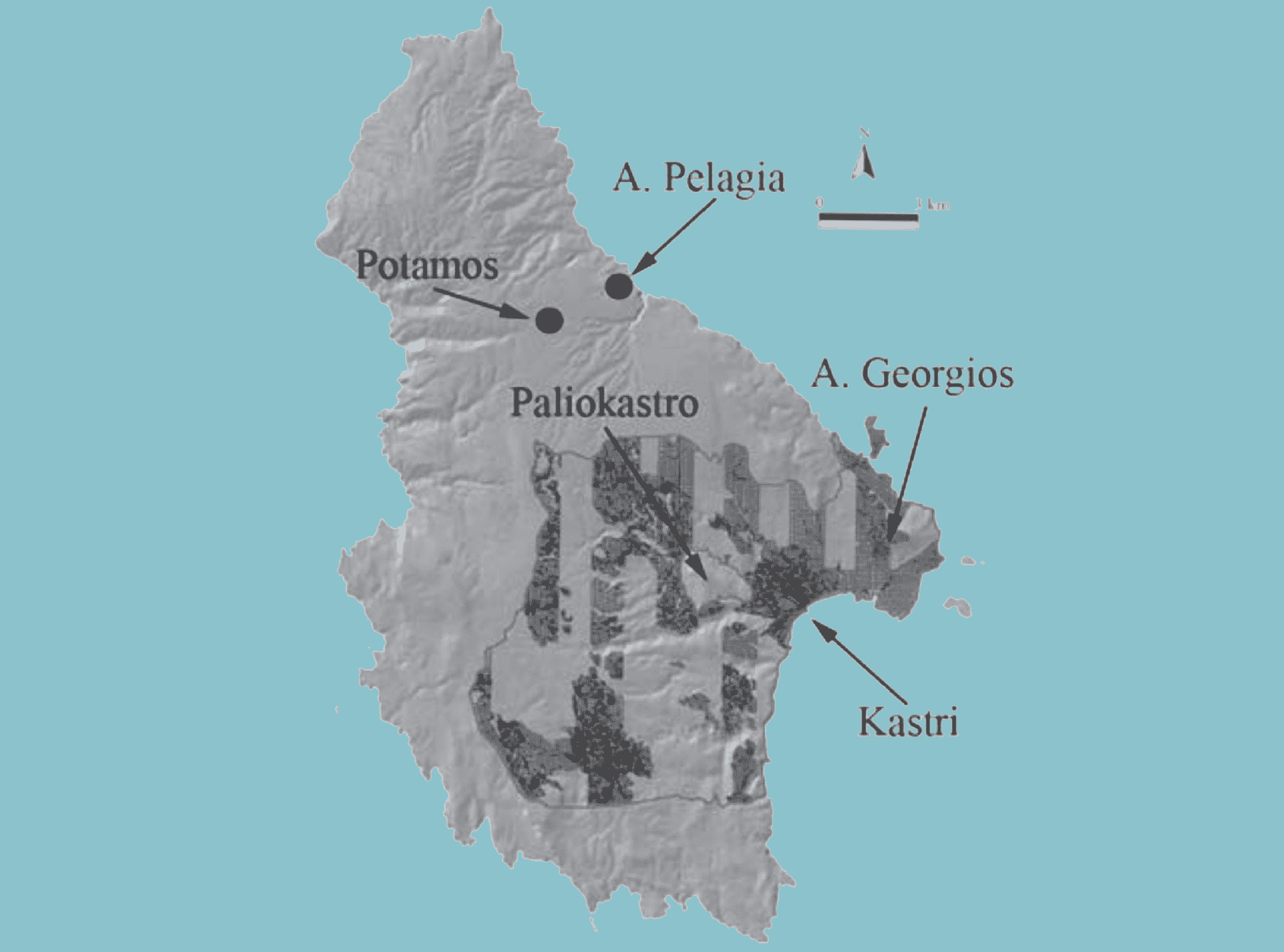
Also, as more and more intensive surface surveys are published, it becomes obvious that such a survey can provide a much greater wealth of information than previously recognized, since its findings concern a large number of sites of different character from the same area, cover a wide chronological range, and are collected and studied in exactly the same systematic way, thus facilitating comparisons between different sites and periods. The combined application of analytical techniques to the archaeological study of such finds has the potential to further enhance the potential and role of intensive surface research in understanding the overall history and evolution of a region. For a successful application, however, the use of analytical techniques should not be carried out in a complementary way, usually at the final stage of the investigation, or even after its completion, but should be integrated from the planning stage in order to adapt the methodology of the fieldwork and the way of collecting, studying and sampling the finds accordingly. The aim of this paper is to highlight the possibility of such an approach by presenting its application in the context of the Kythera Research Programme. This is an interdisciplinary research project that involves the study and analysis of the environmental and cultural dynamics that have determined life on a Mediterranean island over time.