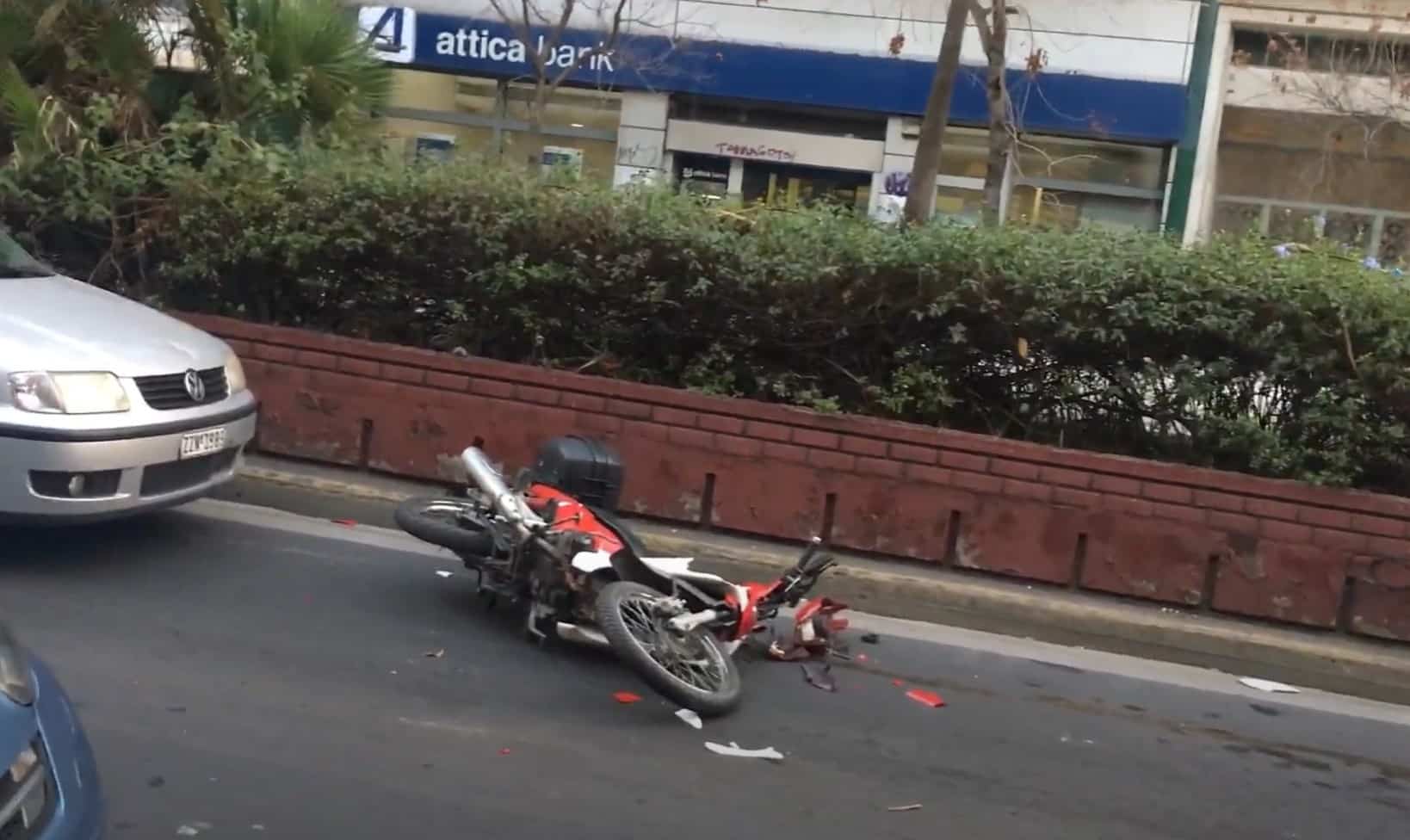
Data from recent months show that the number of road accidents in which people were killed or injured has increased compared to last year.
Last October, in Attica alone, 12 people died in road accidents in Attica, while 661 were seriously or slightly injured in a total of 580 accidents.
An indicative month is August, in which 70 people were killed nationwide, 70 more were seriously injured and 1,177 were slightly injured. In comparison, in August 2020, 68 deaths, 54 seriously and 998 slightly injured were recorded in August. The increase in the number of traffic accidents between the 2 months reaches 17.3% according to ELSTAT data.
The reality is that in the decade from 2010 to 2020, Greece has made an impressive improvement, reducing road fatalities to 54%. However, the country still ranks among the leaders in Europe in terms of deaths per million population. In 2020, despite the improvement of the last decade, Greece will be ranked 24th in the world.η position out of 32 countries on the continent. The average death rate in the country is 54 people per million population, when the European average is 42 per million.
But what is the reason for the increase in road accidents in recent months? Are Greeks bad drivers? Looking beyond the numbers, it is surprising that fatal road accidents occur even in central parts of Athens or Thessaloniki, where usually due to heavy traffic it is not possible to develop high speeds.
«Recovering freedom by stepping on the gas»
People who follow the issue and are active in the field of road safety agree that after the lifting of the lockdowns, there has been a spike in road accidents. «We're seeing aggressive attitudes after last year's lollygagging. Many drivers feel that they regain their freedom by stepping on the accelerator.», Dr Dimitris Margaritis, a scientific associate of the National Centre for Research and Technological Development and the Institute for Sustainable Mobility, tells Magazine. «The main reason for the decrease in traffic fatalities in the last decade was the economic recession, when people were driving less. However, the improvement of the road network with the creation of major motorways was also decisive,» he adds.
The new reality shaped by the pandemic However, it affected driving behaviour early on. This is because in 2020, a large percentage of road accidents were serious, resulting in death or serious injury to those involved. On the country's empty roads, there were far more people developing higher speeds or violating the Highway Code.
«During the lockdown period, the focus of controls turned to compliance with the covid measures and road safety was sidelined», underlines Vasiliki Danelli-Mylonas, President of the Panos Mylonas Institute for Road Safety, a UN Advisory Body and member of the European Transport Safety Council. “In 2020 incidents increased compared to 19. Collisions, pedestrian drift. With the help of psychologists and sociologists, we are trying to analyse the phenomenon. One rationale is that after periods of particularly stressful situations there is a spike in offending behaviour,” he says.
Driving behaviour is the decisive factor
According to experts, driver behaviour is the decisive factor in most road accidents. For this reason, a change in attitude and training from an early age is considered crucial. «In the Netherlands, where I lived for some years, the traffic education was a compulsory course already from primary school and children even received a kind of diploma,» says Dimitris Margaritis.
«In Greece in previous years, we created and delivered to the Ministry of Education materials for the Traffic Education lesson. However, it remains in the optional subjects along with Recycling etc.». Vassiliki Danelli-Mylonas, who is optimistic, agrees with the conclusion that a change of attitude among young people is a key issue.
«We see young children being disciplined at a much higher rate. We hope that young people are changing a lot as they are more receptive than in the past. Following traffic education programmes that we carry out in secondary schools and high schools, we receive direct messages from parents who say that their children carry what they have learned in everyday life. We usually put them in a vehicle that rolls over on an axle, doing a simulated rollover, low-speed crash test and a drunk driving simulation on how vision and judgment are affected.».
Abandoned road network
Beyond road behaviour, however, the provincial road networks, the pavement of urban centres and road markings seem in many cases to have been abandoned to their fate, significantly increasing the risk factors. Poor road markings and lighting, damaged pavement, potholes and bumps that can prove fatal, especially for two-wheeler drivers, but also traffic lights hidden behind trees and signs with contradictory information are the usual picture in the country, except on major motorways.
«The statistics clearly show that the countries with the highest economic level have the best road safety scores. Conversely, countries that invest less of their budgets in this area are in the lowest positions. In Greece, usually the solutions chosen are sloppy and postpone the problem without solving it. The budgets that emphasise road safety are low, and in addition to the central state, there is also local government. In some cases of municipalities and regions, we have found that there is not even a provision in the annual budget for road maintenance. Not a single euro» says Vasiliki Danelli-Mylonas.
Pressure on distributors and the EU's targeting of distributors.
Returning to the new data added by the pandemic, several of the accidents are with two-wheelers. The large number of workers who have turned to product distribution is a logical explanation, considering that many of those who have chosen this profession do not have much experience. «Delivery workers are under pressure from their employers», says Dimitris Margaritis.
«They are monitored by the applications, which give a clue as to where they are. They are graded on the speed of delivery so they are consistently working under constant pressure. At the same time, there is a concomitant demand from people even in bad weather conditions for timely delivery. We are moving in the direction of providing training, especially for new workers in consultation with the store owners. Tighten controls on companies and correct the labour framework. Helmet, clothing, vehicle and specific hours must be provided. This is what the European Union will focus on in the coming period», adds the scientific partner of the Institute for Sustainable Mobility.
Greece last in helmet use
He, being a member of the World Motorcycle Federation, underlines that beyond the professionals, in Greece the use of helmets by motorcycle riders has not been established to the extent that it should be: «Owners of large motorcycles are more conscious, they generally wear their equipment. But we are still by far the last country in Europe to use helmets. I was giving colleagues from abroad data on accidents involving motorcycles without helmets and the difference was noticeable.».
Indicatively, in 2019, in a total of 800 accidents involving two-wheelers of 50-115 cc, in 252 cases the drivers were not wearing a helmet. Of these, 19 were killed and 25 were seriously injured. Similarly, of the 548 who were wearing a helmet, 5 were killed and 19 were seriously injured.
In conclusion, experts agree that the key to reducing road accidents is a sense of monitoring road behaviour and an active presence of the traffic police on the roads. According to Vasiliki Danelli-Mylonas, «When there are coordinated and mass checks by the Traffic Police, they have an immediate effect. In England when the state budget was reduced in traffic control issues, incidents increased rapidly» says Ms. Mylonas. For his part, Dimitris Margaritis adds: «The respect that the traffic monitoring system exudes is a catalyst for reduced accidents.».