One more Confirmation to what is written about the Antikythera in recent days comes to light from today's edition of the Newspaper of the Editors and the journalist Dimitris Angelidis. And while questions about central radio silence order from the Ministry of Maritime Affairs are left unanswered, a refugee submits his own testimony for what happened. Here is the journalist's full report.
As the Newspaper of the Editors hours of communication with the Antikythera Police on the morning of Monday 6 July the «disappeared» refugees who had landed on the island in Saturday 4 July, after four days of struggling with the waves and the faulty engine of their boat.
The «disappeared» of Antikythera reveal
According to the testimony of one refugee, who was contacted by Eph.Syn. «The refugee,» according to a refugee who was contacted by phone on Friday night and via WhatsApp on Saturday, had started from the Smyrna at noon on Tuesday 29 June, with destination Italy, 35 Iraqis of Kurdish origin most of them, mainly young people men 16 to 30 years old, and two families with three children. Two days after departure, the engine started to have problems.
«It would go out and we'd start it up again. That happened 20 times and we lost a lot of time. On the last day it was bad weather, it was blowing hard, the sea had waves. There was anxiety and fear. We wanted to get to Italy, we didn't want to waste our efforts. We were very scared, the migrants were screaming. Some of them thought that we had to go on. Others thought we couldn't go any further with this machine. We thought that we must find a safe place before it was too late and we were completely adrift in the sea. We decided to go to the nearest island. That was the island of Antikythera.’ tells the Eph.Co. B. from Smyrna, where he ended up after the redirection of the group.
«But the boat was taking on water and moving very slowly in the waves and we decided we should call 112, although some people disagreed. I called them first. I asked for help, but they didn't believe us and asked for proof. I sent them our geographical position. They still didn't believe us and asked us to send them cell phone video. We showed them the families and children and they said they were coming to help. In the meantime, after fifteen minutes, we arrived on the island and ran ashore to hide, leaving the boat to sink. The authorities came half an hour after we contacted them and were looking for us, not knowing we were on the island.», he says.
The refugees had little water and food with them and decided to find another boat from Greece or Turkey to continue to Italy. But the trafficker with the boat was not coming, the water and food was saved and they decided to surrender. «I've been on chat with the police for hours. They were asking where we were. I told them that we don't want to go back to Turkey but to stay in Greece. They promised us that they would help us. Around 3 in the afternoon a group of policemen showed up who were calm. But they led us into a large warship where there were many officers with their faces covered, who treated us violently from the beginning, told us not to look at them, even beat the families, took our mobile phones, money and everything we had. They used me to act as their interpreter because I know English.», he continues.
After six hours, they arrived outside the Smyrna, they put them in a floating raft three by three and left them in the sea runaway. After an hour they were rescued by the Turkish Coast Guard.
Central order from the Ministry of Shipping for disappearing refugees and evidence?;
With a central order of the highest echelons of the Ministry of Shipping it seems that first the «disappearance» of the 35 refugees from Antikythera on Monday 5 July was attempted and then the disappearance of any trace of the Coast Guard and Police operation to locate and repatriate them.
According to information cited by a local website Kythera News on Monday, which has not been refuted, senior officials of the Ministry of Shipping instructed the mayor of Kythera Efstratios Harhalakis «not to leak any information, photographic or other visual material to the outside world».
In response to a question from the «Eph.Syn» to Mr. Harhalakis by telephone on Tuesday evening, July 6, about the presence of refugees on the island, the mayor replied that he does not know and that he is absent from Antikythera. The answer causes reasonable wonder, if not suspicion, as the mayor did not seem surprised nor did he mention that there had been an investigation nor did he seem willing to investigate the information.
The very serious questions, which, as long as they remain unanswered, directly expose Minister Yannis Plakiotakis and the Chief of the Coast Guard Theodoros Kliaris to accusations of serious violations of international law, are reinforced by the information about the attitude of the competent authorities.
The Kythera News publication, which first published the news of the arrival and disappearance of the refugees, notes that it contacted the port authorities of Voion Laconia and Kythera and the Coast Guard Headquarters, but got «no confirmation and no denial of the fact, while an officer of the Coast Guard told us when we insisted to know what is happening: «I am not authorized to answer you»».
The vague and curious attitude of the authorities is confirmed by the local radio station Adelin-FM, whose reportage reported that «Coast Guard vessels and helicopters were seen both on Sunday and Monday» and that in response to a question, sources replied «yes we know, but the mandate is that we can't say anything».
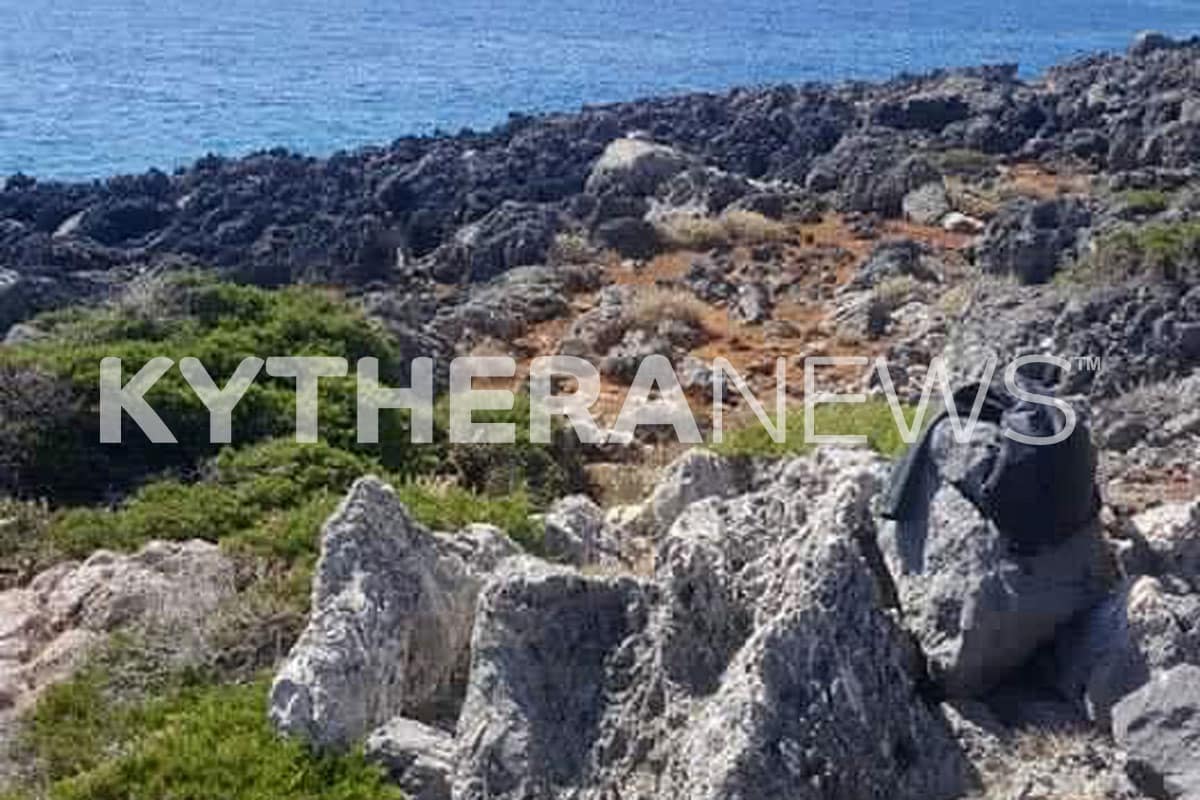
Kythera News has published photo from Coast Guard vessels in the port of Antikythera during the period in question. He also published a video (1,2) made available to the Aegean Boat Report, an organisation known for its systematic and documented recording of complaints of illegal refoulement operations in the Aegean. The video, taken from a mobile phone of refugees, shows them on the southeast coast of the island. «We are now in Greece, at the border, at the last point of Greece. We are now waiting to call the Italian police in the hope that they will come and get us, or the Greek police.», a refugee is heard speaking in Sorani, a dialect spoken by the Kurds of Iraq.